

Published
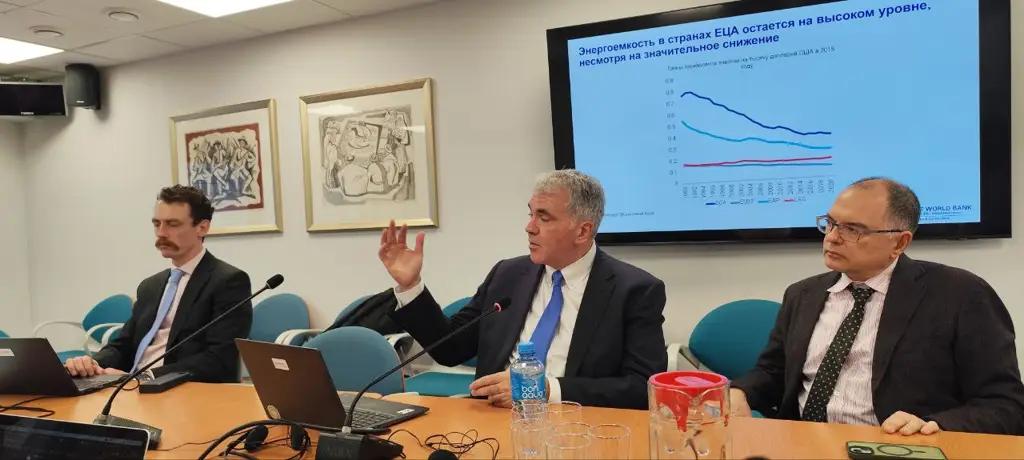
02/04/2025, 15:05Economists and analysts from the World Bank analysed the challenges facing middle-income countries, including Central Asian states. The presentation discussed the structural challenges faced by these countries, as well as ways out of the so-called ‘middle-income trap’.
Among the key challenges, the experts noted slow economic growth, structural stagnation and limited room for manoeuvre. They stressed that one of the main factors of stagnation is the inefficient use of capital, labour and energy resources.
To overcome these difficulties, the analysts suggested measures aimed at creating a more dynamic economic environment. These include abandoning systems that favour the retention of power by ‘insiders’, rewarding on merit and effectively using crisis situations for reform.
‘Kyrgyzstan has been growing well, but a slowdown is inevitable,’ said David Knight, a leading economist on Central Asia.
He added that to avoid stagnation, the economy needs to shift from investment to ‘injection’. This means that for effective growth we need to move from quantity to quality.
Special attention was paid to the countries of Central Asia. According to experts, the region needs urgent changes in approaches to decision-making, data analysis and economic policy-making. This will allow the states of the region to avoid long-term stagnation and reach a new level of development