

Published
12/03/2025, 14:05Along the Bishkek–Osh highway, traffic never stops for even a second — cars rush in both directions one after another. This road is one of the key and strategically important transport corridors of our country. After the modernization, regional logistics has improved, significantly facilitating trade and making travel between Bishkek and Kara-Balta more accessible and comfortable.
Under the Asian Development Bank’s CAREC Corridor 3 improvement project, 52.5 kilometers of this highway were reconstructed: the main 43.5-kilometer section was expanded to four lanes, and the particularly busy 9-kilometer stretch was widened to six lanes. Six new bridges were also built, and one existing bridge was rehabilitated. The total cost of the project was just over 90 million USD.
Residents of both cities have already felt a significant reduction in travel time between the capital and Kara-Balta, both for daily commutes and for freight transportation.
The road in this section is now safer, with high-quality bridges and well-laid asphalt designed to withstand the local climate. It has become easier for people to get to work, schools, kindergartens, and hospitals.
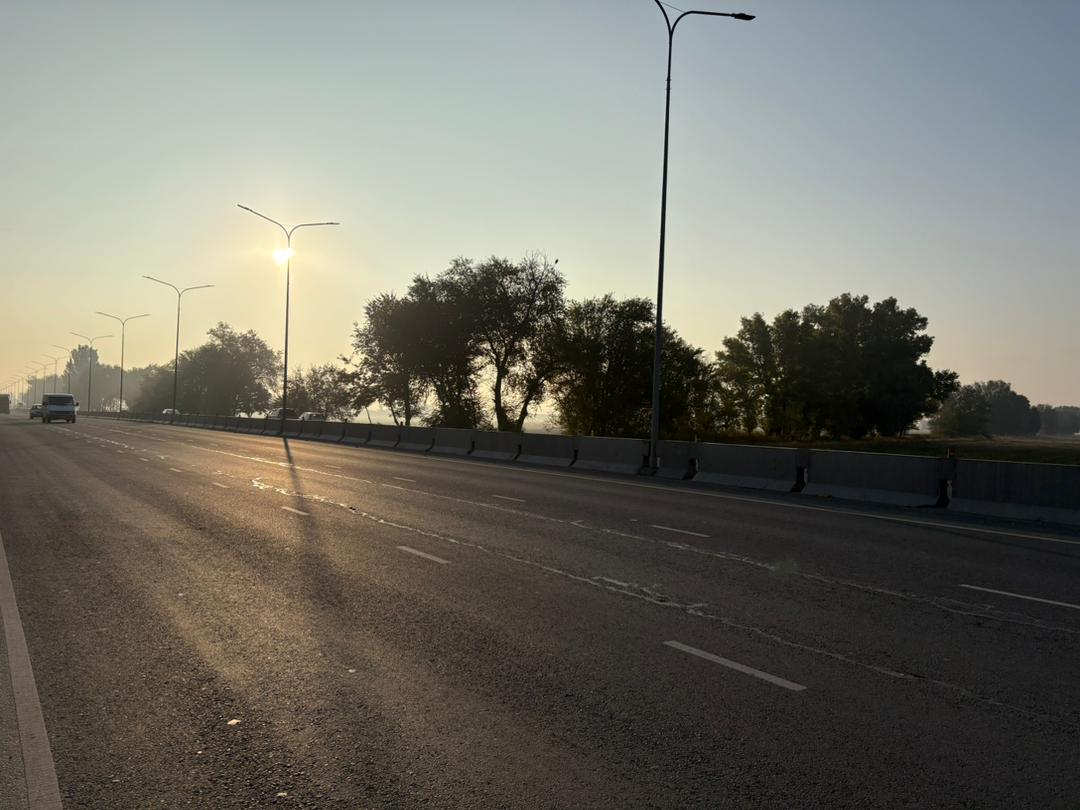
“Originally, the project was planned for the section from the car market to Kara-Balta. However, during implementation, we managed to save funds and add 7.4 kilometers. Construction work began back in 2017, but the main works were completed in 2022. The defect liability period ended last year. As part of the project, 13 underground pedestrian crossings were renovated due to the heavy traffic on the highway. Seven of them were reconstructed, and six are entirely new,” — said Nurmat Kalmurzaev, a road engineer from the ADB project implementation group at the Ministry of Transport.
This section belongs to category 1B — a high-speed highway designed for an axle load of 11.5 tons. Currently, there are only two such roads in the country. The other one is the Vasilievsky Tract leading to Manas Airport.
With increasing traffic, the existing road could no longer handle the load, and a decision was made to widen it. Within the city limits, from the bypass to Alykulova Street in Bishkek, the road was expanded to six lanes, while the section up to Kara-Balta was widened to four lanes.
“Eighty-five percent of this road passes through populated areas. The main challenge during construction was carrying out repairs within settlements, where there were many underground utilities not accounted for in the project. We encountered these issues during project implementation, which led to an extension of the project timeline,” — noted Nurmat Kalmurzaev.
He also added that this road is unique because the asphalt thickness is 23 centimeters. The reinforcing layer consists of 9 centimeters of crushed black stone, the base layer is also 9 centimeters, and the wearing course is 5 centimeters.
Traffic never stops for even a second. Naturally, defects may appear, but future routine maintenance will be covered by the Ministry of Transport.
Another project — the connecting road of CAREC Corridors 1 and 3 — was implemented with a loan of USD 68.5 million and a grant of USD 9.5 million from the Asian Development Bank.
The main goal of the project is to improve key road connections between regions, as well as to enhance the safety and resilience of the road network.
The reconstruction of the sections from the city of Balykchy to the village of Kochkor and from Kochkor to the village of Epkin has already been completed. Work began in 2022 and was finished in 2023. Previously, only medium and routine repairs were carried out on this section, but works of this scale were undertaken for the first time.
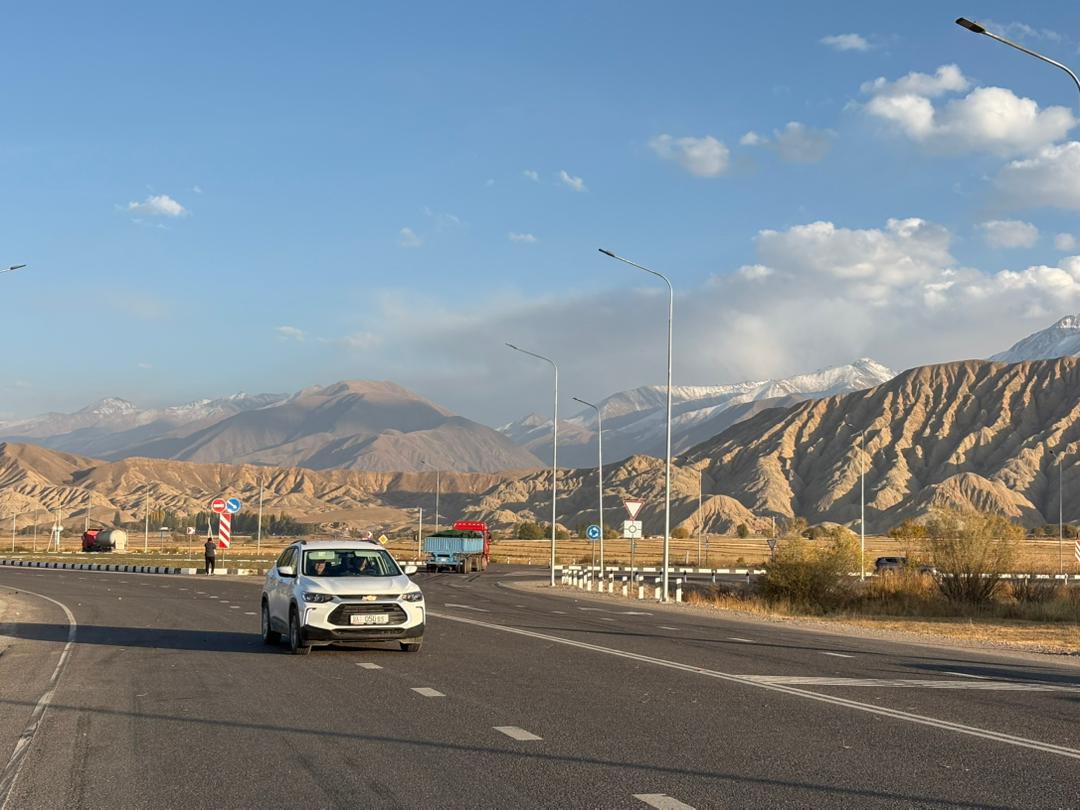
The project is currently under a three-year warranty period.
Next year, reconstruction of eight access roads (around 40 kilometers) will begin. All construction works are expected to be completed in 2027, and the contractor’s defect liability period will end in 2028. These roads already allow thousands of drivers to travel faster and more safely, and for rural residents they provide reliable access to markets, schools, and hospitals.
Journalists from the capital met with Eldar Samarkulov, the project consultant for the construction of the alternative road, at the 60th kilometer of the North–South highway. The total length of the section is 27 kilometers. The project is financed by the ADB under a loan agreement.
“Before the reconstruction, this section was a category-3 road built back in Soviet times. After reconstruction, the highway was upgraded to category 2, and within populated areas it was expanded to four lanes. Water supply and drainage pipes were also installed, bridges were built, and street lighting and sidewalks were arranged to ensure the safety of drivers and pedestrians,” — he said.
According to him, the greatest impact has already been felt by truck drivers: the road can now withstand heavy traffic, has become smoother and safer, which is especially important for transit transportation along the North–South route.
Zhang Wu, Country Director of the Asian Development Bank’s Resident Mission in the Kyrgyz Republic, noted that since 1994 the Asian Development Bank has been a key development partner for Kyrgyzstan.
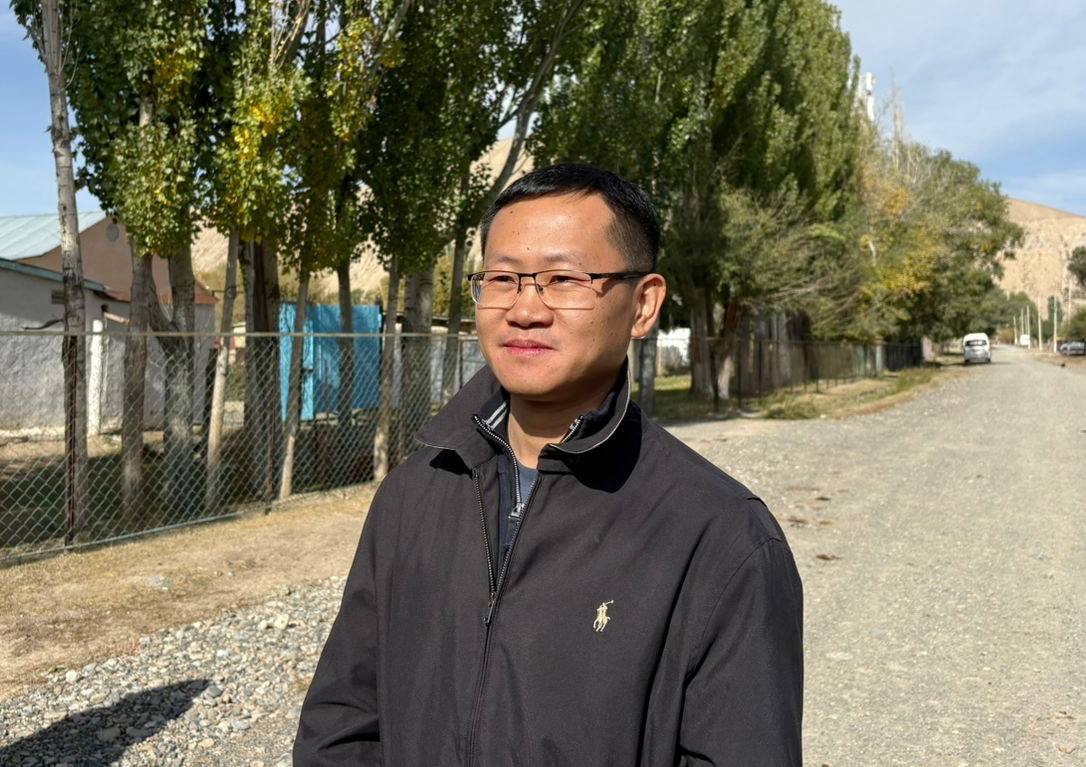
ADB has provided the country with more than USD 3 billion for the development of infrastructure and other sectors.
“Over the past three to four years, Kyrgyzstan’s GDP has doubled. This is a key indicator of economic growth. Normally, development partners such as the World Bank and ADB stop providing grants when GDP increases. However, we continue to mobilize resources to provide concessional loans for projects aimed, for example, at improving the quality of life in rural areas,” — said Zhang Wu.
He also noted that the country’s cooperation with the Asian Development Bank will continue to focus on the development of infrastructure and agriculture. In addition, collaboration with the Government of Kyrgyzstan will continue on issues related to climate change adaptation.