

Published
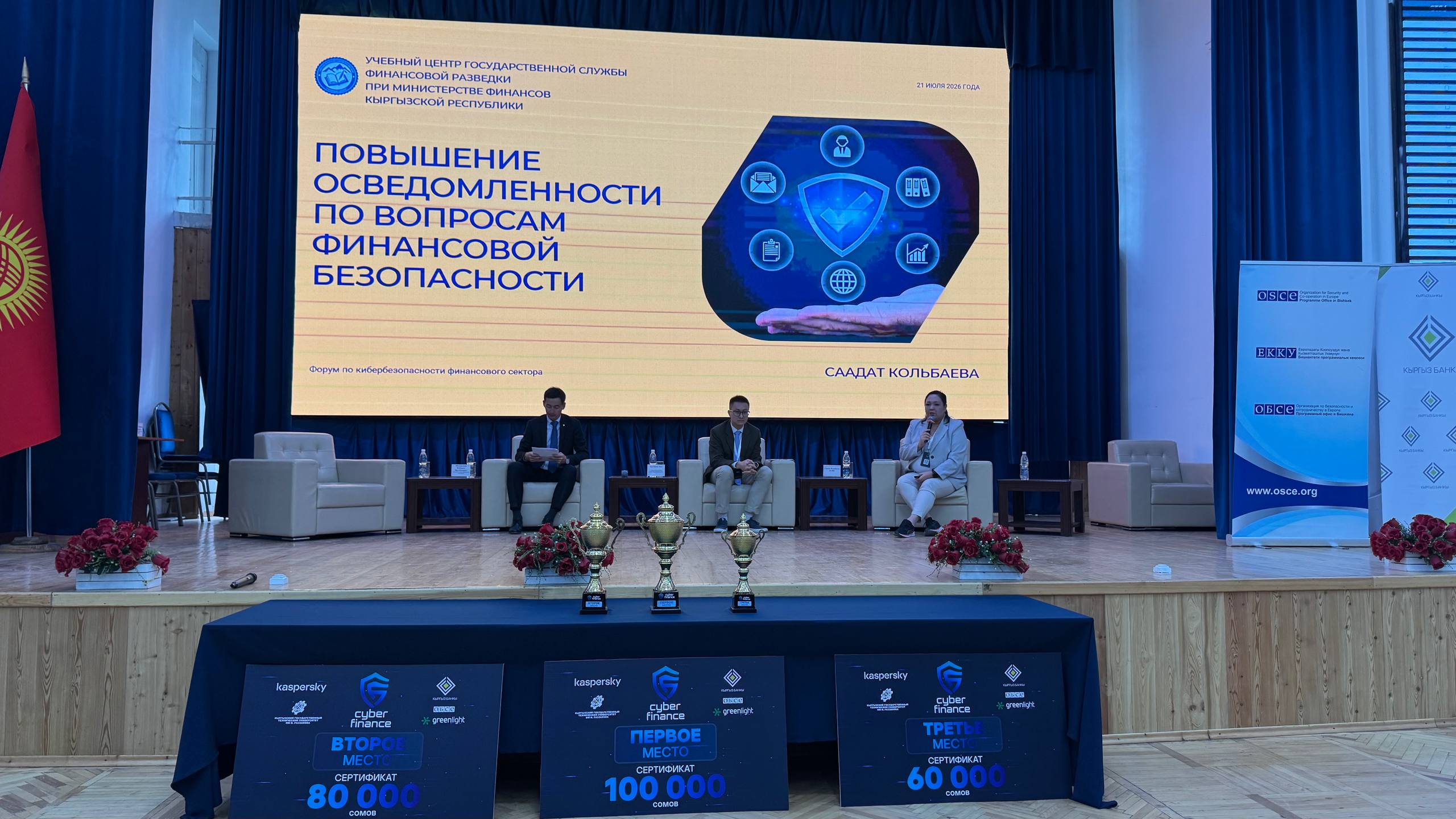
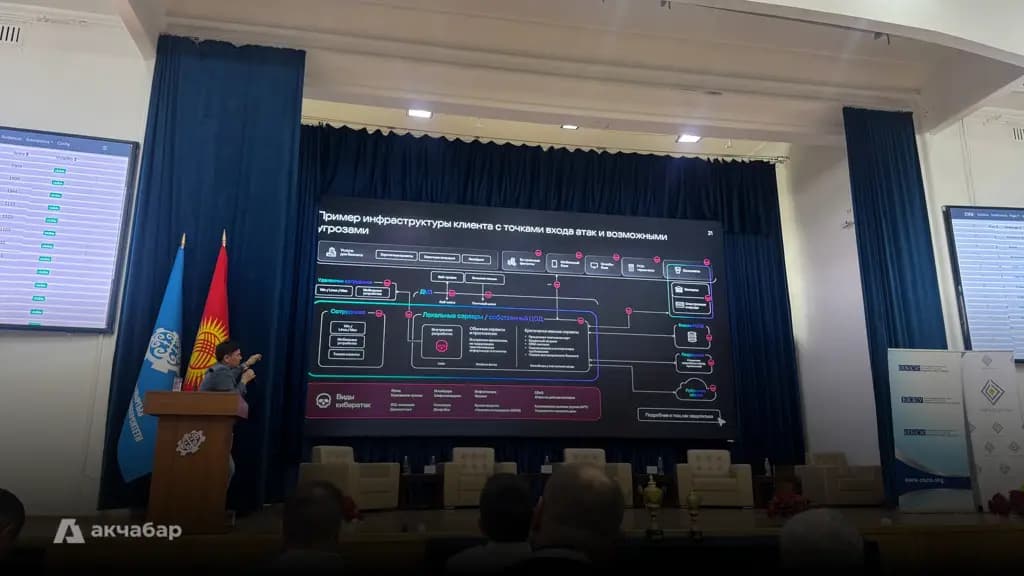
07/22/2026, 19:09On July 21, a forum was held at the Kyrgyz State Technical University named after Iskhak Razzakov, where one of the most sensitive topics for the financial market — cybersecurity — was discussed. CYBERFINANCE 2026 brought together around 120 representatives of banks, IT companies, government agencies, faculty members, and students.
The discussion focused on phishing, data leaks, fraud involving digital payments, and other threats that the financial sector is already facing today.
Opening the forum, National Bank board member Sanjar Abdygaziev emphasized that cybersecurity can no longer be viewed solely as a technical task.
“Artificial intelligence, digital financial services, distributed ledger technologies, stablecoins, and other innovative payments are transforming the global economy. At the same time, they are shaping a new architecture in which cybersecurity issues become not only technological but also economic challenges,” — he noted.
According to Sanjar Abdygaziev, the goal of the National Bank is to create a secure digital financial environment in Kyrgyzstan, where innovations will strengthen citizens’ trust rather than become tools for fraudsters.
In recent years, the republic has been actively developing digital payments, mobile banking, and new financial technologies, and along with this, the number of fraud attempts has also been increasing.
“Our strategic goal is for innovations to contribute to sustainable economic development and improve citizens’ well-being,” — added Sanjar Abdygaziev.
Today, cybersecurity has become a matter of economic resilience. Azamat Karabaev, head of the Cybersecurity and Information Protection Department, explained how the National Bank is already building a platform to safeguard the financial sector. This is being achieved through the rapid exchange of threat information between banks and non-bank financial institutions.
“We need to build an environment of trust. When one bank detects a threat, the others must receive an early warning and have time to mitigate risks and protect their clients,” — he explained.
At the same time, Karabaev specifically emphasized that the system will not transmit clients’ personal data or banking secrecy. It concerns only technical threat indicators, which will help financial institutions detect attacks in advance.
For the banking sector, this could be an important step, as the maturity level of cybersecurity systems varies across banks, and information sharing will enable faster responses to new fraud schemes.
The forum devoted significant attention to the cryptocurrency sector, as Kyrgyzstan was among the first in the region to actively establish regulation of this market following the adoption of the Virtual Assets Law in 2021.
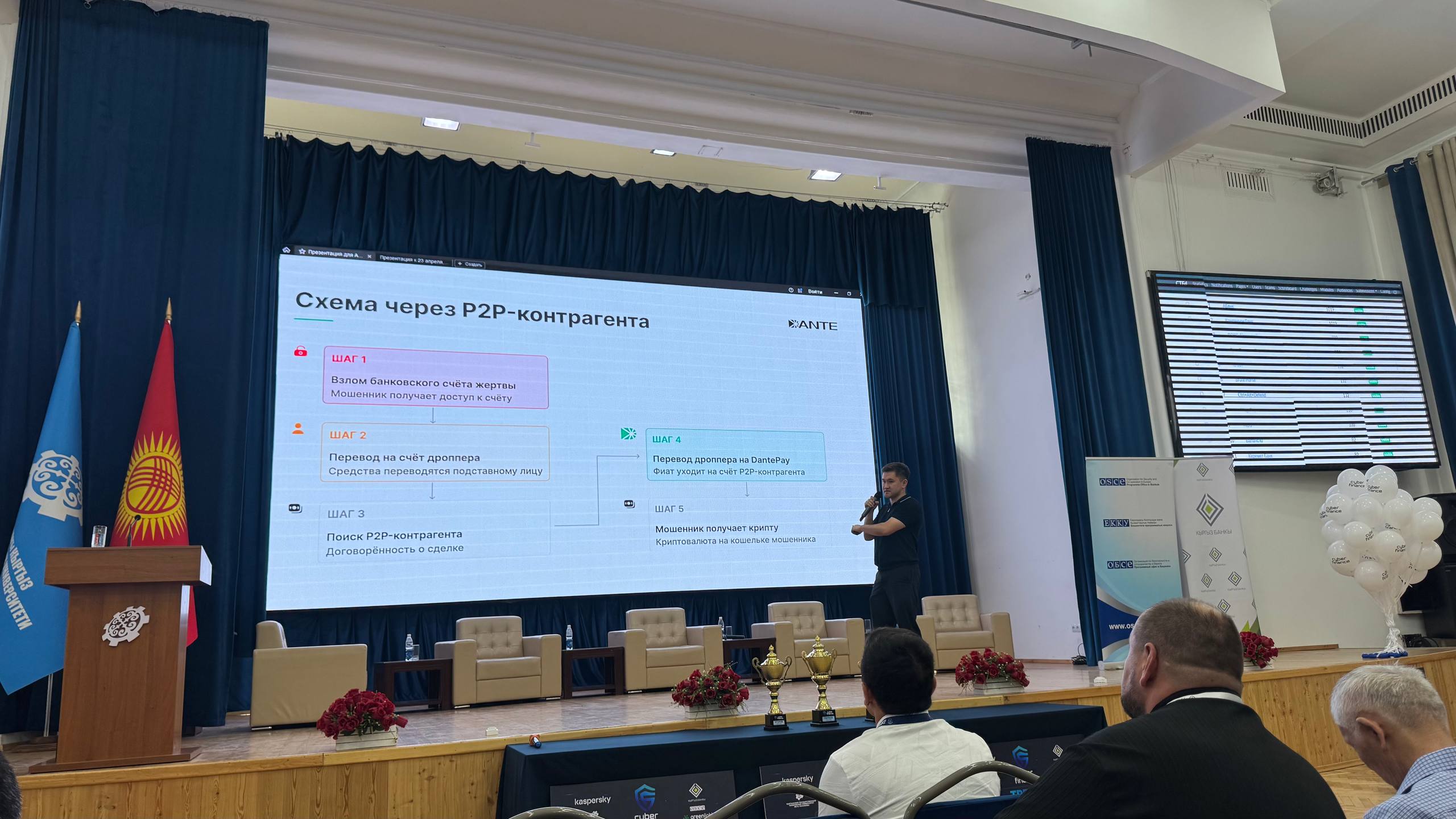
Baisal Sheraliev, a representative of the international IT company Green Light, gave a detailed account of the schemes faced by platforms. The most common include dropper schemes, hacking of bank accounts, transferring funds to accounts of front persons, and subsequently cashing out money to foreign crypto wallets.
“For many, it may seem like easy money. But in the end, a person can find themselves involved in a criminal scheme and held accountable,” — the expert warned.
According to him, within a single calendar year the company’s platform attracted around 20,000 users, and about 300 transactions are carried out on it daily. This is why KYC checks, client identification, and monitoring of suspicious transactions are becoming critically important for the entire industry.
Baisal Sheraliev also pointed out that the main problem lies not only in technical vulnerabilities but also in the low level of financial literacy among the population.
“Our technologies have advanced far ahead, while the population has not yet had time to get used to and adapt to them. This is exactly what fraudsters exploit,” — he said.
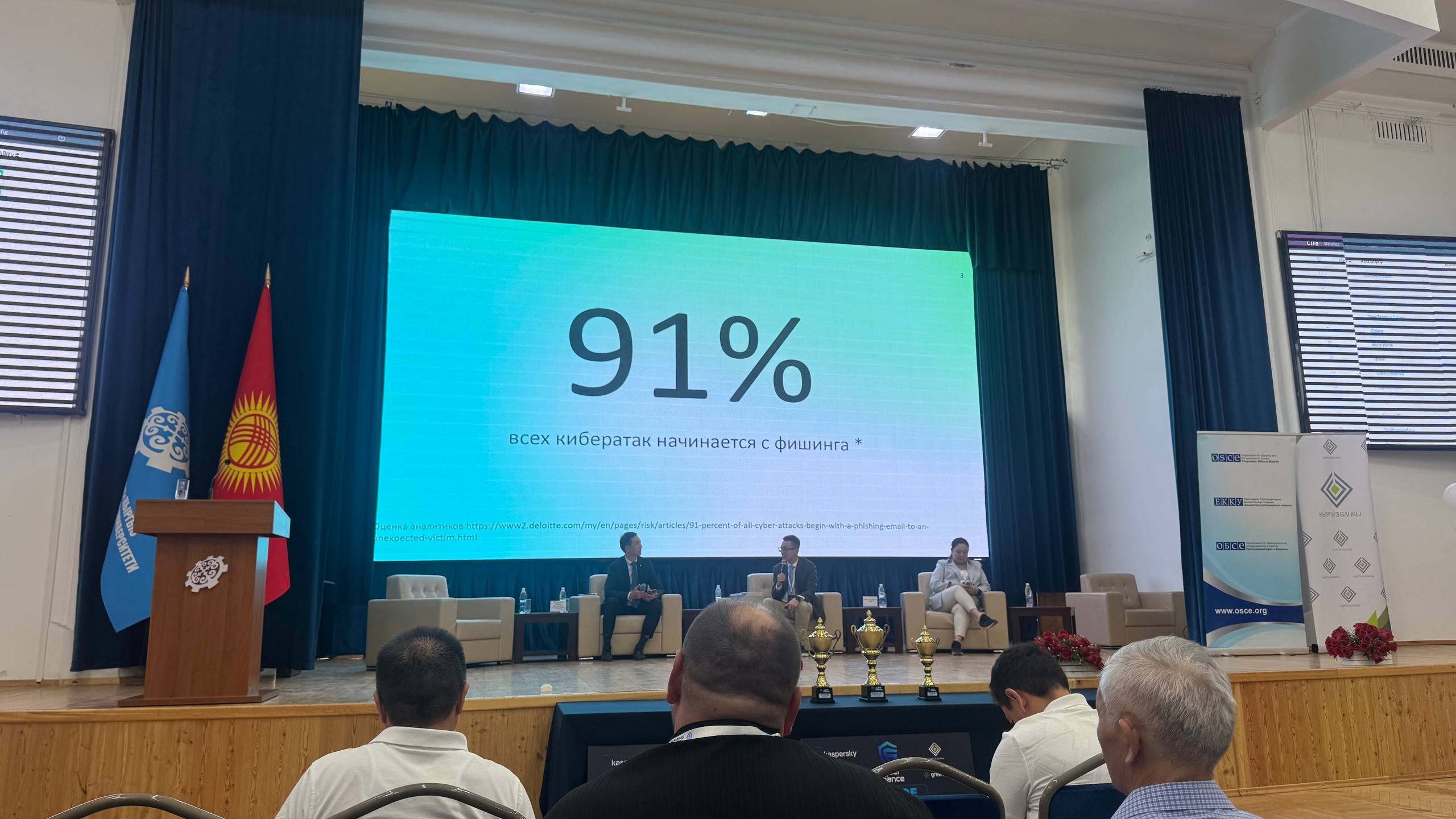
David Soldaev, a cybersecurity expert from Kaspersky Lab, presented statistics at the forum that vividly demonstrated how vulnerable the financial sector is to cyber threats today.
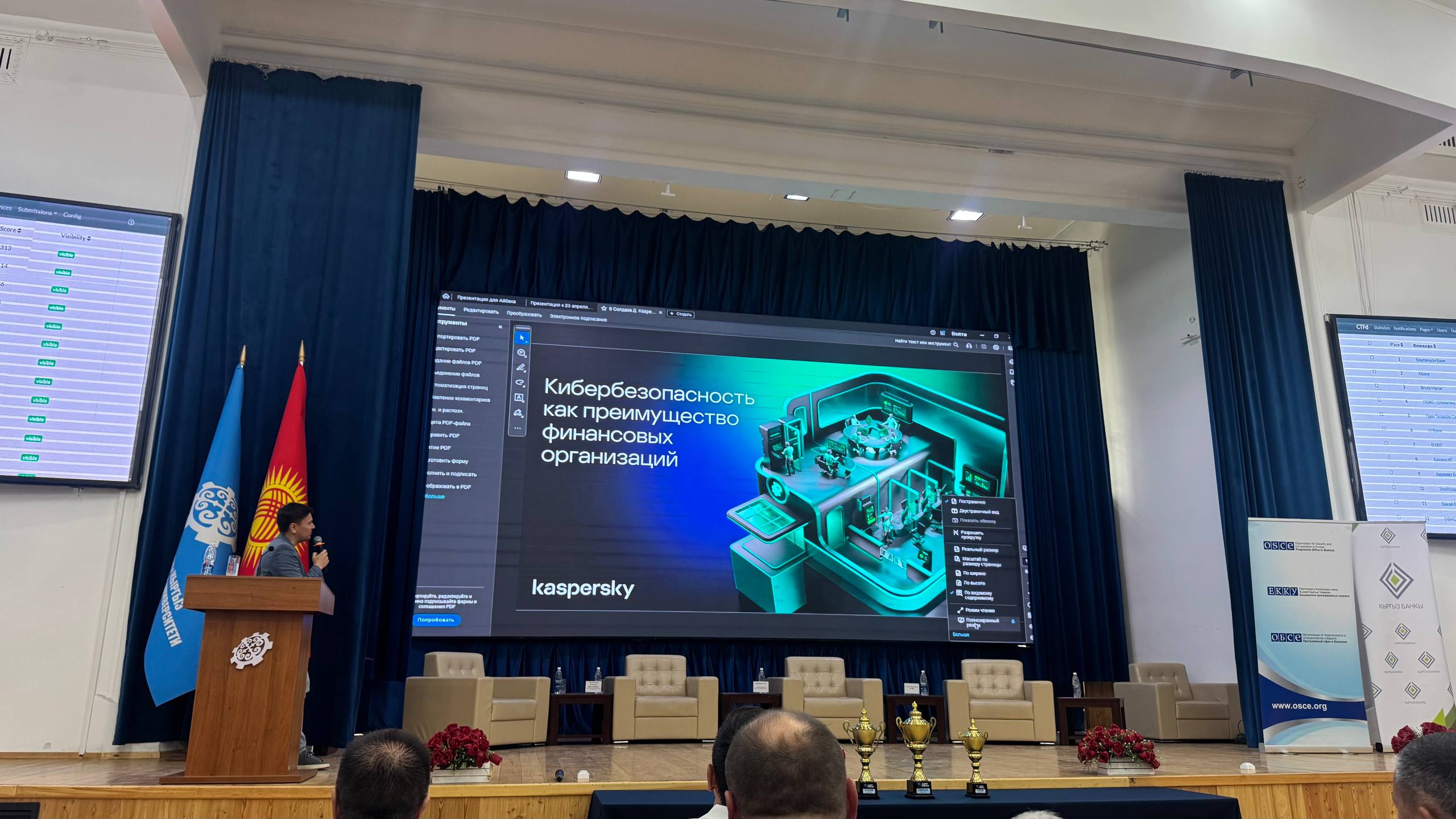
According to the company, in 2025 around 400,000 security alerts were recorded worldwide in the financial sector, and the average damage from a targeted attack for a single financial organization amounted to about 80 million rubles.
The expert also noted that:
"The financial industry is developing too rapidly, and organizations do not always manage to adapt their security systems to new threats,” — said the representative of Kaspersky Lab.
These figures are particularly important for Kyrgyzstan, where digital financial services are becoming increasingly popular, and mobile banking and online payments have already become part of everyday life.
While expert discussions were underway, Capture the Flag (CTF) competitions were held in parallel. Student teams and teams from Kyrgyz banks simulated real hacker attack scenarios, practiced identifying vulnerabilities and neutralizing cyber incidents, and competed for prizes.
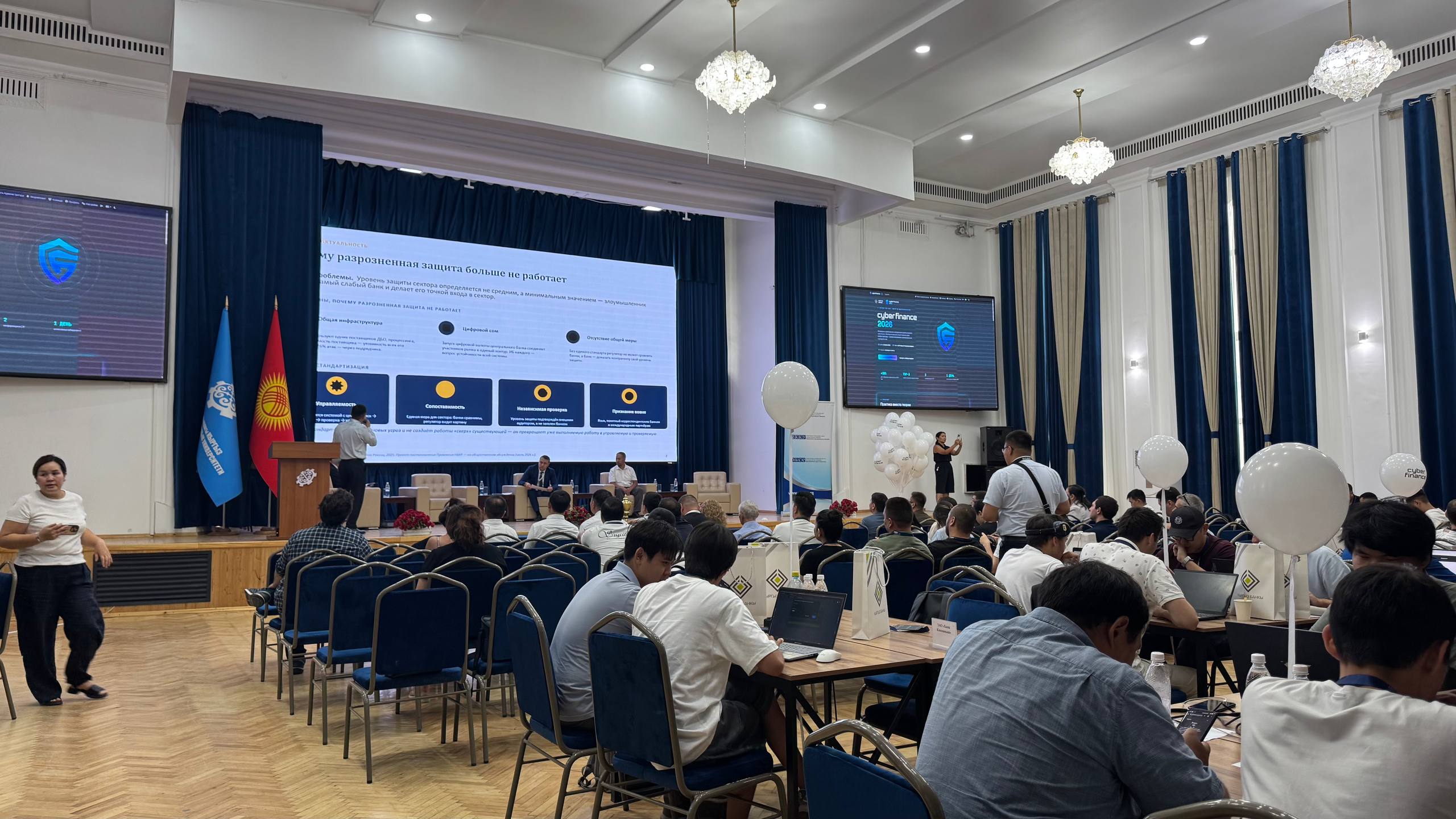
At the tables with laptops, there was an almost sporting atmosphere: some were rapidly typing commands, while others were discussing the vulnerabilities they had found.
Based on the competition results, the first and second places were taken by IT specialist teams from Kyrgyz banks. The third place went to the ‘POKS-1’ team, composed of students from the Kyrgyz State Technical University.
The winners received cash prizes: 100,000 KGS for first place, 80,000 for second, and 60,000 for third.
Here, among future IT specialists, the forum demonstrated its practical value: cybersecurity is not only about protecting banks, but also about training professionals who will be responsible for the security of the country’s digital economy in the coming years.
Just a few years ago, a cybersecurity specialist was seen merely as someone responsible for keeping IT systems running. Today, however, much more depends on their decisions. At stake are not only the stability of digital infrastructure, but also the protection of personal data, the security of financial transactions, and the trust of clients in banks and payment services.