

Published
03/28/2026, 18:36Over the past few years, the capital has been actively reforming its public transport system: route minibuses have been replaced with buses, trolleybuses have been phased out and replaced with electric buses. However, despite all these changes, city residents still continue to face heavy traffic congestion.
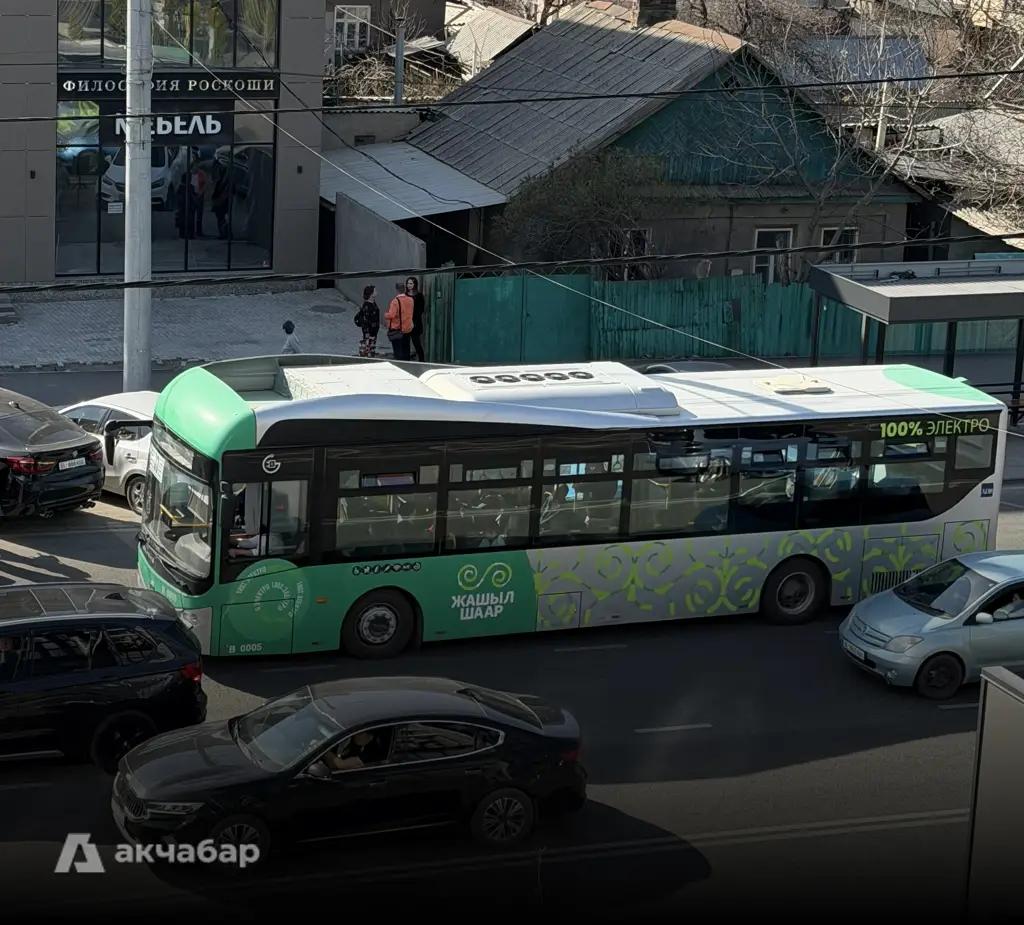
In recent years alone, more than 1,400 buses have been brought into Bishkek. The largest deliveries were in 2023 — 624 buses, and in 2024 — 585 buses. This year, 95 buses and 120 electric buses have also been delivered. Some of them truly have a high comfort level — they are low-floor buses, meaning even people with limited mobility can use them. This includes not only wheelchair users, but also mothers with children and elderly passengers. They are also equipped with air conditioning, which is particularly important during hot weather. These buses almost fully meet standards of inclusiveness, safety, environmental friendliness, and comfort. However, the majority of the fleet is still made up of buses with a low comfort level, often lacking even basic features such as air conditioning.
Urban researchers Alexey Zhuravlev and Altynai Nogoibaeva studied the bus routes and presented their findings to the city’s residents, who were then able to share their opinions on whether the system had become more convenient.
According to the study, as of February this year, more than 1,500 municipal buses and electric buses, 130 private buses, and 320 minibuses are operating in Bishkek. This does not include suburban minibuses that run from the outskirts of Bishkek to nearby settlements.
According to the Department of Transport, in 2025 buses alone carried about 226 million passengers in the capital. This figure also includes passengers from eco-passenger services, meaning both municipal and private buses.
However, despite all the measures taken by the city authorities, residents of Bishkek still have to spend a lot of time stuck in traffic while traveling from one place to another. The average speed of buses in the city is 18 kilometers per hour. The United Nations Economic Commission for Europe notes that if public transport moves too slowly, it loses its main advantage — the ability to get passengers to their destinations faster. When buses travel at an average speed of around 15–20 kilometers per hour, people are more likely to choose private cars, as there is simply no time advantage.
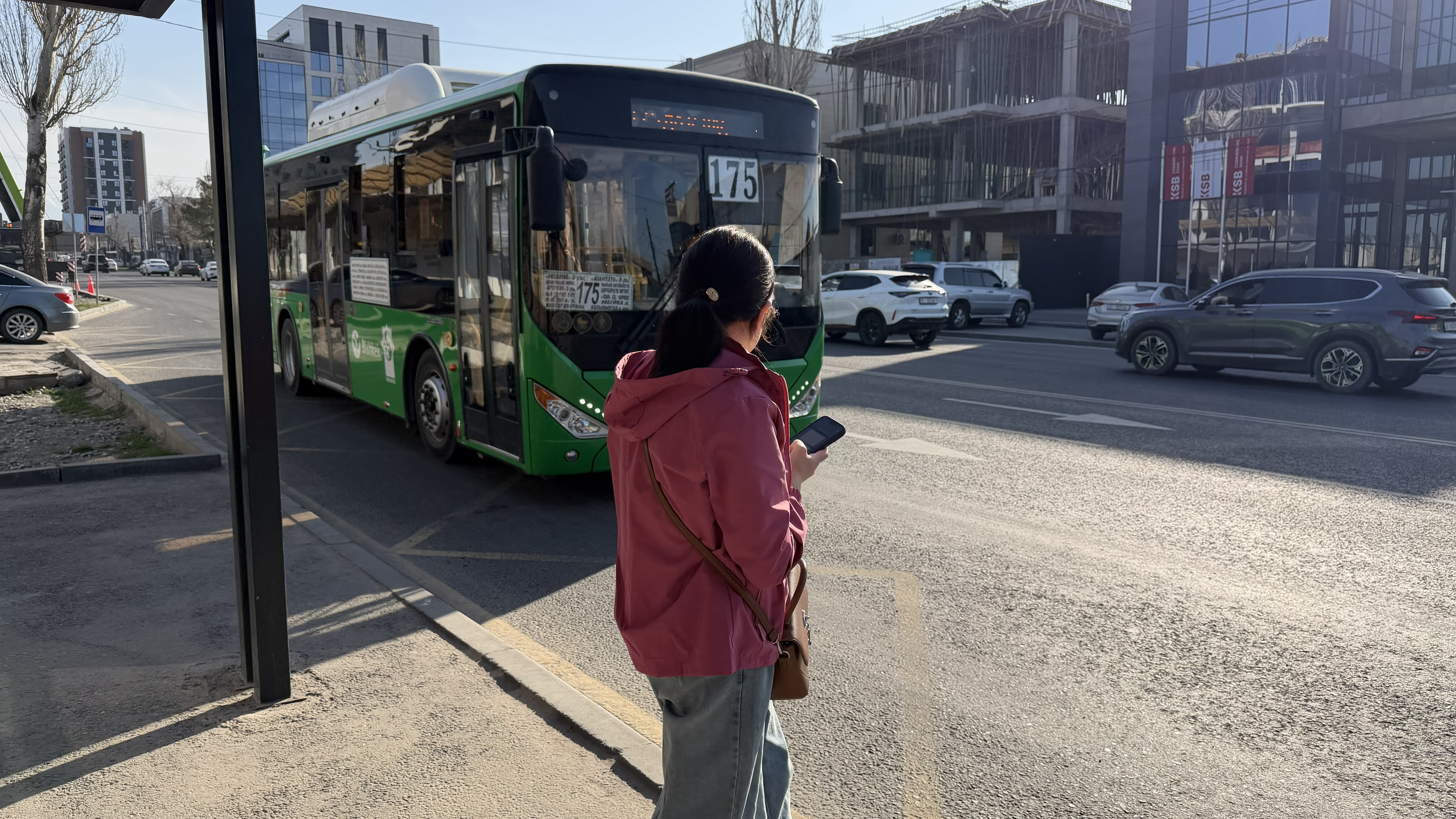
Moreover, according to the World Bank’s recommendations under the Urban Bus Toolkit project, public transport is considered accessible if bus stops are within walking distance for 75–90% of the city’s area. According to international standards, the nearest stop should be within walking distance — no more than 500 meters — which can be reached in 5–7 minutes. In the capital, however, researchers found that only 25% of the built-up area is covered by walking-accessible bus stops.
In many countries, traffic congestion has been addressed not just by building more roads, but through a systematic “shift” of people to public transport — by combining restrictions on private cars with improvements to buses and trams. Here are the most illustrative cases:
For example, the Colombian city of Bogotá is known for one of the largest transport reforms in the world, which began in the early 2000s with the introduction of the TransMilenio system, designed to “shift residents” to public transport. In the early 2000s, they also had private minibuses and buses operating chaotically, roads were congested, and transport was slow and unsafe.
So what did the city authorities do? They transformed the infrastructure. Dedicated bus lanes were built, along with special platform stations where passengers pay their fare in advance, so buses don’t lose time boarding. TransMilenio buses run on these dedicated lanes and avoid traffic jams. Over time, they replaced private minibuses, and drivers were integrated into the new system, becoming part of it rather than competing with it. Buses run more frequently, and fares are cheaper than the metro. As a result, hundreds of thousands of car users switched to buses.
In London, one of the strictest reforms was implemented — a congestion charge was introduced for entering the city center. Dedicated bus lanes were also created, and restrictions were placed on older vehicles. It turned out that traveling by bus to key destinations became cheaper and faster, which led to a reduction in traffic congestion and an increase in passengers.
The Chinese city of Shenzhen has fully converted its buses to electric and introduced digital systems, including apps and navigation. Most importantly, buses run frequently and adhere to the schedule, providing a comfortable experience for residents.
Currently, Shenzhen is actively developing public transport, in addition to the metro, to reduce traffic congestion and air pollution.
They realized that electric buses are a flexible mode of transport that can be scaled up faster than the metro. In addition, they provide quick access to new areas without the need for a private car. Most importantly, the buses run frequently and are equipped with Wi-Fi and air conditioning.
As for us, Bishkek has already invested significant resources in upgrading its transport system. There are more buses now, and they are more modern. However, key problems remain: low speeds, lack of priority on the roads, and weak road infrastructure. Without addressing these issues, new vehicles alone will not fundamentally change the situation.
As long as a bus is stuck in the same traffic jam as a car, it cannot serve as a real alternative. The real solution is a systemic overhaul: dedicated lanes, route optimization, increased frequency of service, digital monitoring, and genuine measures to ensure accessibility and comfort — not just the purchase of new vehicles.