

Published
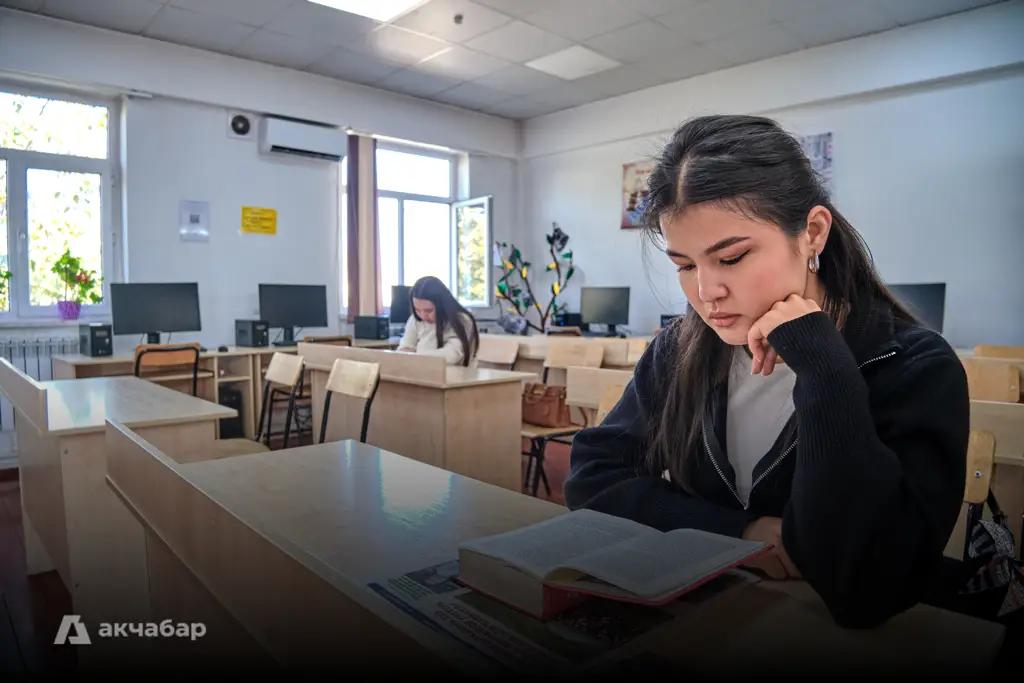
12/04/2025, 17:23A few years ago, a Center of Excellence was established at the Industrial and Pedagogical College of Osh State University with the support of the Asian Development Bank’s “Skills for Inclusive Growth” project. Journalists were shown how the project is currently operating and what results it is delivering.
Students at the Industrial and Pedagogical College in Osh now have the opportunity to learn not only by sitting at desks and attending lectures, but also by applying what they have learned in practice and earning money. To facilitate this, a training and production complex was established within the Center of Excellence (CoE). The training and production complex is a sewing workshop where college students receive on-the-job training while producing real products.
In the sewing workshop, the monotonous hum of sewing machines fills the air as the girls sew medical gowns for students of the medical faculty. And, by the way, the students have no shortage of orders. Previously, they made curtains for all the facilities of Osh State University, of which there are more than thirty in Osh. When colleagues learned that the college had set up a sewing workshop, they decided to support it and placed an order for curtains. The workshop can also produce workwear, aprons, and headscarves.
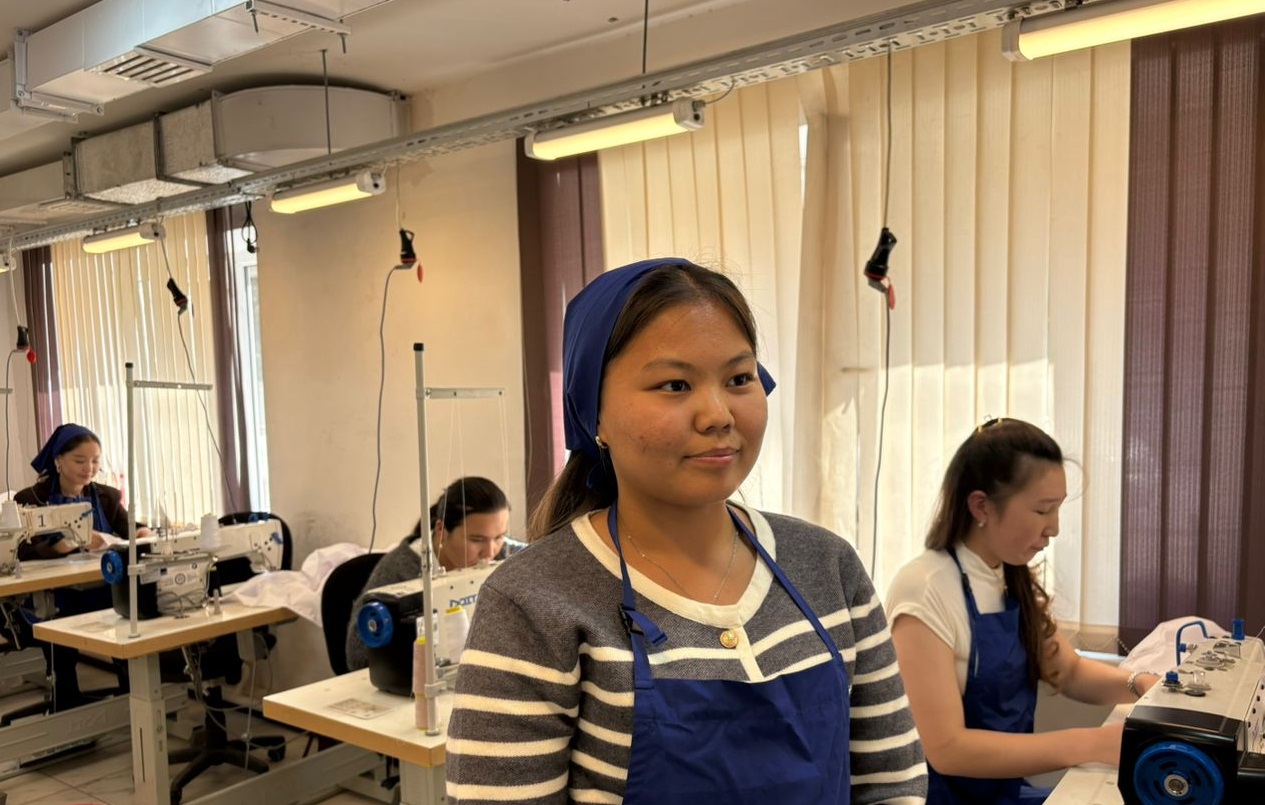
Aisezim is a third-year student at the Faculty of Garment Design, Modeling and Technology.
“Last year, I learned everything I need for my current work. I am also studying the automated clothing design system online. Classes last until noon, and after lessons I can work in the training and production complex. I have learned a lot here, and in the future I dream of designing clothing models,” — the young woman said.
She also mentioned that the tuition fee at her faculty this year is 25,000 KGS, and thanks to her work, she is able to pay it herself.
Mirlan Manashov, Director of the Industrial and Pedagogical College at Osh State University, spoke about the college’s areas of work and the implementation of projects with the support of the Asian Development Bank (ADB).
The college has 1,617 students enrolled, studying in seven fields: primary school teaching; preschool education; software for computer and automated systems; garment design, modeling and technology; design; physical education; social work. In addition, the college has a second academic building. A total of 137 teachers work at the college.
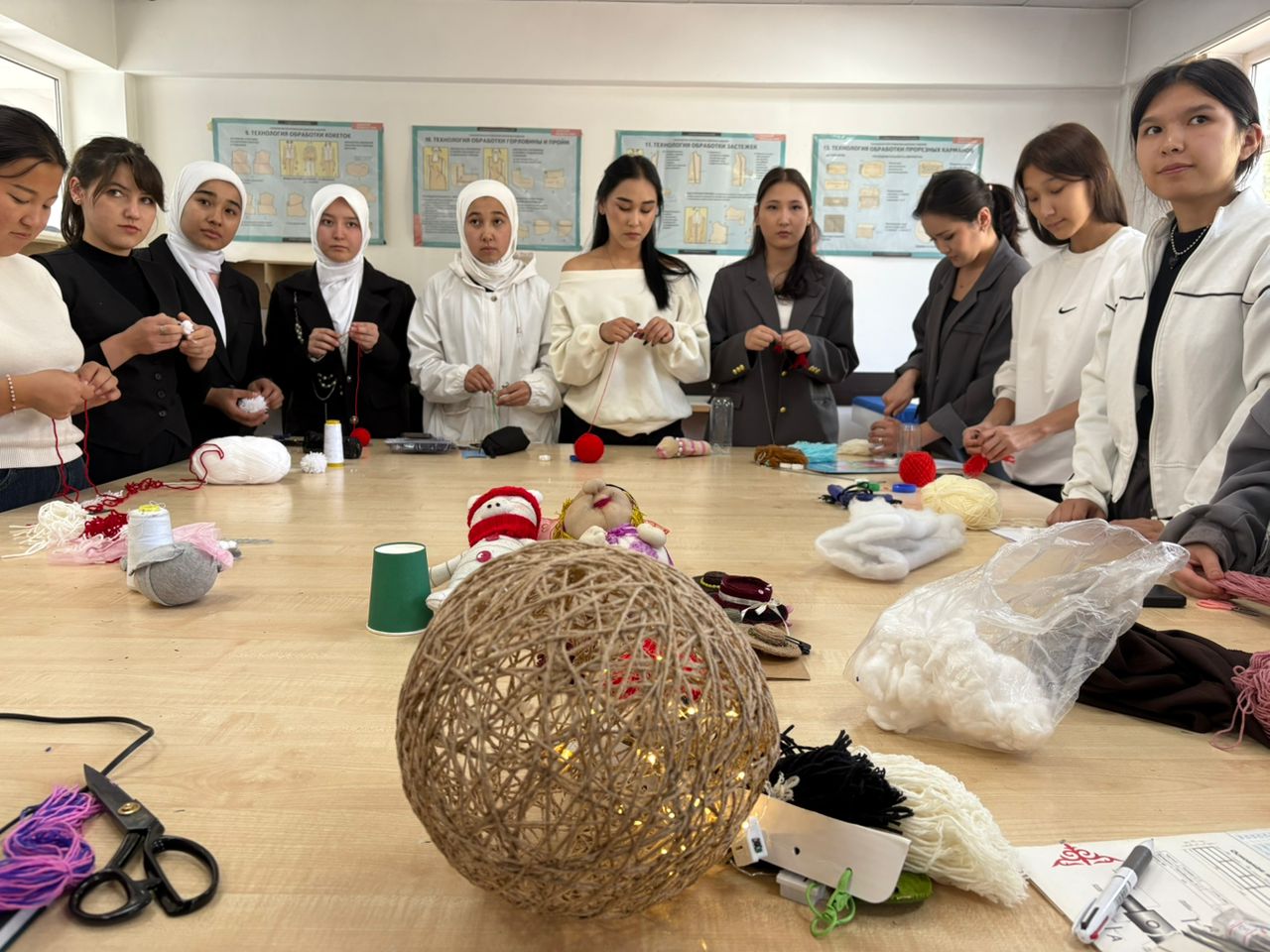
The college has a shop showcasing products made by students, including bags, jackets, T-shirts, and caps. As well as jewelry made from beads and stones. In addition, bedding sets are also sold here. By the way, the prices are reasonable, and the quality is comparable to branded items.

By the way, the ADB project “Sector Development Program: Skills for Inclusive Growth” was implemented by the Ministry of Education and Science and covered 34 educational institutions across the country, eight of which now have such Centers of Excellence. The centers were established based on an analysis of the regional labor market, taking into account which specialties are most in demand in each area.
In addition to Osh province, such Centers of Excellence are also located in colleges in Jalal-Abad, Chui, Batken, Naryn, and Issyk-Kul provinces.
In Issyk-Kul province, for example, the Industrial and Pedagogical College in Balykchy was selected, and the project focuses on developing tourism and software for automated systems, which are in demand in the local labor market. The college has a hotel where students welcome local and international tourists. There is also a workshop providing computer repair services.
Although the hotel is located within the college, it has everything needed for a comfortable stay: cozy rooms, lounges, and even a room showcasing national traditions and customs. It is therefore no surprise that this hotel often ranks among the top in guest reviews on Booking.com.
The Naryn Agro-Economic College has its own veterinary clinic, where emergency surgeries can be performed, ultrasounds conducted, and pets vaccinated. There is also a workshop for producing dumplings.
At the Center of Excellence of the Kara-Balta Technical and Economic College, a training and production complex has also been established, where on-the-job training is now applied for the specialty “Operation of Transport Electrical Equipment and Automation.” This has undoubtedly brought significant changes to the educational process, enriching it with practical experience, improving students’ professional skills, and strengthening ties with employers. In their free time, the college operates a car service station for passenger vehicles, and the profits from this activity are used to improve the college’s material and technical resources.
By the way, the project also created opportunities for teacher professional development, and nearly 6,000 staff members from colleges and vocational schools in various regions have already improved their skills and gained new experience. A total of 904 teachers obtained pedagogical qualifications, and around 100 teachers completed formal advanced training courses.
Vocational education is closely linked to the labor market and therefore constantly faces significant challenges due to the changing demand in the labor market.
The goal of the project is to train entry- and mid-level specialists who are in demand in the labor market and to increase the impact of practical skills.
As part of the project, 55,300 square meters of college and vocational lyceum buildings and facilities were renovated. A total of 686 million KGS was spent on repairs and modernization.
In addition, training and production equipment was supplied — 3,800 units worth 212 million KGS. Office equipment was also provided — 5,765 units worth 116 million KGS. Furniture was supplied as well — 11,230 items worth 81 million KGS.
The Centers of Excellence have become skill validation centers. The first-ever skills validation in Kyrgyzstan took place at the Center of Excellence of the Osh Industrial and Pedagogical College.

An independent study showed that employer satisfaction with the quality of graduates has increased by 25% over the past five years.