

Published
05/12/2026, 17:31Central Asia is gradually transforming its tourism image. While just a few years ago the region was mainly associated with budget routes for backpackers — trekking, mountains, and hostels — today the countries of the region are actively developing infrastructure aimed at a broader segment of travelers, including high-income tourists.
The information is taken from a study conducted by the IQ KNOWLEDGE BASE team of Commonwealth Partnership UZBEKISTAN. The project was led by Aleksey Letunovsky, with Katya Styles and Anastasia Rogova serving as analysts.
Just 5–7 years ago, much of the region’s tourism infrastructure appeared rather limited. Outside the capitals, there were numerous local hotels, small family-run establishments, and guesthouses — services that largely fell short of international standards.
Today, Central Asia is increasingly moving away from the image of a "cheap destination". Instead, the region is shaping a market for full-fledged, comfortable leisure — with international hotel chains, luxury accommodations, premium services, and tourists willing to pay not only for experiences but also for quality.
By 2025, the branded hotel capacity in Central Asia reached 12,743 rooms. Compared to 2020, the market has grown by almost 90%.
The distribution of hotel capacity is as follows:
For the hotel industry, this is a very rapid pace. Moreover, what matters is not only the number of new hotels, but also who exactly is entering the market.
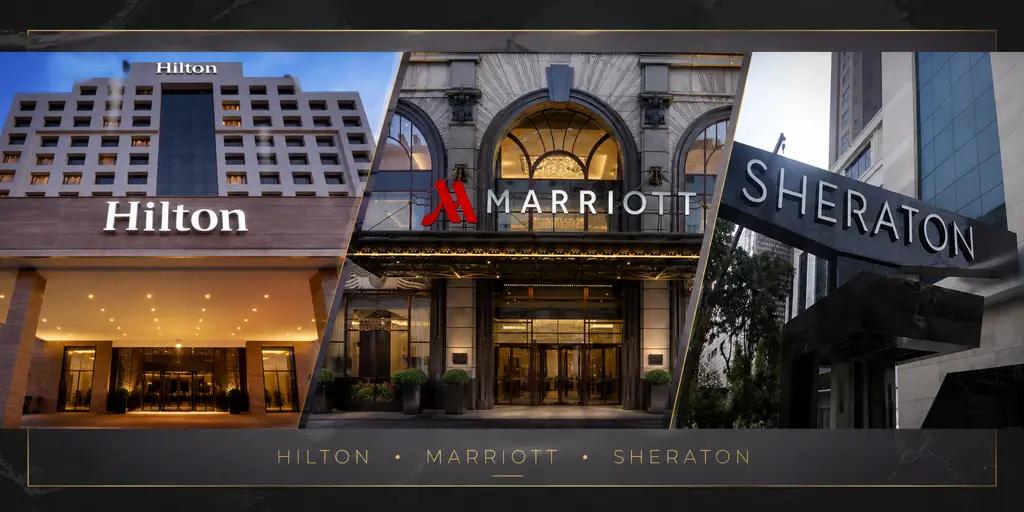
In recent years, Central Asia has become a zone of active expansion for the world’s largest hotel chains:
International hotel chains enter markets where there is stable demand for quality service, upscale rooms, and comfortable infrastructure. The region is beginning to attract more affluent tourists, as the level of service provided can compete with other destinations.
International hotel chains have begun expanding not only into capital cities, but also into tourist areas:
This means that the region is beginning to target an audience that wants to combine travel with comfort. For example, a person may come to the mountains of Kyrgyzstan or to historic Samarkand, yet stay at a Hyatt, Hilton, or Sheraton.
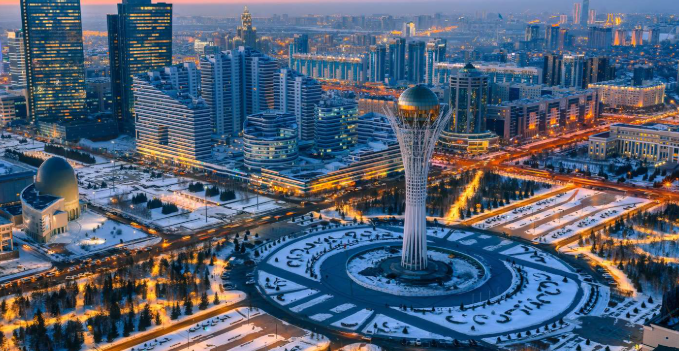
Kazakhstan remains the most developed hotel market in the region. The country accounts for about 57% of all branded hotel capacity in Central Asia — roughly 7,200 rooms. Moreover, Kazakhstan is focusing less on traditional leisure tourism and more on the business and premium segments, with Astana and Almaty as the main centers.
International forums, summits, business events, and major corporate meetings are held here. Unlike seasonal tourism, business travel provides hotels with more stable year‑round occupancy. This is precisely why international hotel chains are actively expanding in Kazakhstan.
Essentially, Kazakhstan has carved out its own niche and created a comfortable infrastructure for business, international events, and affluent tourists.
This is clearly reflected in the prices (per person):
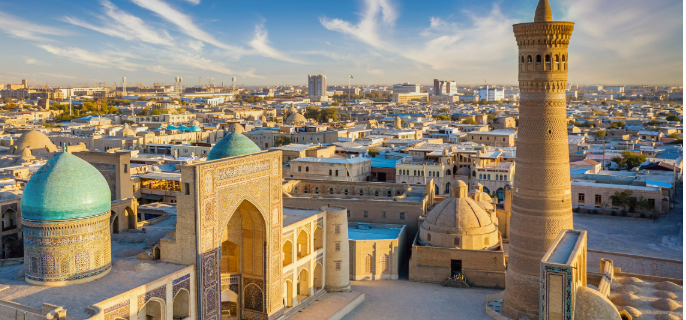
If Kazakhstan is the leader in terms of market scale, then Uzbekistan today is the fastest‑growing hotel market in Central Asia.
Since 2020, the country’s hotel capacity has grown by 272%, reaching 4,473 rooms. This growth is largely due to Uzbekistan’s success in transforming cultural tourism into a fully fledged international product. Previously, Samarkand and Bukhara were perceived mainly as destinations for short excursion trips with relatively inexpensive accommodation.
The situation is now changing. International hotel brands and upscale complexes are appearing next to historic landmarks. As a result, every tourist can afford to stay longer, enjoying not only cultural excursions but also strolling through the city and immersing themselves in an oriental fairy tale.
For Central Asia, this already represents the level of premium international tourism. At the same time, Tashkent remains one of the most competitive markets in the region. Due to the rapid growth of hotel supply, prices here are often lower than in less developed markets.
Prices per person:
Uzbekistan is now simultaneously expanding both mass tourism and the more upscale segment.
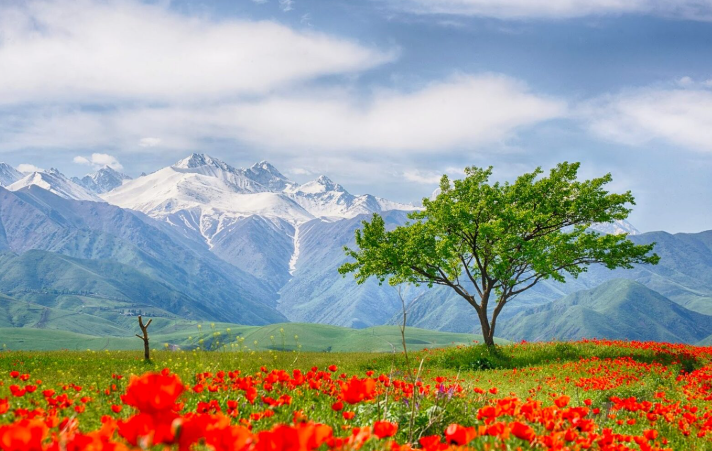
Kyrgyzstan still remains a relatively small hotel market — about 585 branded rooms. Yet changes are noticeable here as well. For a long time, the country was mainly associated with budget eco‑tourism, seasonal holidays at Issyk‑Kul, trekking and mountain tourism, and inexpensive guesthouses. Foreign visitors came primarily for nature and low prices.
But now the market is gradually shifting toward more comfortable leisure.
This is evident from several changes in the market. International hotel chains are actively entering the region, resort infrastructure is developing, premium hotels are emerging, and with this comes growing interest from foreign tourists, who now arrive not only for nature and low prices but also for high‑level, comfortable leisure.
Today, Sheraton, Hyatt Regency, and Novotel are already operating in Bishkek — a clear sign that the market is beginning to target wealthier tourists and the business segment.
Prices are also gradually approaching international levels (per person):
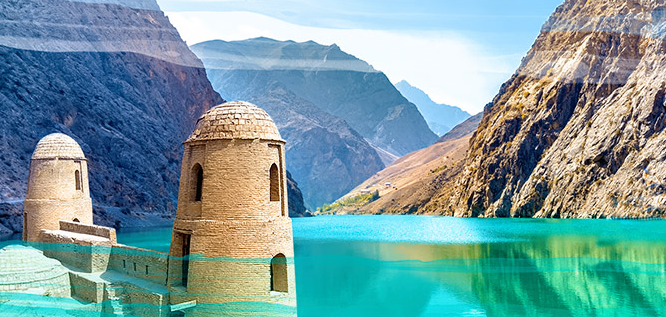
Tajikistan remains the smallest hotel market in the region — about 485 branded rooms. But here it is especially evident how the shortage of quality infrastructure affects prices.
For example, per person:
High prices here are not explained by massive tourist flows, but rather by limited supply. When there are few quality international hotels, they can maintain higher rates. In other words, Tajikistan’s market remains niche and less competitive.
In Central Asia, the premium hotel segment is growing, business tourism is developing, and service standards are rising. More and more tourists are focusing on comfort and gastronomic experiences.
The region is beginning to attract a wealthier audience — business travelers and guests from Europe, China, Turkey, and the USA, for whom quality and service are essential.
Thus, Central Asia is gradually moving away from the image of a budget destination and is strengthening its position as a full-fledged player in the international tourism market.