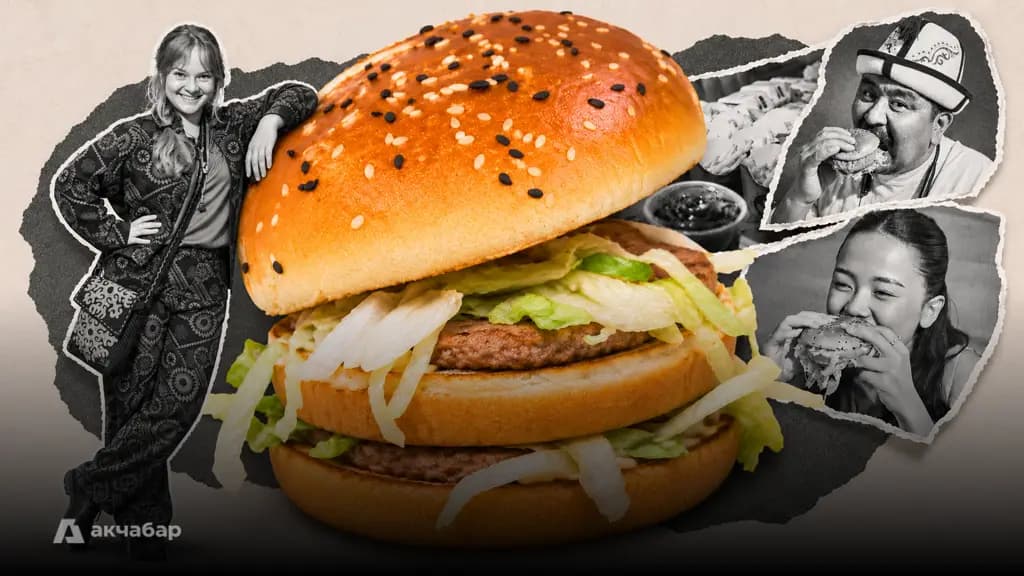


Published
11/06/2026, 15:49Around 200 employees responded to an internal announcement seeking team members for the launch of Vkusno i Tochka in Kyrgyzstan. The support team includes more than 10 management-level specialists. According to Tatyana Yasinovskaya, Vice President for Human Resources Development and Training at Vkusno i Tochka, a significant share of them are citizens of Kyrgyzstan currently working in Russia who are planning to return home.
For these individuals, the opening of the restaurants represents an opportunity to continue their careers in their home country, applying the experience they have gained over years of working abroad.
We are accustomed to measuring the contribution of migrant workers by the amount of money they send home. They send remittances, support their families, boost household consumption, and contribute to the foreign exchange market. In reality, however, these are trained professionals who have learned how to manage teams, train employees, oversee quality standards, and take responsibility for results. Now, those skills can be put to use at home, as the future restaurants will need managers and mentors.
This is perhaps where the conversation about Vkusno i Tochka should begin. Yet any discussion of the new chain inevitably brings us back to another name, one that people in Kyrgyzstan had been waiting to see for many years.
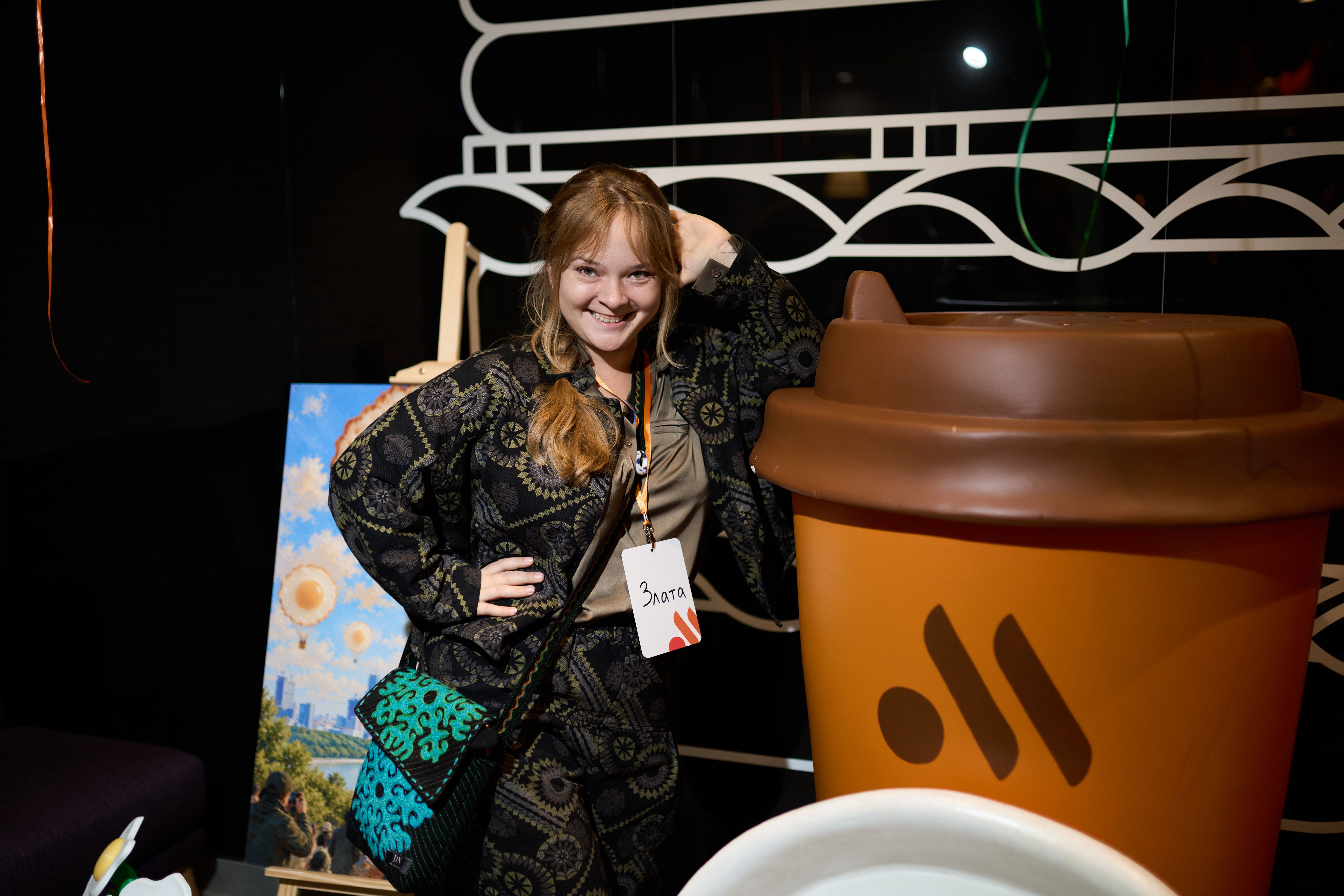
Many had hoped for McDonald's to enter the market. The familiar golden arches were seen almost as a sign that Kyrgyzstan had finally caught the attention of global business. A burger represented more than fast food. It embodied expectations of a major international brand, the kind of service people knew from American movies, and a sense that Bishkek belonged to the same consumer landscape as other world capitals.
In Central Asia, McDonald’s chose to focus on Kazakhstan. The first restaurant opened in Astana in March 2016. However, as early as 2017, company representatives dismissed speculation about further expansion across the region. Then, in January 2023, the Kazakh franchise ceased operating under the American brand. The official reason cited was disruptions in product supply chains.
Now, it is Vkusno i Tochka that is entering its first foreign market in the region, and it is starting with Kyrgyzstan. The chain’s management has repeatedly stated that, under its agreement with the corporation, Vkusno i Tochka cannot operate in markets where McDonald’s is present.
But the connection between the two companies goes beyond their choice of markets. To understand what kind of business is now entering Kyrgyzstan, it is worth looking back at how it came into being.

On May 19, 2022, McDonald’s announced an agreement to sell its Russian business to Alexander Govor. A long-time franchise partner of the corporation, Govor had operated 25 McDonald’s restaurants in Siberia since 2015. Under the terms of the deal, the business was required to continue operating under a new brand.
The published terms of the deal required that employees be retained for at least two years under comparable conditions of employment. The buyer also assumed responsibility for financing payroll until the transaction was completed, as well as meeting obligations to suppliers, landlords, and utility providers.
The golden arches, the name, and the trademarks remained with the corporation. The Russian team acquired an operating business that it would have to develop independently: create a brand, redesign the packaging, adapt the menu, and rebuild the technological infrastructure.
Changing the letters above the door is far easier than ensuring the operation of cash registers, product supplies, staff training, and consistent quality across hundreds of restaurants. According to the company, after the relaunch it had to develop its own point-of-sale systems, data management, cybersecurity capabilities, and demand forecasting tools.

The extent to which the company has succeeded in building these capabilities can be seen in the expansion of its network. According to the company, it operated around 850 restaurants in 2022, and this year Vkusno i Tochka opened its 1,000th outlet in Russia. The next stage will be expansion beyond Russia’s borders.
In Kyrgyzstan, the franchise will be developed by the local company Alcrest Food, which has signed an agreement with Sistema PBO LLC. According to the announced plans, the company intends to open more than 15 restaurants over the next five years and create around 750 jobs. The first restaurant is scheduled to open by the end of 2026.
Seven hundred and fifty jobs provide a tangible measure of the project's scale. Behind that figure are future wages, workforce training, tax payments, and social security contributions.
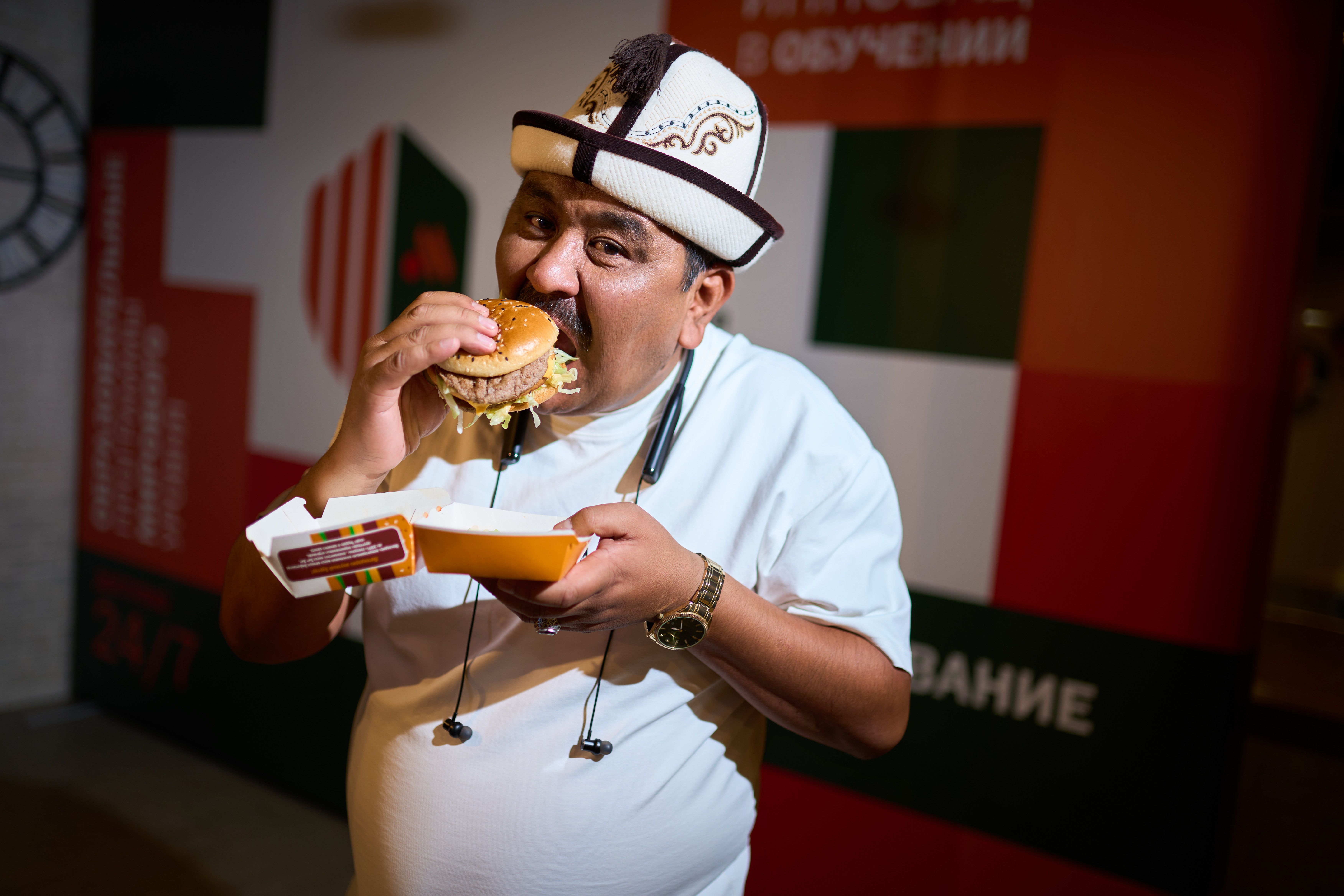
Stories of labour migration are familiar to many families in Kyrgyzstan. For this reason, the opportunity to build a career at home while maintaining professional prospects deserves particular attention. The launch of the chain creates exactly such an opportunity for specialists who already work in its Russian restaurants and are considering returning to Kyrgyzstan.
The support team described by Tatiana Yasinovskaya is expected to assist with the opening of the first restaurant, transfer accumulated expertise, and take part in training local employees.
To see what future employees will be trained for, I traveled to Moscow as a journalist with Akchabar and visited the chain’s restaurants.

My introduction to the kitchen began even before I set foot in it. To access the production area, I had to undergo a medical examination and obtain a health certificate. Even a journalistic visit requires compliance with food safety standards.
In the kitchen itself, staff wear hairnets, gowns, and gloves. Yet even familiar sanitation procedures have their own nuances. For example, a single pair of gloves is not sufficient when handling a raw meat patty. A second pair must be worn over the first.
“We handle raw products only with a second pair of gloves, even though we are already wearing one pair,” — explains an employee, demonstrating the frozen beef patties.
Then technology takes over. The patties are cooked on clamshell grills with preset time and temperature settings. They are then transferred to a heated holding cabinet, where a timer starts automatically on the display. Large patties have a holding time of ten minutes. If they are not used in an order within that period, the product is discarded.
French fries follow their own schedule: three minutes for frying and five minutes for serving the finished portion. If the fries are not sold within that time, they are discarded as food waste. Seasonings are not added by eye either. Patties are seasoned using a dedicated dispenser, while fries have a separate salt shaker. A single turn of the shaker dispenses 2.5 grams of salt.
Virtually every task follows a prescribed procedure. Employees know exactly how long each product takes to prepare, how long it can be held, and how much seasoning should be used. Compliance with these standards is supported by the equipment, timers, and established operating procedures.
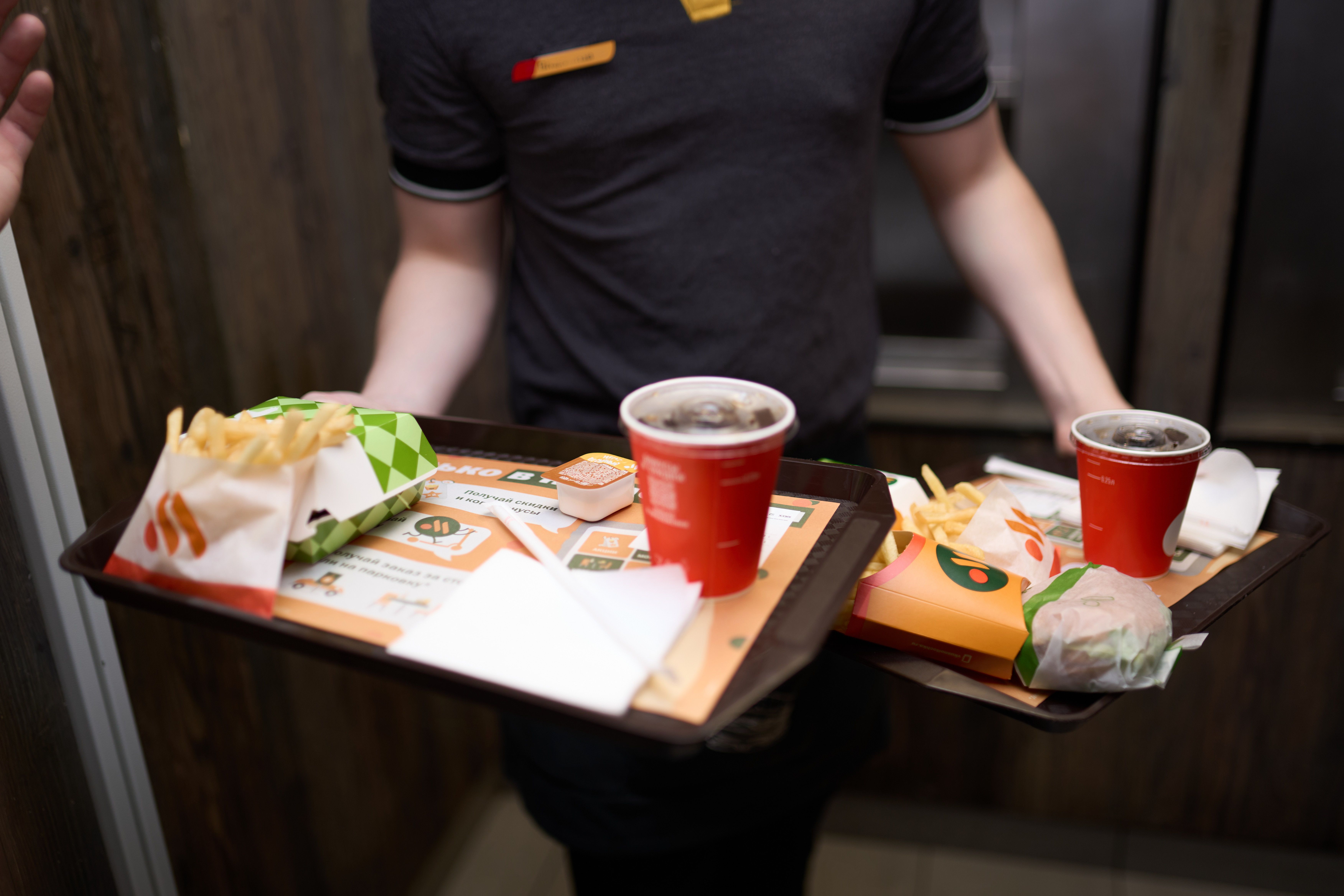
However, these strict holding-time requirements create another challenge for the restaurant: preparing enough food to serve orders quickly while minimizing waste. To address this, the Production system is used to analyze sales patterns and help forecast demand.
“We need to make sure guests do not have to wait and that products are not wasted unnecessarily. Production helps us forecast how much of each product we will need,” — explains an employee of the company.
Behind an ordinary order of a burger or French fries lies an entire system: demand forecasting determines how much food needs to be prepared, equipment sets the cooking parameters, and timers monitor holding times.
This discipline extends beyond the kitchen to relationships with suppliers. It is here that an opportunity emerges for another group of stakeholders in the project: producers in Kyrgyzstan.
The chain will require food products, packaging, as well as transport and technical services. For a local company, a contract with such a buyer could mean a steady flow of orders and more predictable production planning. In return, suppliers will need to meet requirements for quality, food safety, and reliability of supply.
Based on what was observed in Moscow, supplier selection and production audits are an integral part of the chain’s day-to-day operations. Potential partners in Kyrgyzstan will also need to prepare to meet these requirements. The share of procurement that will ultimately come from local producers remains unclear, making it too early to estimate the financial impact. What is already clear, however, is that businesses will have a concrete buyer with whom they can begin discussing the terms of future cooperation.
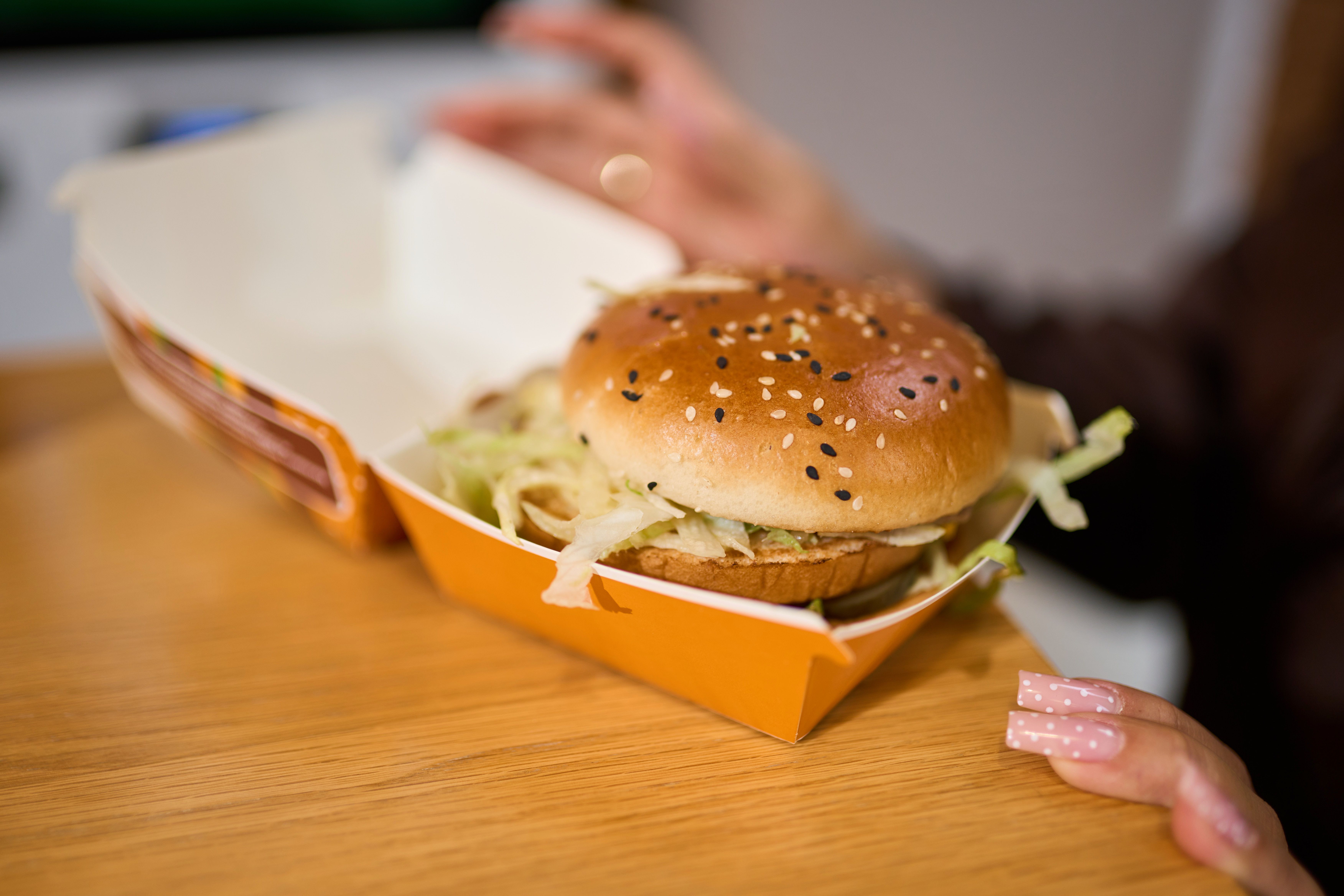
For visitors, this entire system is meant to translate into simple, tangible benefits: good food, reasonable prices, fast service, and a clean dining environment. The future restaurants in Bishkek will ultimately have to prove the quality of their operations to local customers.
And the debate over whether the Big Hit is really like the Big Mac, and which one tastes better, will likely continue around the dining tables. According to the company, the Big Hit has its own signature sauce. But the final verdict will be left to the customers.