

Published
07/18/2026, 17:48Summers in Bishkek increasingly test the resilience of the city’s residents. Abnormal heat, high air temperatures, and stifling humidity have turned air conditioners from a luxury into a near necessity. In apartments, offices, shops, and government institutions, climate control equipment runs almost continuously.
Yet behind the coolness indoors lies another problem — rising electricity consumption and increased pressure on the power grid. Moreover, incorrectly chosen equipment may prove more costly for the owner in the long term and add further impact on the climate.
Today, when purchasing an air conditioner, most consumers focus primarily on the price. However, the main expenses arise after installation — during operation.
The main mistake buyers make is evaluating equipment solely by its initial cost. The difference between a standard and a more energy-efficient air conditioner at purchase may amount to several thousand soms, but over years of operation this difference is completely offset by electricity expenses.
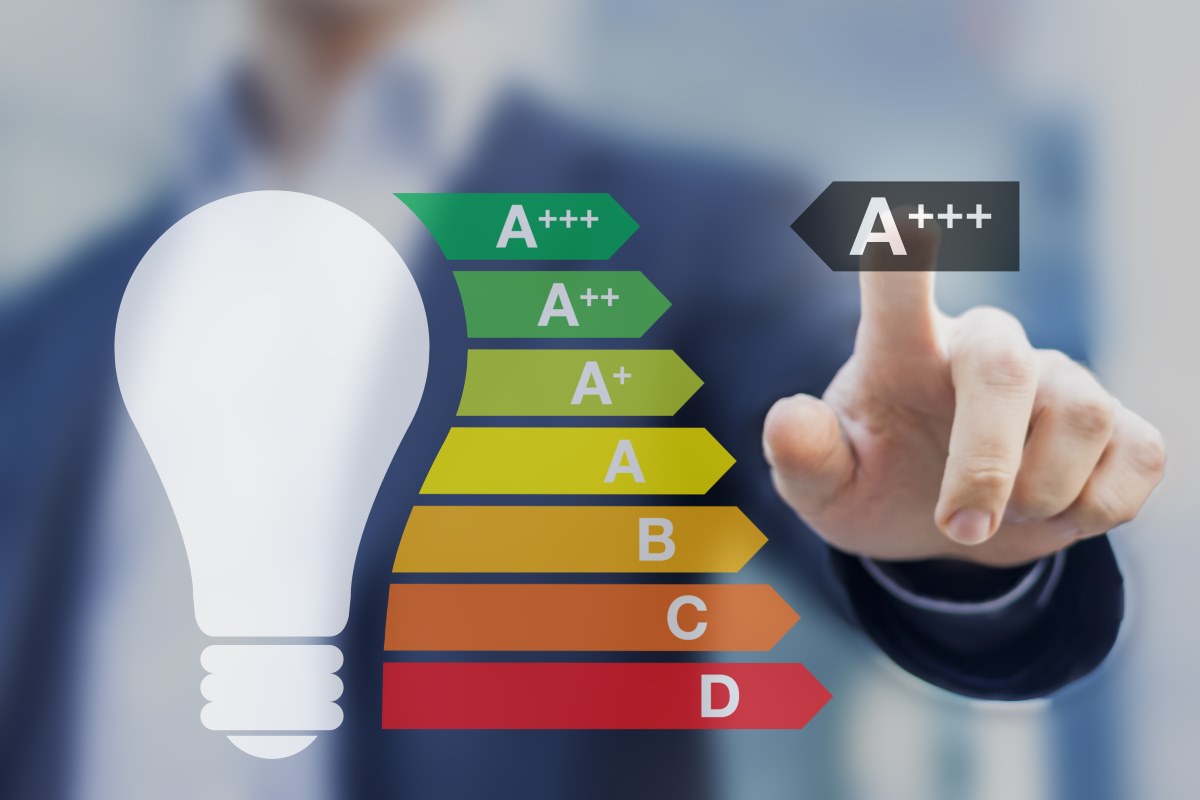
For example, a Yasin air conditioner with energy efficiency class A can be purchased in Bishkek for 45,000 KGS, while a Hansa model with energy efficiency class A+++ costs just over 55,000 KGS. The price difference between the two units is about 10,000 KGS. However, the A+++ model consumes approximately 30–50% less electricity than the class A unit at the same performance level. If the air conditioner is used regularly (for instance, 6–8 hours a day in summer and additionally for heating in the off-season), the savings on electricity can amount to several thousand soms per year. In this case, the higher price of the Hansa model may pay off in about 4–7 years, after which the owner will enjoy pure savings on electricity bills.
A conventional air conditioner operates on the principle of constant switching on and off. When the indoor temperature rises, the compressor restarts at full power, causing spikes in electricity consumption. Inverter models work differently — they adjust power smoothly and maintain the set temperature without repeated starts. As a result, energy consumption decreases and the load on the power grid is reduced. In other words, equipment that seems more expensive at the outset may ultimately prove more cost-effective.
Rising temperatures directly affect energy consumption. When tens of thousands of residents switch on air conditioners simultaneously, the load on the national power grid increases.
A recent large-scale power outage affecting Bishkek and several other regions of Kyrgyzstan has once again drawn attention to the resilience of the energy system. While the causes of such incidents may vary and require official assessment, these events highlight the importance of reducing excessive strain on the grid, especially during periods of extreme heat and peak electricity demand. The use of more energy-efficient equipment can be one of the factors contributing to alleviating this burden.
For Kyrgyzstan, this issue is particularly relevant. Although the republic is among the countries with a relatively small contribution to global carbon emissions, the consequences of climate change could seriously affect its economy. Rising temperatures, shifts in precipitation patterns, and declining water resources pose risks to energy, agriculture, and other sectors.
Experts emphasize that Kyrgyzstan produces less than 1% of global CO₂ emissions, yet it is precisely such countries that may feel the consequences of climate change more acutely than others.
When choosing an air conditioner, it is important to look not only at the energy efficiency class — such as labels A, A+ or A++ — but also at the substance used inside the equipment.
At first glance, this may seem like a technical detail, yet such decisions on a national scale affect overall energy consumption and environmental impact.
The challenge of choosing efficient equipment concerns not only ordinary consumers. Large volumes of climate control systems are purchased by public institutions — schools, hospitals, and administrative buildings.
According to experts, public procurement should gradually move away from the principle of lowest price.
Today, equipment chosen solely based on price may lead to higher expenses in the future. The government may purchase a cheap air conditioner, but then pays annually for increased electricity consumption, maintenance, and repairs.
Experts propose introducing the principle of green procurement — where equipment is selected not only based on price but also on its entire life cycle.
Such an approach involves assessing: energy efficiency; environmental characteristics; refrigerants used; maintenance costs; and future energy consumption.

An air conditioner that is more expensive at the time of purchase may pay off more quickly through electricity savings. When used on a large scale, such savings can reduce the load on the national power system.
Such an approach has long been applied in developed countries. For example, in Japan, energy efficiency has become part of everyday culture: businesses and shops strive not to consume energy where it is unnecessary, regulate temperature settings, and use technologies that help reduce costs.
For Kyrgyzstan, the transition to such practices is becoming increasingly relevant.
Today, an air conditioner is no longer just a household appliance that helps endure the heat. It is part of a larger system connected to energy, the economy, and the environment.
In the context of rising temperatures, the choice of equipment becomes not only an individual decision for each consumer but also a factor that influences the future energy consumption of the country.