

Published
04/03/2026, 17:40Spring is the time when the land awakens, and with it begins the most important work of the year. The future harvest is determined in the fields, and how timely and properly fertilizers are applied affects not only the prosperity of individual farms, but also the food security of the entire country.
This year, spring fieldwork in Kyrgyzstan is taking place under conditions where the usual course of events has been disrupted. Tensions around Iran and difficulties with shipping through the Strait of Hormuz have also affected Kyrgyz farmers.
At first glance, the Republic does not procure fertilizers directly from these regions. However, modern agriculture, like the broader economy, has long been part of a global supply chain, where changes in one link inevitably affect another.
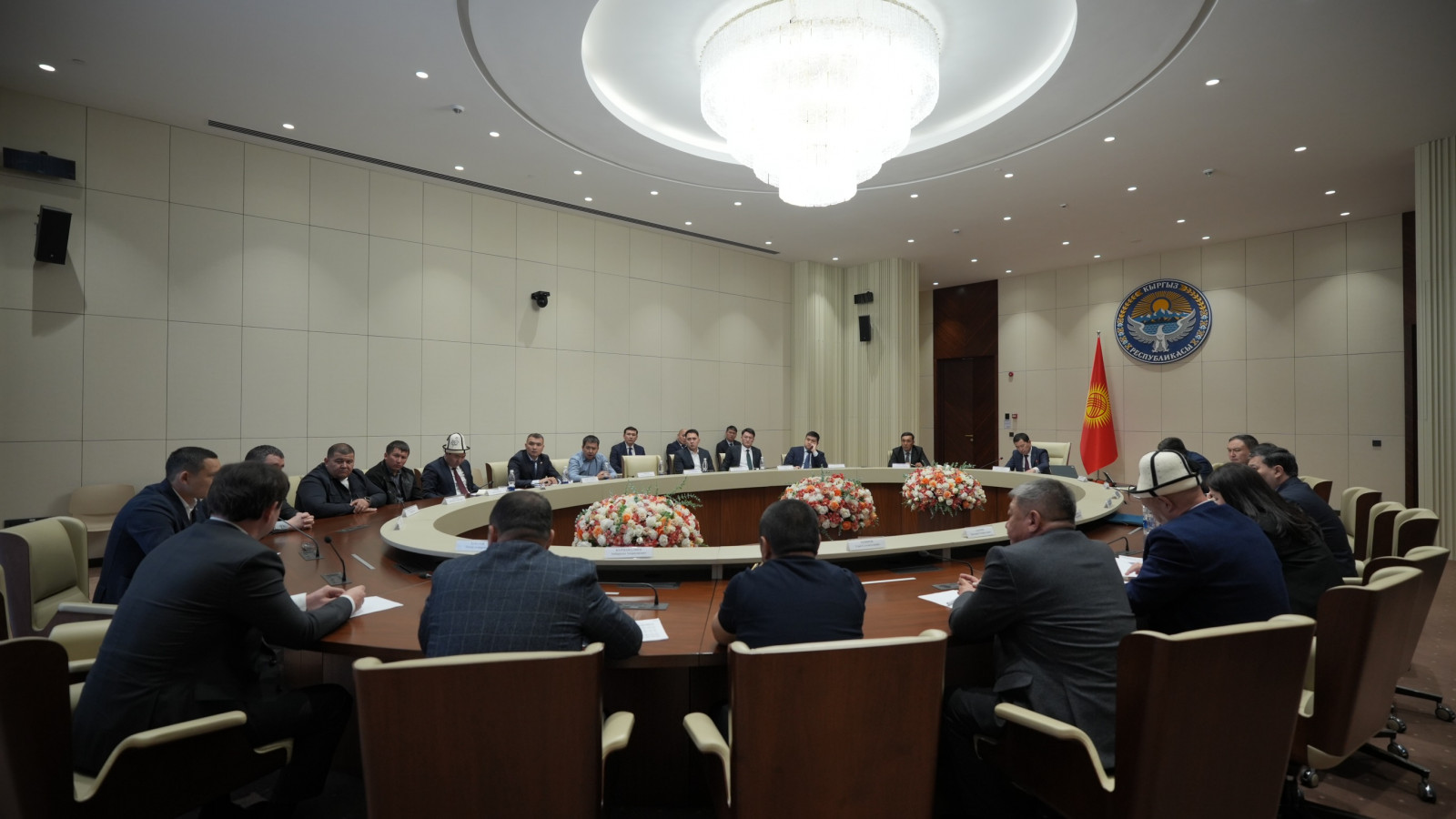
On March 26 in Bishkek, Deputy Chairman of the Cabinet of Ministers and Minister of Agriculture Erlis Akunbekov held a meeting with fertilizer importers. The meeting focused on current import volumes, the pricing situation, and emerging logistical challenges. Relevant authorities were tasked with ensuring uninterrupted supply to agricultural producers during the peak of the spring fieldwork season, when every week is critical for the future harvest.
Kyrgyzstan’s fertilizer demand for the season is about 182,000 tons, including 96,000 tons of nitrogen fertilizers, the Ministry of Water Resources, Agriculture and Processing Industry told Akchabar.
Fertilizer supplies to the Republic mainly come from neighboring countries. According to the ministry, the main supplier is Uzbekistan, followed by Russia and Kazakhstan. According to Almaz Alakunov, Deputy Director of the Department of Chemicalization, Plant Protection and Quarantine, these ties have been built over many years and have long served as a reliable backbone for the country’s agricultural sector. However, today even these supply chains are experiencing pressure from the global market.
To understand why events on distant sea routes affect Kyrgyz fields, it is necessary to understand how the global fertilizer market works.
At its core are three key plant nutrients: nitrogen, phosphorus, and potassium. Each of them has its own sources and its own path to the field.
Nitrogen fertilizers are the most widely used. They drive growth — foliage, stems, and the future harvest. Production is concentrated where the key feedstock — natural gas — is available. Therefore, leading producers include China, India, Russia, the United States, as well as countries of the Persian Gulf, including Iran, Qatar, and Saudi Arabia.
Phosphate fertilizers have a different nature. Their base is phosphate rock, and therefore production is tied to deposits. Here, Morocco stands out as the country with the largest phosphate reserves. Alongside it, the leading producers remain China, the United States, Russia, and India.
If nitrogen is the energy of growth, then phosphorus is the root and foundation of the future harvest. Its production requires not only extraction but also processing, which means a combination of natural resources and industrial capacity.
Potash fertilizers are the rarest and therefore the most sensitive to any market changes. Their production is concentrated in just a few countries. The global leader is Canada, followed by Russia, Belarus, China, and Germany.
In summary, the global fertilizer market rests on several key pillars. China accounts for the bulk of production, while India and the United States are the largest consumers. Meanwhile, Russia and the countries of the Middle East supply a significant share of exports, effectively shaping the balance of the global market.
With such a geography of production, logistics becomes a key factor. Any disruptions in transport corridors quickly translate into price and supply imbalances. A clear example is the situation around the Strait of Hormuz, through which the countries of the Persian Gulf export significant volumes of fertilizers. Its effective blockage has already removed up to half of the global export supply from the market, intensifying competition for available resources.
Against this backdrop, Kyrgyzstan, despite not being directly dependent on Iran, is facing indirect pressure due to the redistribution of global supply flows.
“Fertilizer supplies are handled by 10–12 major private distributors, who have established logistics, warehouses, and a sales network across the country. By the end of March, they had delivered around 38,000 tons of nitrogen fertilizers — approximately 21% of the national demand. At the same time, the global situation is affecting the market: major consumers such as India and China are redirecting their purchases to alternative suppliers, including Russia and Uzbekistan. As a result, some of the products that could have reached the region are diverted to other markets, creating pressure on supply,” — notes Almaz Alakunov.
As a result, Kyrgyzstan is not facing a direct shortage, but a more complex effect — increased competition for resources, where the largest and most financially capable markets take priority. This has already led to a shortfall in fertilizer deliveries compared to last year, reaching 12,000 tons.
And this comes at a time when fertilizer imports to Kyrgyzstan were already lower in 2025:
At the same time, the price of nitrogen fertilizers decreased by only 3.5%, indicating an overall increase in costs.
Such a discrepancy between volumes and prices reflects a shift in market behavior. Farmers and distributors are forced to reduce purchases but cannot forgo key nutrients, primarily nitrogen. At the same time, secondary elements—phosphorus and potassium—are being cut back more significantly. An indirect confirmation of this trend is the 33% increase in imports of compound fertilizers in 2025, which helps partially compensate for the shortage of individual components.
Another concern for farmers is the rising cost of fertilizers. According to experts from the Ministry of Agriculture, prices have increased domestically by 10–20%, while on the global market, the rise has been even more pronounced—up to 30%. However, as noted by the Ministry, this does not necessarily mean that food prices will increase by the same margin.
“The link here is not direct,” — explains Almaz Alakunov, Deputy Director of the Department of Chemicalization, Plant Protection, and Quarantine. “Crop yields depend not only on fertilizers, but also on weather conditions, soil quality, and the overall cost structure. Therefore, the impact of fertilizer prices is felt indirectly.”
Equally important is the fact that fertilizers themselves require careful management. As experts emphasize, their effectiveness depends not on the quantity applied, but on the precision of application. Different soils demand different nutrient treatments, and what works for one plot may be ineffective—or even harmful—for another.
“Farmers used to often follow their neighbors: if someone had a good harvest, they assumed the same fertilizer would work for them. But this approach doesn’t pay off. Over-application can reduce crop quality and lead to the accumulation of harmful substances,” — says Almaz Alakunov.
Today, an increasing number of farmers are turning to a scientific approach by conducting soil analyses. Each test costs slightly over one thousand soms, and several samples are needed from a single plot. However, the results make it possible to accurately determine which nutrients the soil requires and to avoid unnecessary expenses.
Despite the existing challenges, the Ministry of Agriculture does not anticipate a critical situation. Supplies continue, distributors are seeking new sources, and farms are gradually adapting to the changed conditions. Farmers are also turning to the use of organo-mineral fertilizers, which can partially substitute for traditional ones.
The market also has its own peculiarity. Fertilizers cannot be stockpiled for long periods. Their shelf life is limited to about six months, and proper storage requires strict control of temperature and humidity.
“This is not a product that can be purchased years in advance,” — the Ministry notes.
As a result, agriculture remains dependent on timely deliveries. And although Kyrgyzstan is not directly involved in international conflicts, changes in global trade still reach our fields.
This season clearly demonstrates that the resilience of agricultural work depends not only on nature and human effort, but also on the ability to respond flexibly to change — by finding new supply routes, using resources wisely, and treating the land with care.