

Published
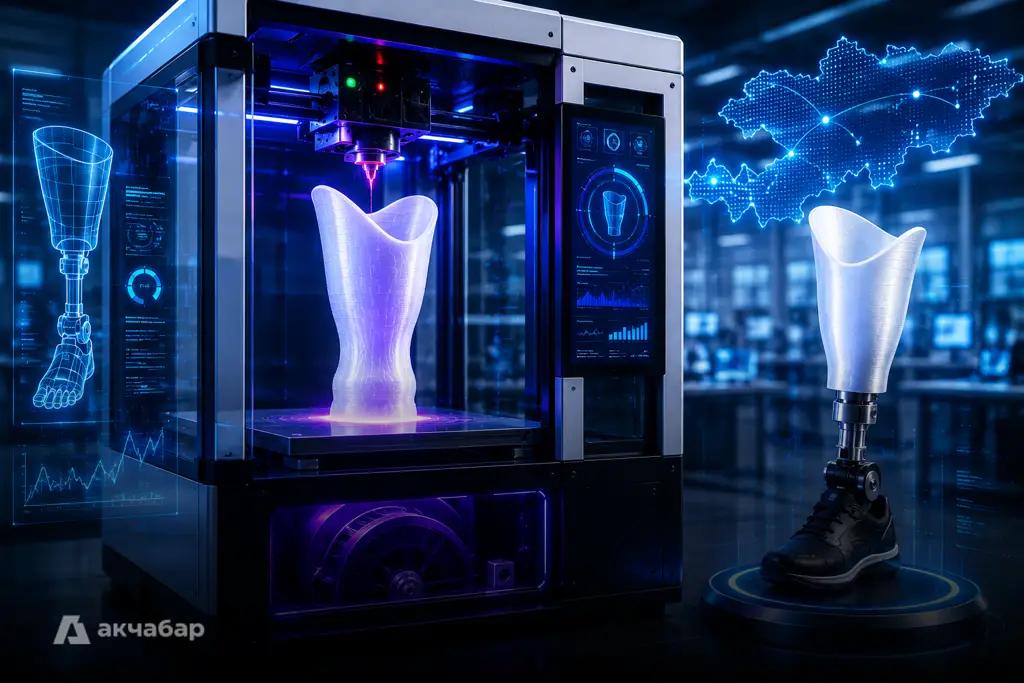
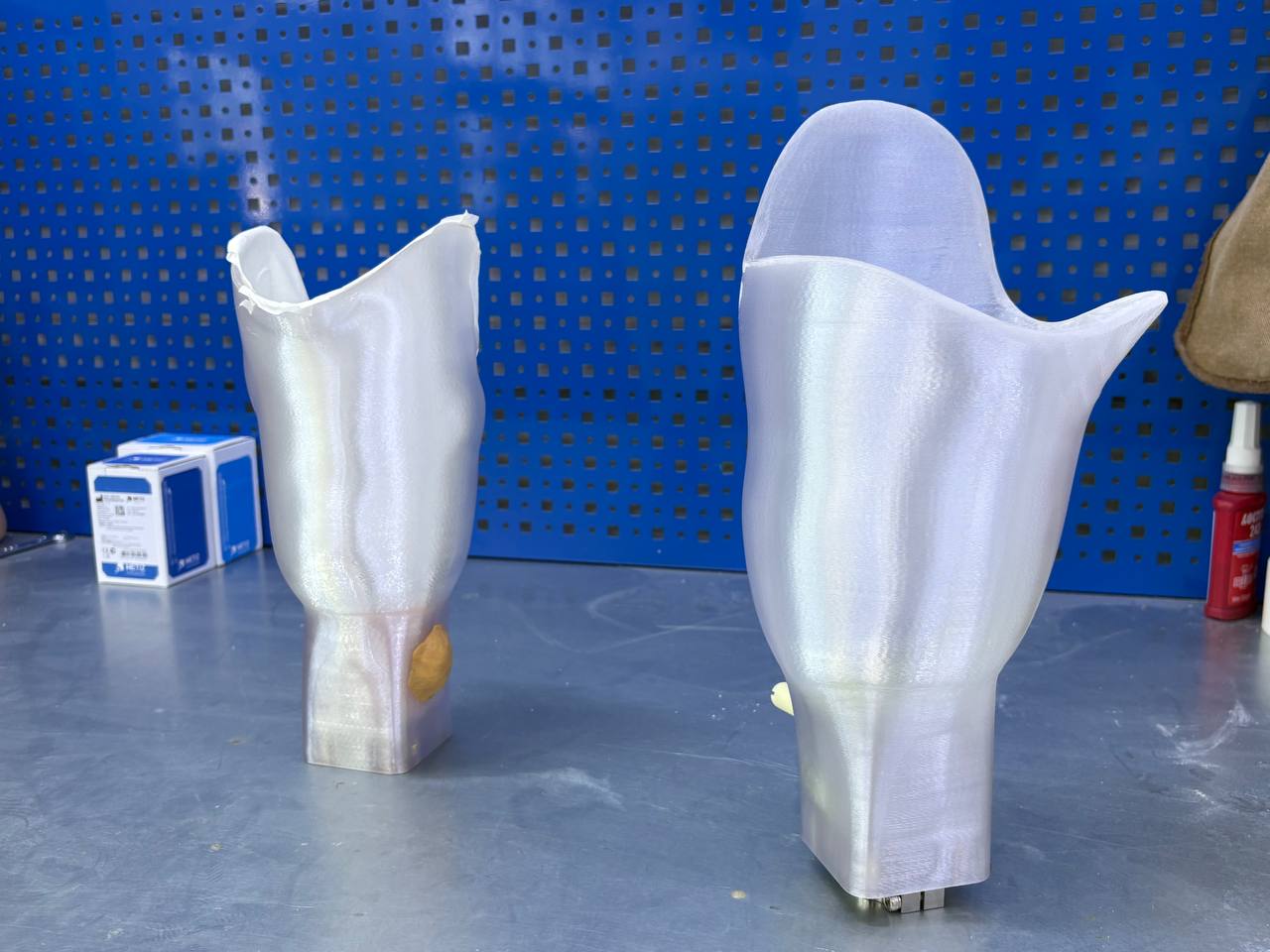
06/09/2026, 18:01Investments in advanced equipment for digital prosthetics in Bishkek have already started to show tangible results. With the use of a 3D scanner and 3D printer, specialists can manufacture personalized prosthetics more quickly, more accurately, and with reduced resource consumption.
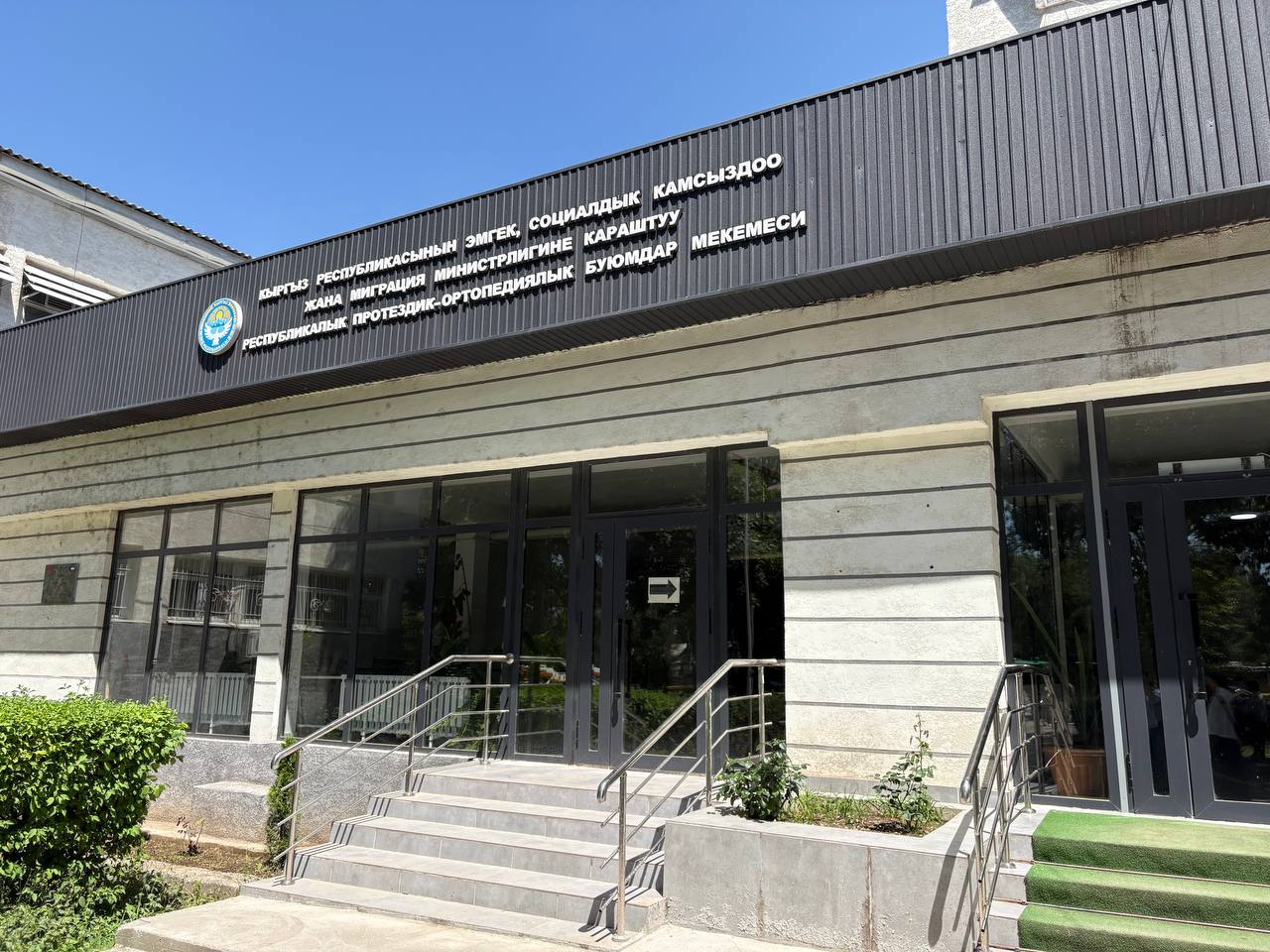
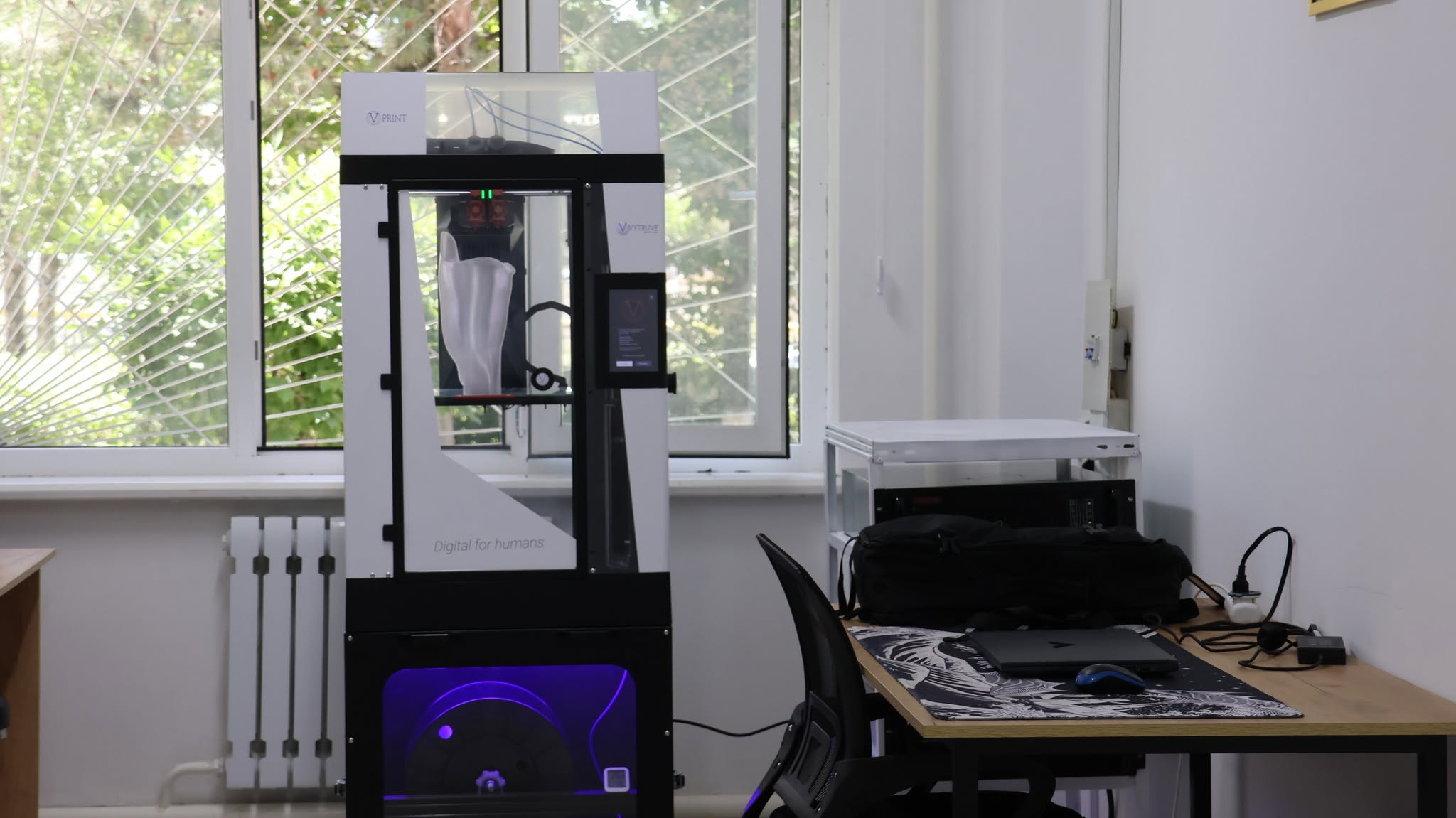
Since March of this year, the Republican Institution of Prosthetic and Orthopedic Products (RUPOI) has been operating a French‑made 3D scanner and 3D printer, acquired as part of the institution’s modernization. The equipment, worth €45,850, was purchased with funds from the Republican budget. The introduction of 3D technology in prosthetics is being implemented for the first time among CIS countries.
At RUPOI, the introduction of 3D technologies has effectively marked the transition from the traditional craft‑based approach to a digital production cycle.
Prosthetist Ernst Kazakeev notes that 3D printing significantly speeds up the prosthetics process. Printing a transfemoral socket, for example, now takes about 12 hours. At the same time, manual work is minimal: after printing, the product only needs a slight polishing — and it is already ready for fitting to the patient.
The sockets are made of a special copolymer plastic supplied from France in 10‑kilogram spools. One spool is enough for approximately nine sockets. As a result, production becomes more standardized and material consumption more predictable, which is important for a budget‑funded institution operating within the state financing system.
An additional advantage of the technology is production logistics. For the fabrication of a new prosthetic socket, the patient’s physical presence is no longer required. If the person is located in another region, the necessary parameters can be captured locally and transmitted to Bishkek, where the device is manufactured remotely. The patient then comes only to receive the finished prosthesis.
From a financial perspective, the introduction of 3D prosthetics reduces costs on several levels at once.
Firstly, the share of manual labor and the specialists’ time costs are reduced. Digital modeling and 3D printing accelerate the production cycle, allowing more patients to be served within the same period.
Secondly, material consumption and the number of errors are reduced. Fewer reworks mean lower losses of plaster, plastic, and other consumables.
Cost savings also manifest in the long term. Digital patient models can be stored and reused when prostheses need replacement or adjustment, which is particularly important for children and patients requiring regular device renewal. This reduces repeated expenses for diagnostics and impression‑taking.
At the Republican Institution of Prosthetic and Orthopedic Products, despite the introduction of digital technologies, a significant part of the work remains dependent on manual labor and an individualized approach.
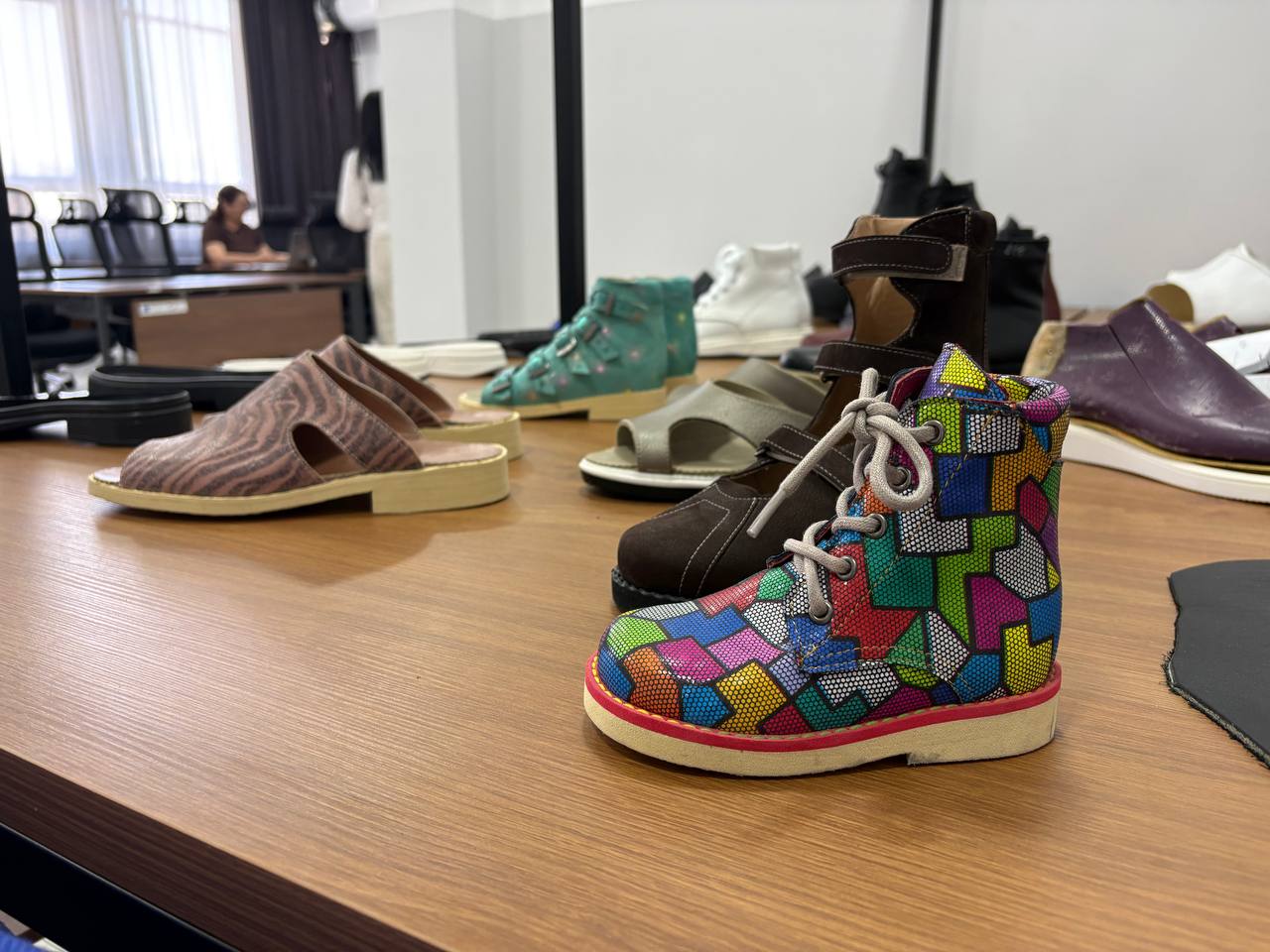
Orthopedic footwear designer Roman Filippov joined the enterprise at the age of 16 and has now been working here for 16 years. He is engaged in producing various types of orthopedic shoes — from children’s booties to footwear with height correction for patients whose legs differ in length.
I never thought of changing my profession; I enjoy this work. Here I work with people. Besides, my specialty is very rare, and not everyone can master it. It is both difficult and time‑consuming, so you have to love this craft — and with experience, the skills will come,” — he says.
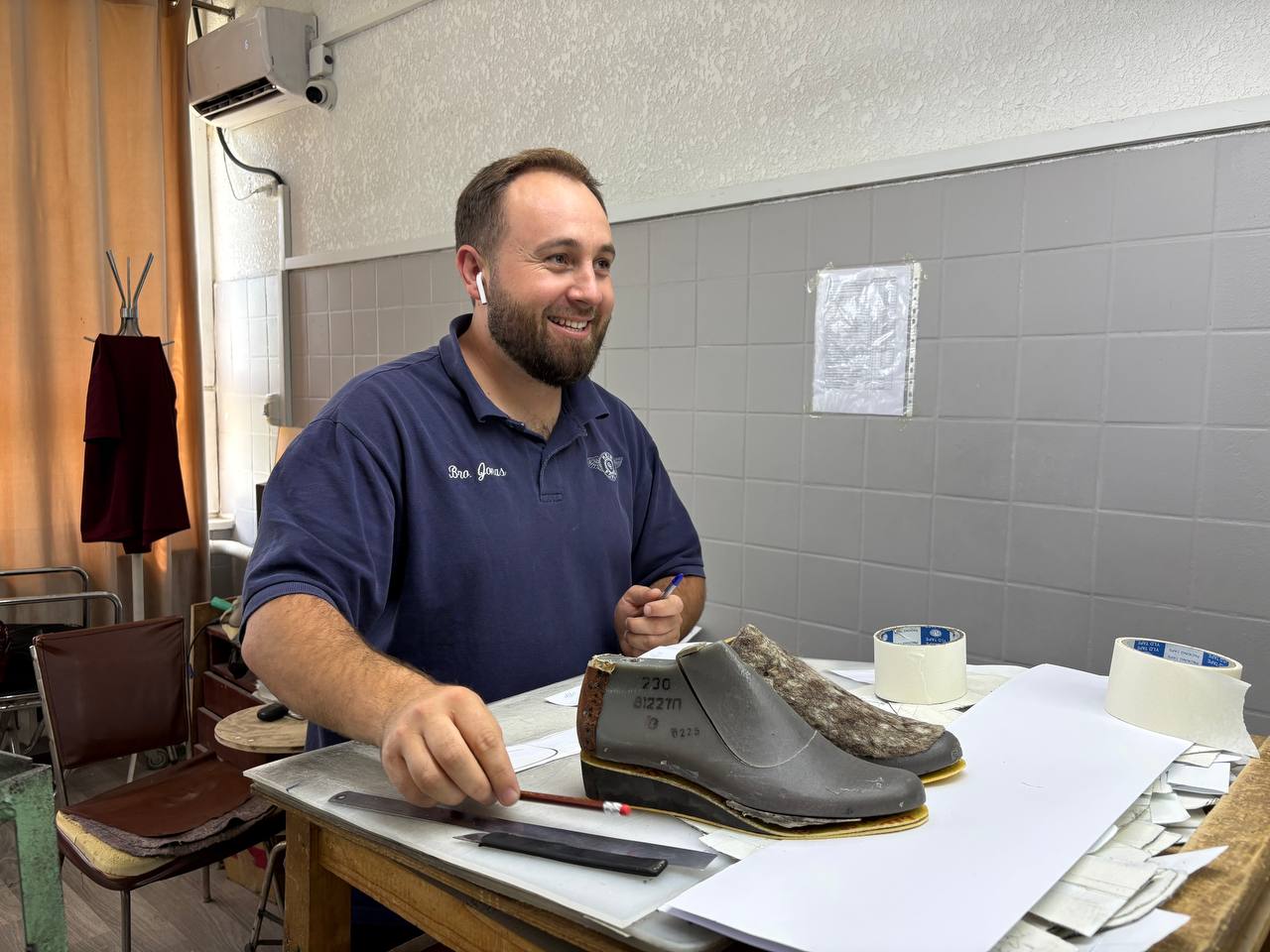
He notes that the work of an orthopedic footwear designer requires being constantly on one’s feet: each product is created individually, and every model must be assessed from all angles.
A historical example of individualized craftsmanship is the production of footwear for the tallest man in Kyrgyzstan, Zhenishbek Rayymbaev (a native of the Naryn province), whose height was 2.36 meters and shoe size 58. His footwear was made exclusively to order at this very enterprise. After his death in 2015, the shoe lasts created for him were preserved and continue to be used to study the specifics of individualized shoemaking.
Employees of the enterprise note an increase in wages after modernization. Roman Filippov reports that he previously earned about 40,000 KGS per month, and now — about 80,000 KGS.
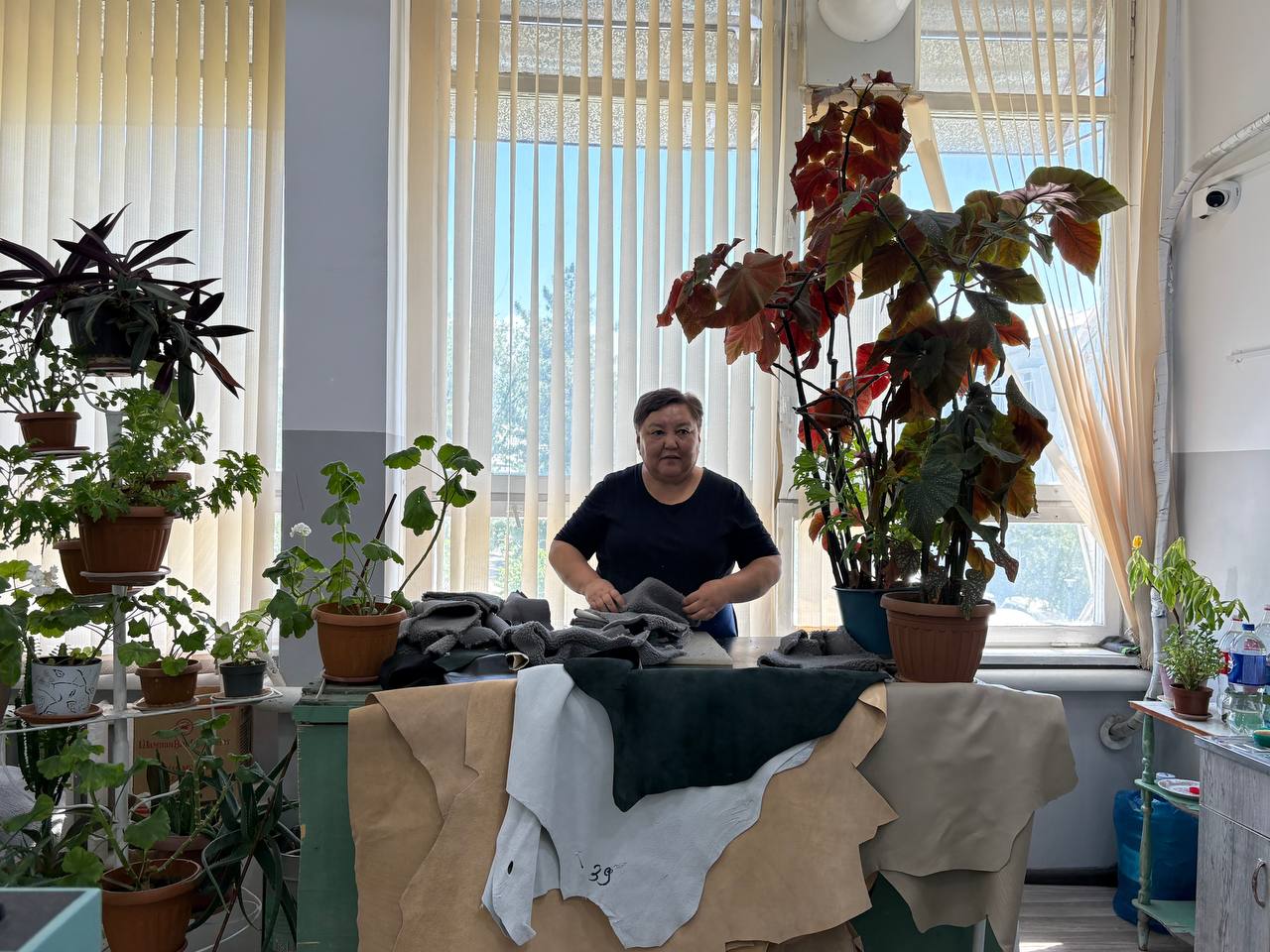
Orthopedic shoe preparer Gulnara Abdykerimova has been working at RUPOI for 27 years. She produces the uppers of orthopedic footwear. On her workbench lie fur and leather patterns for future products. Even in summer, winter shoes are manufactured here — a true case of "prepare your sleds in summer".
“A long time ago I started here as a cleaner, and later I mastered this craft. The materials we use for footwear are good and natural — fur and leather. Our clients usually order two pairs per year. If I sew 130 pairs a month, now I receive 90,000 KGS. That is very significant, since earlier we earned about 35–37,000 KGS,” — she says.
Chief physician of RUPOI, Jypara Jaylobaeva, notes that after modernization the queue of patients requiring either their first prosthesis or a replacement of an existing one has decreased. These prostheses, incidentally, can be obtained once every two years completely free of charge. Servicing of the devices is also free, and patients may come at any time. Orthopedic footwear is sewn for patients twice a year.
If earlier about 300 people were waiting for prosthetics each year, now only around 20 patients remain in the queue.
The waiting time has also been reduced: whereas previously a prosthesis was manufactured in an average of 35 working days, now it takes a maximum of 10 days.
She notes that the principal reasons for amputations include diabetes, congenital limb underdevelopment, and oncological conditions.
As part of the institution’s modernization, 97.8 million KGS were allocated for infrastructure renewal, of which 89.3 million have already been directed toward the purchase of 55 types of equipment.
The relevance of these innovations is linked to the need to improve the accessibility and quality of rehabilitation, as well as to introduce modern technologies into the social sphere.
By the way, RUPOI, established in 1942 as a prosthetic and orthopedic workshop and transformed in 2004 into the Republican enterprise, today fulfills not only a production role but also a social function.
The organization employs 159 staff members, about 10% of whom are persons with disabilities. A branch also operates in Osh, serving the southern region of the country. Special attention is given to job quotas for people with disabilities, as well as to the observance of labor rights.