

Published
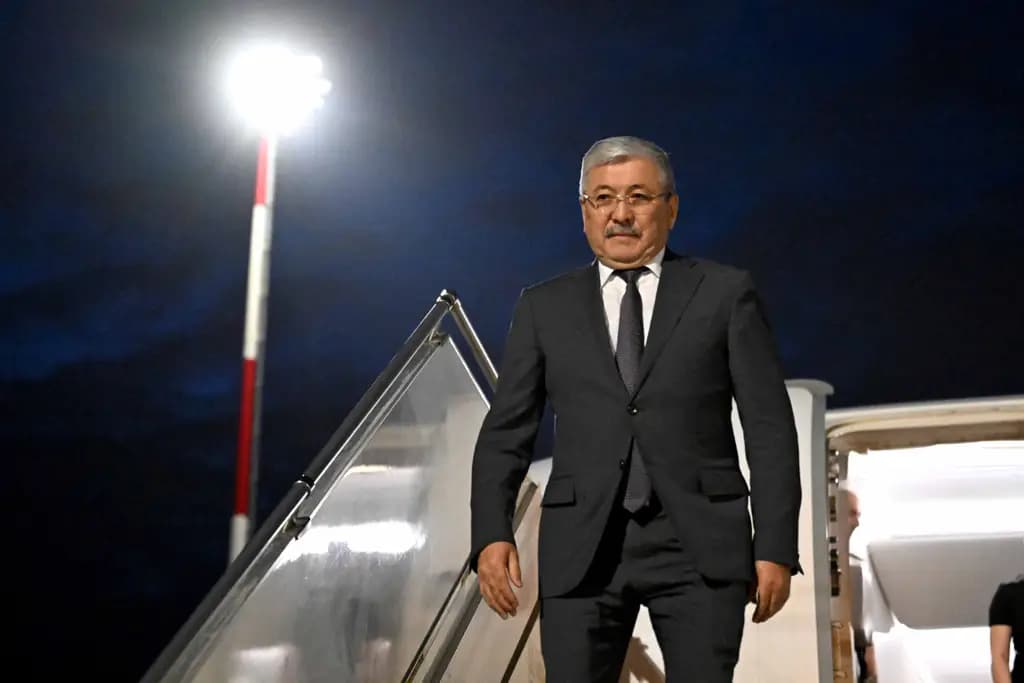
11/11/2026, 09:30Prime Minister Adylbek Kasymaliev arrived in Antalya to participate in the UN Climate Change Conference (COP31). His visit includes a leaders’ summit and a meeting focused on glaciers, the sustainability of mountain regions, and funding for their protection. For Kyrgyzstan, this marks a continuation of its long-standing efforts to advance the mountain agenda in international climate negotiations.
The conference runs from November 9 to 20, with the leaders’ summit scheduled for November 11–12. The high-level event “Advancing the Mountain Agenda,” in which Kasymaliev is expected to participate, will take place on November 12. Participants will discuss the state of glaciers and the cryosphere, adaptation to global warming, the shared responsibility of states, and sustainable sources of financing.
The official agenda for the conference and the concurrent negotiations on the Paris Agreement includes emissions reductions, adaptation, climate finance, the work of the Loss and Damage Fund, technology transfer, and carbon market mechanisms.
For Kyrgyzstan, the cost of these decisions is measured in terms of water, crop yields, and the expenses required for recovery from natural disasters. According to World Bank estimates, without the necessary measures, up to 24% of the demand for irrigation water could remain unmet by mid-century. Climate change also poses risks of declining agricultural incomes and damage to infrastructure.
Kyrgyzstan has already secured international support for part of its mountain agenda. At the republic’s suggestion, the UN General Assembly declared 2023–2027 the Five-Year Period of Action for the Development of Mountain Regions. The initiative was included in a resolution adopted in December 2022. The next major event is expected to be the Second Global Mountain Summit, “Bishkek+25,” which Kyrgyzstan is preparing to host in 2027.
Kyrgyzstan directly links the scale of its future climate actions to international support. In its Nationally Determined Contribution (NDC) 3.0, submitted in 2025, the country set a target to reduce net greenhouse gas emissions by 18% by 2030 through its own measures and by 30% with international support.