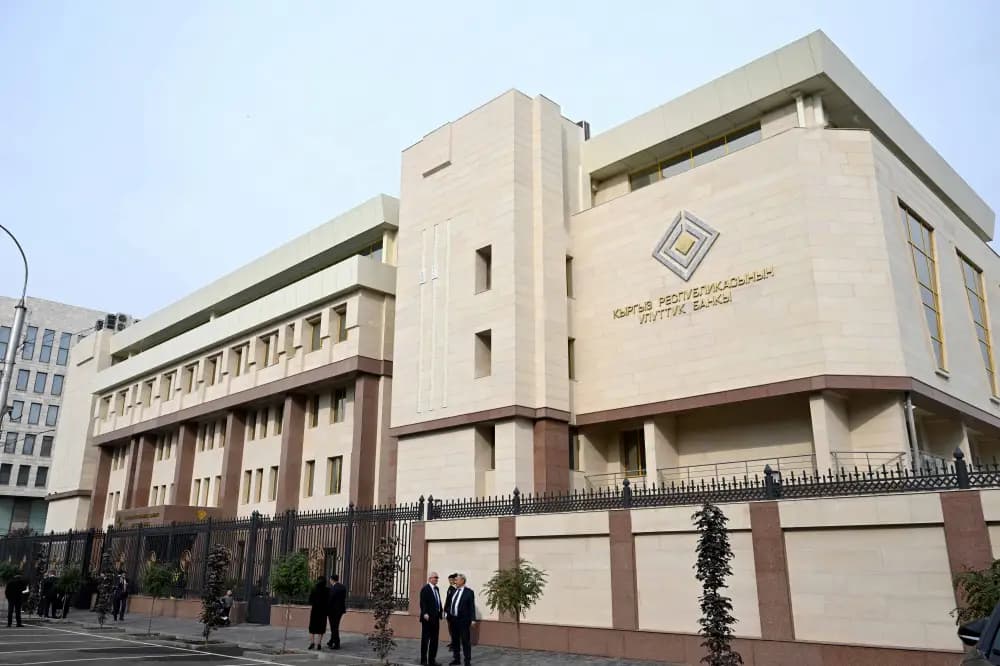


Published
11/09/2026, 18:00The National Bank of Kyrgyzstan is proposing to change the rules for calculating bank liquidity. The regulator expects that this will allow banks to use their funds more effectively—including for lending—and will increase interest in government securities. The corresponding draft amendments have been released for public comment.
A bank must maintain a reserve of funds and assets that can be quickly converted into cash in order to make payments and fulfill other urgent obligations. One of the indicators the National Bank uses to assess this readiness is called the instant liquidity ratio—K3.3.
This ratio includes, among other things, government securities issued by the Cabinet of Ministers. However, currently only those securities that the government must redeem within the next seven days are counted. The National Bank proposes extending this period to 180 days.
For example, suppose a bank holds 100 million KGS in government bonds. The government is required to repay this amount in four months. Under current rules, such securities are not counted toward the K3.3 calculation, so banks must meet the ratio requirement using other eligible assets. If the amendments are adopted, these bonds will also be included in the calculation.
According to the regulator’s plan, this will reduce the need for banks to hold additional cash reserves solely to meet the requirement. The existing portfolio of government securities can be utilized more broadly in liquidity management, and a portion of the funds can be directed toward other operations, including lending to households and businesses.
At the same time, the National Bank expects this to support the government securities market. For banks, such investments will become more attractive, as the securities will be able to generate income and be counted toward meeting the instant liquidity requirement for a longer period. The regulator anticipates that this could increase demand for them.
However, the change in the calculation itself will not inject additional funds into the banking system. The same set of assets will allow a bank to meet a higher reserve requirement thanks to the new accounting rules. The National Bank explicitly highlights this point in its analysis of the draft.
This approach also carries risks. The government will repay the money on the bonds in a few months, but the bank may need it today. In that case, the bank will have to sell the securities or raise funds through a repo—a transaction in which the bank sells securities with an obligation to buy them back.
In a rush sale, the price may turn out to be lower than the value at which the securities are recorded on the bank’s books. This would result in a loss. If several banks need funds at the same time, it may be more difficult to quickly sell large volumes of government securities. The regulator assesses the risk of misjudging actual liquidity and the risk of losses from selling securities as moderate.
As before, government securities that serve as collateral for the bank’s obligations or have already been sold under repo transactions cannot be included in the calculation.
If the amendments are adopted, they will not affect everyone. The changes will apply to banks required to comply with the K3.3 instant liquidity ratio. Under the current regulation, these are large banks that account for at least 8% of the deposit base of the entire banking system.
The National Bank’s Supervisory Committee establishes the specific list of banks and the minimum ratio for each, taking into account systemic importance criteria.