

Published
08/02/2026, 09:31July turned out to be a mixed month for Kyrgyz citizens who had invested in standard gold bars. The National Bank began buying back troy ounces of gold at a higher price; however, an investor who bought a bar at the start of the month and decided to sell it at the end would still have made a loss. This was all down to the difference between the selling price and the buy-back price.
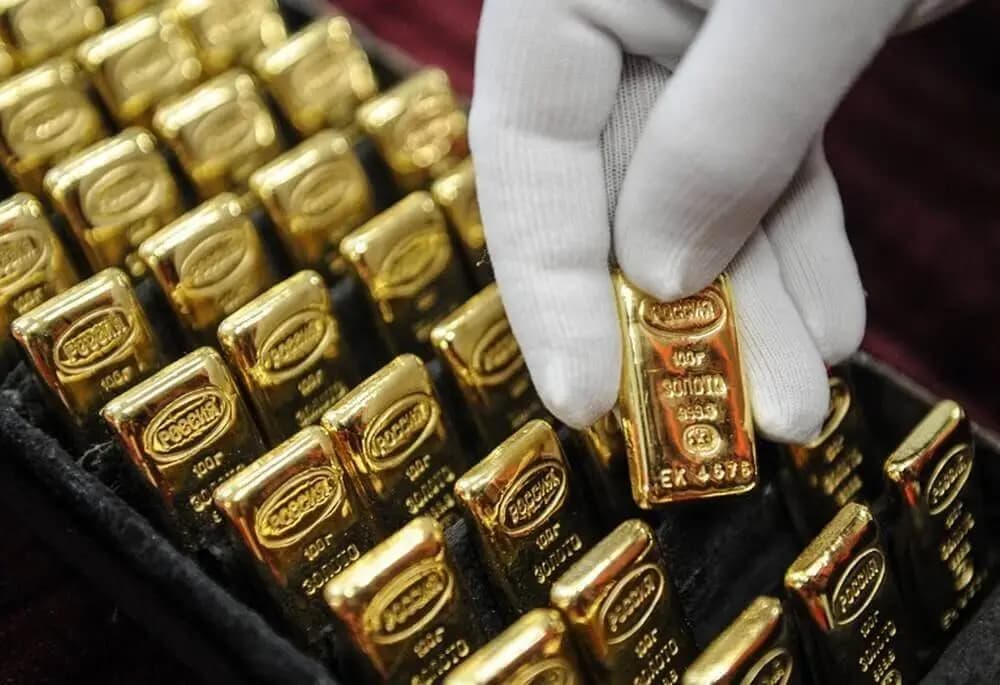
For example, on 1 July, the National Bank was selling a bar weighing 31.1035 grams for 383,013 KGS. By 31 July, its price had fallen to 367,074.5 KGS — a drop of 15,938.5 KGS, or 4.2 per cent.
However, the selling price only indicates how much one must pay for a gold bar. The true value of the asset to the owner is reflected in the buy-back price — the amount the National Bank is prepared to pay them upon the return of the gold.
Over the course of the month, this figure rose:
Thus, the liquid value of an ounce of gold increased by 7,433 KGS, or 2.1 per cent. In other words, Kyrgyz citizens who owned gold before the start of July became slightly wealthier over the month.
However, anyone who bought an ounce on 1 July and decided to sell it back to the National Bank on 31 July would have incurred a loss of 21,400 KGS, or 5.6 per cent of their initial investment.
The reason is the spread, the difference between the selling price and the buy-back price. At the start of the month, it was particularly wide:
Over the course of the month, the spread narrowed by more than five times. However, even this proved insufficient to compensate the investor for purchasing the gold bar at the start of the month.
Throughout July, the price per ounce fluctuated significantly. The highest buy-back price was recorded on 6 July at 366,283.5 KGS. The lowest was on 17 July, when it fell to 351,374.5 KGS. The difference between the high and the low reached almost 15,000 KGS.