Published
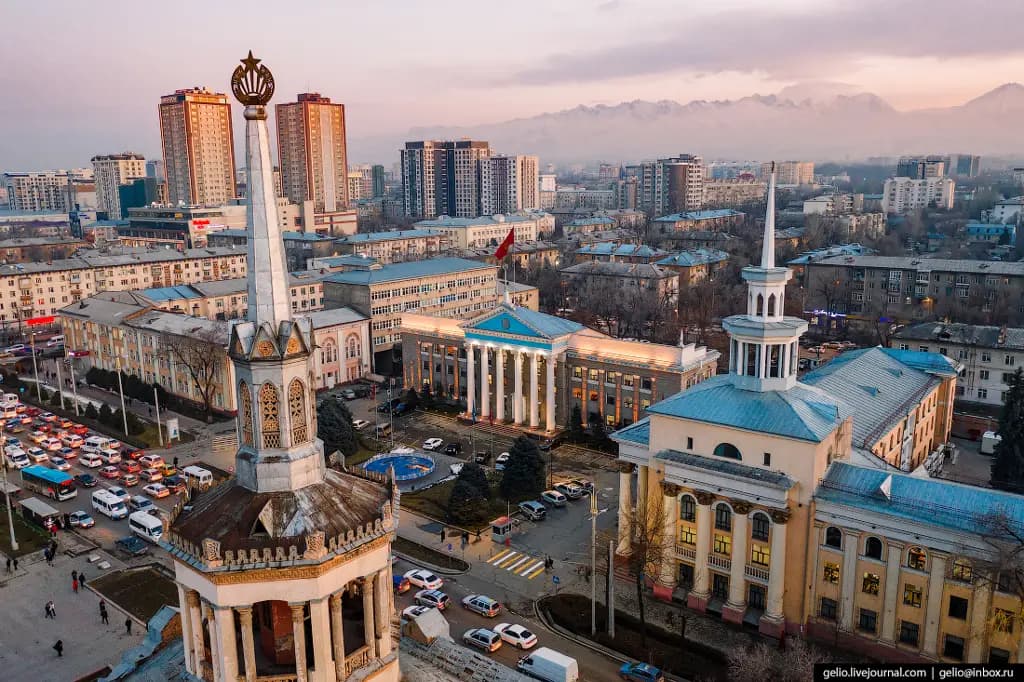
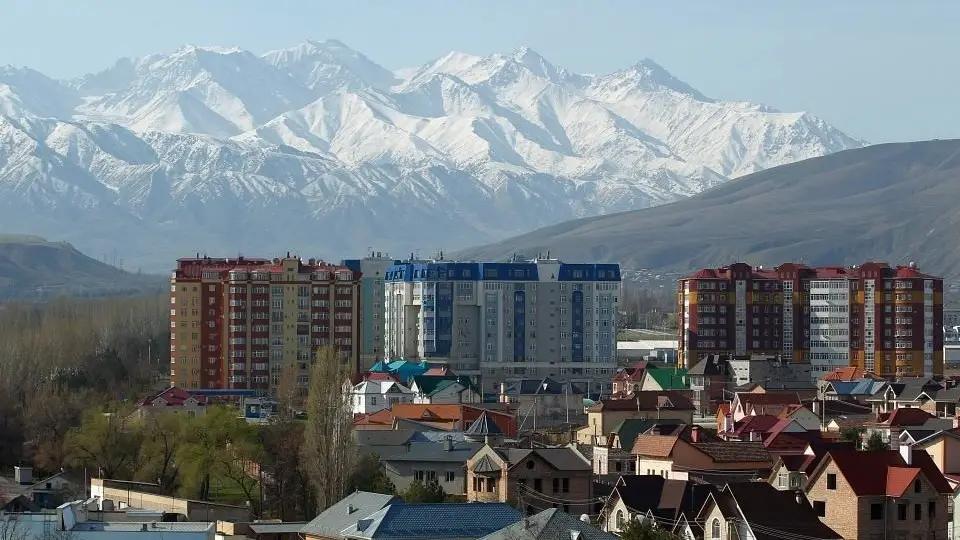
08/27/2026, 08:48In the capital, 8.7 million square meters of housing are being built, prices have reached 1,440 USD per square meter, and one developer controls almost a third of all construction. Bishkek is rapidly turning into one giant construction site.
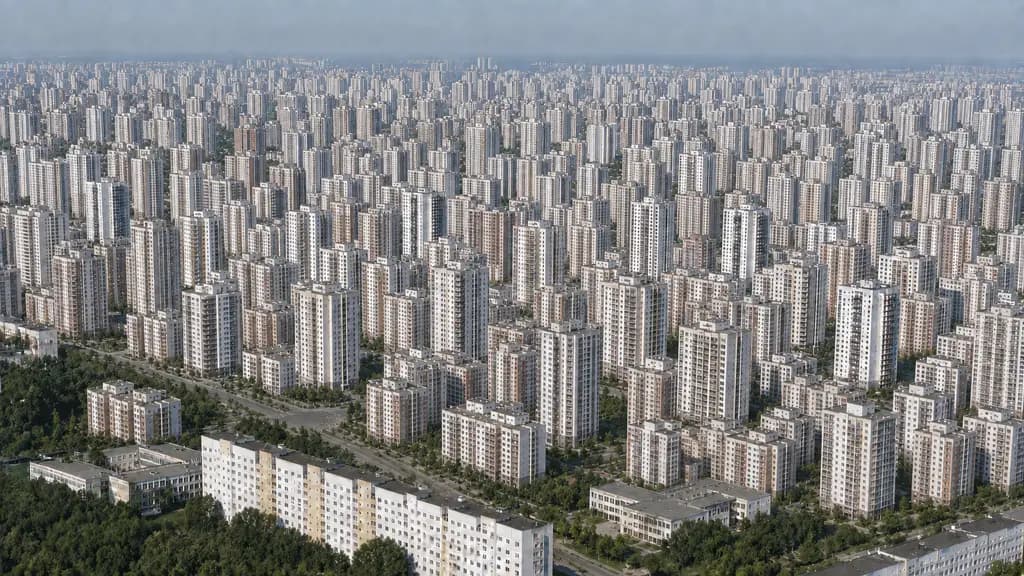
According to the analytical platform Elitka.kg, 315 residential complexes are currently being built simultaneously in the city. Their total area amounts to an astonishing 8.73 million square meters.
Who will buy all these apartments — and will the capital’s roads, schools, and utility networks be able to cope with millions of new square meters?
The average area of a single ongoing project reaches 27,700 square meters. The average declared housing price is 1,440 USD per square meter.
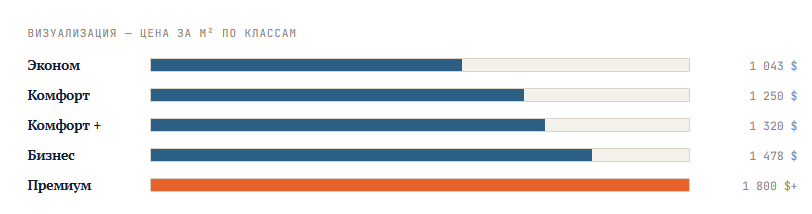
The minimum price of a premium "square meter" is almost 73% higher than the cost of economy-class housing.
And these are only the prices listed in developers’ advertisements. The final amount depends on the stage of construction, the initial down payment, installment plans, and discounts.
The boom is not limited to the capital. According to the National Statistics Committee, in January–July 2026 the added value of the construction sector within GDP reached 96 billion KGS, increasing by 60.6% in real terms. The share of construction in the economy rose from 6.2% to 8.2%. At the same time, the total gross output of construction amounted to 245.2 billion KGS.
In Bishkek, 617,000 square meters of housing were officially commissioned in 2025 — 14.5% more than the previous year.
The declared 8.73 million square meters represent our own calculation based on the Elitka database of ongoing construction projects as of the analysis date. This figure refers not to completed housing, but to the total area of projects at various stages of implementation.
A real wave of new housing may hit the market as early as 2027.
For this period, the completion of 91 residential complexes with a total area of almost 2.2 million square meters has been announced — more than in any other year of the reviewed period.
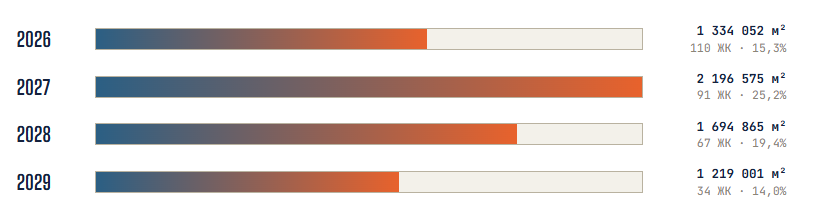
If developers deliver on their promises, buyers will have an enormous choice, while builders will have to compete fiercely for every sale.
But no one guarantees a price reduction. Land, imported materials, labor, and utility connections continue to become more expensive.
In addition, about 2.28 million square meters are scheduled for completion in 2030–2031.
Almost 51% of the construction area is accounted for by just ten developers.
But even within this group, there is an undisputed leader.
"Kut Stroy — Jaz Stroy" is building more than 2.53 million square meters — about 29% of the entire analyzed market. This exceeds the combined volume of the other nine companies in the top ten.
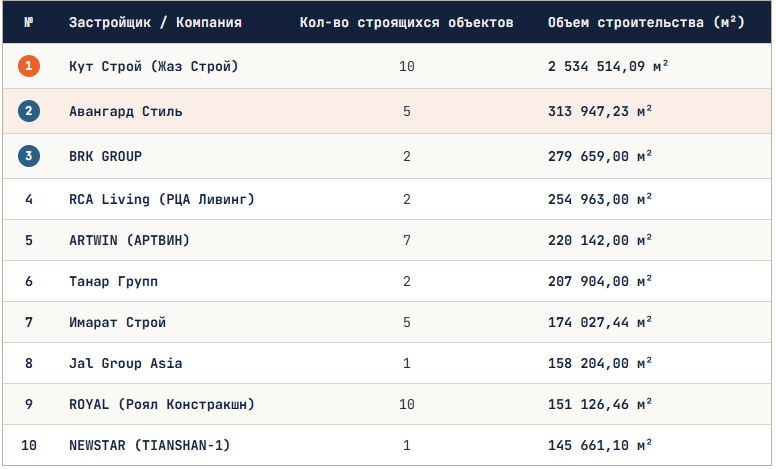
When most construction is concentrated among a few large companies, they gain more opportunities to carry out multiple projects simultaneously. But there is also a risk: if one major developer faces difficulties, it could immediately affect thousands of buyers.
Although "Kut Stroy" leads in terms of total housing area under construction, in the number of residential complexes the company shares first place with ROYAL — each has ten projects.
BRK GROUP, RCA Living, Jal Group Asia and NEWSTAR are building fewer residential complexes, but their projects are larger. Each of these companies is implementing one or two developments ranging from 145,000 to 270,000 square meters. Therefore, the number of projects does not always reflect the real scale of construction. A single large development can outweigh several smaller residential complexes.
As of the end of 2024, Bishkek’s housing stock amounted to 18.525 million square meters: 18.2 million square meters of private housing and 315,000 square meters of state-owned housing. In 2025, another 617,000 square meters of residential buildings were commissioned in the capital. If this volume is added mechanically, the city’s housing stock can be estimated at 19.14 million. This is a calculated, not an official, final figure.
| Year | Total area, million m² |
|---|---|
| 2020 | 14.090 |
| 2021 | 14.559 |
| 2022 | 15.032 |
| 2023 | 15.721 |
| 2024 | 18.525 |
Amid this backdrop, the 8.7 million square meters declared in projects appear especially large, accounting for 45.6% of Bishkek’s estimated housing stock including the 2025 additions. In other words, the construction portfolio is comparable to nearly half of all housing accumulated by the capital over previous decades.
For now, it is not about finished apartments, but about their total area across all residential complexes under construction.
The latest official indicator of housing provision in Bishkek stands at 14 square meters per person. This is an average figure obtained by dividing the housing stock area by the permanent population. The indicator says nothing about the distribution of property among families, its affordability, or the number of vacant apartments.
The estimated housing stock for 2025 at 19.14 million square meters, with the population unchanged, would correspond to roughly 14.5 m² per person. If all the declared 8.73 million square meters are built, housing provision could rise to about 21.1 m² per person.
Thus, the increase could amount to about 6.6 m² compared to the estimated 2025 baseline.
This is an upper bound, not a forecast. The capital’s population continues to grow: between early 2024 and early 2025 it increased from 1.295 million to 1.322 million people, or by 2.1%. The longer the complexes take to be built, the larger the denominator will be in calculating housing provision.
| Capital | The latest available official indicator | Norm in housing legislation |
|---|---|---|
| Bishkek | 14 m² per person, 2024 | At least 12 m² of living area per person |
| Astana | 32 m², 2024 | 15–18 m² of usable floor area when providing public housing |
| Tashkent | 22.9 m², as of January 1, 2025 | At least 16 m² of total floor area, not less than 23 m² for wheelchair users |
| Dushanbe | 13.7 m² of total area, 2020 census; residential — 9.5 m² | At least 12 m² of total floor area under a social tenancy agreement |
| Ashgabat | 22.9 m², 2022 census | At least 12 m² of living area per person or a one-room apartment |
Central Asian countries apply different approaches to housing standards. In Kyrgyzstan and Turkmenistan, mainly the area of living rooms is taken into account. In Uzbekistan and Tajikistan, the total apartment area is measured, including the kitchen, corridor, and other premises. In Kazakhstan, the concept of usable floor space is applied.
For buyers, the construction boom means more apartments, residential complexes, and layout options. However, the more construction projects there are, the greater the strain on roads, water supply, sewage, and power grids. The city will also need new schools, kindergartens, and other social facilities.
Therefore, the figure of 45.6% reflects not only the scale of future construction. It also indicates the significant amount of work that developers and municipal services will have to carry out.