

Published
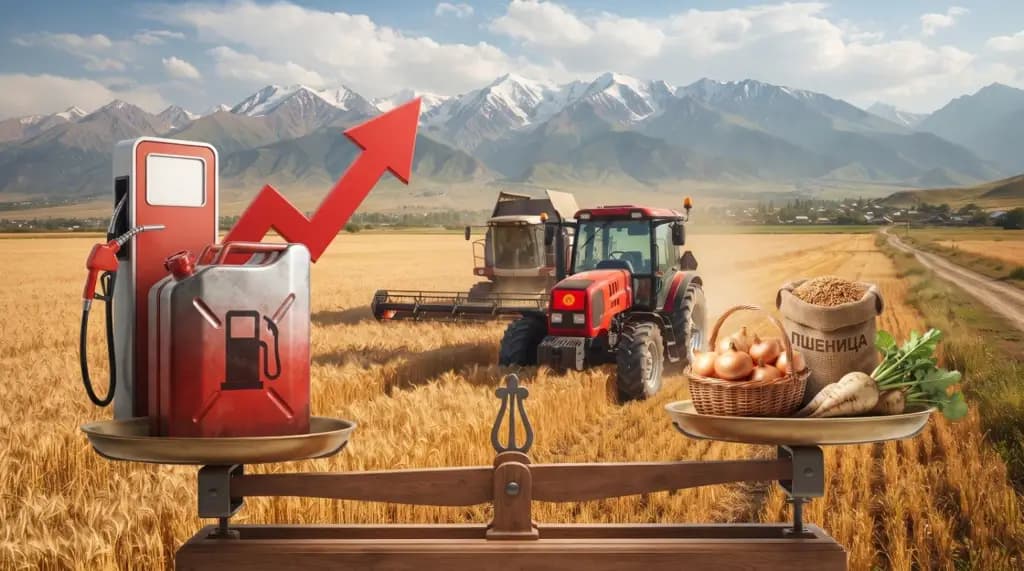
08/18/2026, 13:48The rise in fuel prices in Kyrgyzstan is already affecting the production costs of agricultural products. Farmers are facing increased expenses for field cultivation, planting, harvesting, and transporting crops. At the same time, market participants do not expect any significant improvement in fuel supply before the start of the autumn harvest.
Major fuel station chains in Kyrgyzstan raised the price of AI‑92 gasoline by another 1 KGS on August 14 — from 86.9 to 87.9 KGS per liter. This was the second increase in the past three weeks. In total, since the beginning of July, the popular fuel grade has risen by about 7–8 KGS.
At the same time, the impact of expensive fuel on the food market is uneven. In some cases, additional costs are gradually incorporated into product prices, while in others producers are forced to offset them by reducing their own profits.
Farmer Kadyr, who grows onions, said that fuel expenses account for a significant share of the product’s cost.
"If a kilogram of onions sells for 10 KGS, then 2–3 KGS go additionally to gasoline. On 10 hectares, the expense becomes very large," — he says.
At the same time, fuel is required throughout the entire production cycle — from land cultivation and crop maintenance to harvesting and delivering the yield.
Thus, the latest price increase of 1 KGS may have added only a few tyiyns to the production cost of a kilogram of onions. However, the cumulative rise of 7–8 KGS since early July has already increased expenses by approximately 16–27 tyiyns per kilogram.
At an onion wholesale price of 10 KGS, this corresponds to roughly 1.6–2.7% of its value. For consumers, such a change may go unnoticed, but for farms with large production volumes it becomes significant.
A similar situation is observed in flour production.
Bolotbek Ismailov, Director of the state enterprise "Dan", reported that the rise in diesel fuel prices has led to an increase of about 23% in the cost of agricultural services.
“Previously, cultivating one hectare cost about 2,000 KGS, whereas now it is roughly 2,500 KGS. This year, the increase in diesel fuel prices has already affected the cost of sowing and harvesting, as well as the transportation of wheat to the elevator,” — he told Akchabar.
According to Ismailov’s estimate, the overall production cost of wheat has increased from 15 to 18 KGS per kilogram, or by 20%.
“This is the production cost of grain, taking into account expenses at all stages of working with wheat. At present, it amounts to about 18 KGS. At the same time, the price of wheat itself is not rising as noticeably,” — he added.
As expert Rustam Baltabaev told Akchabar’s editorial team, the impact of rising diesel fuel prices on the production cost of agricultural products will vary depending on the crop. This is primarily linked to the amount of fuel required for the full production cycle.
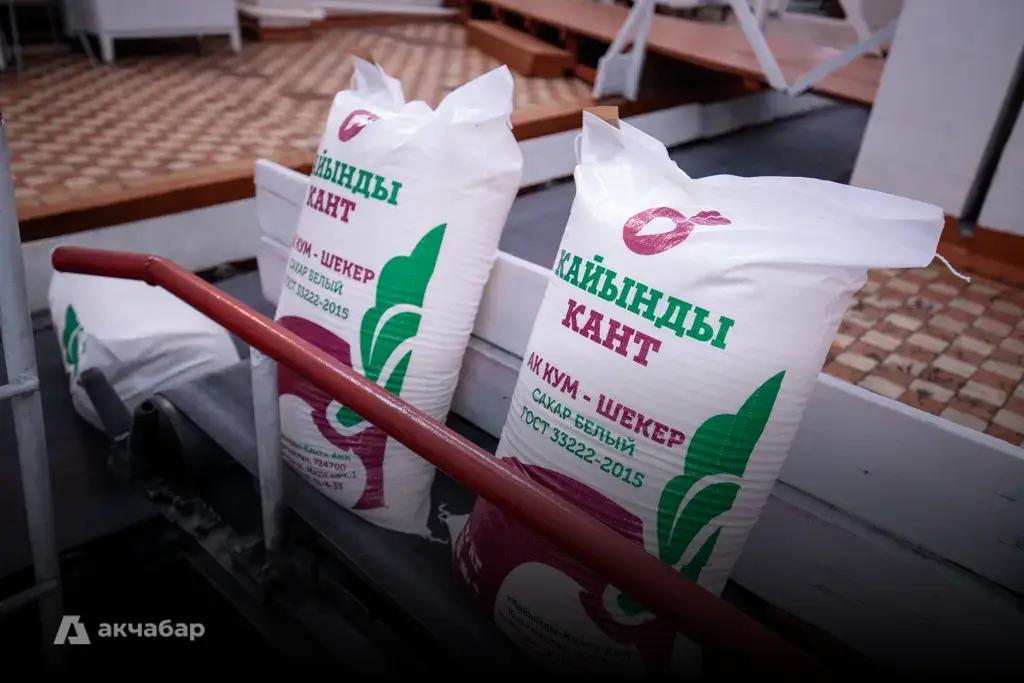
For sugar beet, fuel consumption amounts to about 190–195 liters per hectare. This estimate includes soil preparation, sowing, treatment and crop care, harvesting, as well as transporting the yield from the field. For wheat, the consumption is significantly lower — about 95–100 liters per hectare.
Thus, sugar beet is roughly twice as sensitive to diesel fuel price increases. For example, if the price of one liter of fuel rises by 10 KGS, the additional expenses per hectare of sugar beet would be approximately 1,900–1,950 KGS. For wheat, under the same price increase, the extra costs would be in the range of 950–1,000 KGS per hectare.
At the same time, the final impact on the cost of a kilogram of produce will depend not only on fuel consumption but also on yield.
For Kyrgyzstan, the problem is linked not only to global oil prices. About 90% of gasoline is supplied from Russia, so disruptions in the Russian market directly affect domestic supply.
Kanatbek Eshatov, President of the Association of Oil Traders of Kyrgyzstan, previously reported that offers from Russian refineries are now virtually absent. According to him, fuel supplies to the Republic are currently coming from Belarus, Azerbaijan, Turkey, and other countries.
Alternative imports help avoid a physical shortage, but more complex logistics and different purchasing conditions affect the cost of fuel.
“August–September are unlikely to bring significant improvements. However, by October, Russian exporters plan to expand refining capacity, saturate the market with fuel, and resume supplies to the EAEU,” — Eshatov shared this opinion on state radio.
If this scenario materializes, the pressure from Russian supplies may ease in autumn. However, uncertainty in the global oil and petroleum products market remains.
On August 14, the price of Brent rose to $88.5 per barrel following heightened tensions around Iran and ongoing disruptions to shipping in the Strait of Hormuz. Before the conflict, about 20 million barrels of oil and petroleum products passed through the strait daily, which, according to the International Energy Agency, accounted for roughly a quarter of global seaborne oil trade.
In its August report, the IEA downgraded the oil supply outlook. The estimate of global production for the third quarter was reduced by 1.7 million barrels per day compared to the July forecast. For the full year 2026, the agency now expects a decline in global supply averaging 4.3 million barrels per day. The reasons cited include new military conflicts, problems with maritime transportation, and the shutdown of part of the production capacity in Gulf countries.
In addition, disruptions at Russian refineries forced the IEA to further lower its forecast for global oil refining in the third quarter by 370,000 barrels per day. This is particularly important for the market of refined petroleum products, on which Kyrgyzstan depends through imports.
Fuel today is one of the significant components of agricultural production costs in Kyrgyzstan, especially in crop farming, notes Anvar Medelbek uulu, Executive Director of the Association for the Development of the Agro‑Industrial Complex of the Kyrgyz Republic.
“The rise in gasoline and diesel prices cannot be viewed as a problem of only one sector—crop farming or, for example, livestock. To some extent, it affects the entire agro‑industrial complex. But today I would particularly emphasize logistics. Kyrgyzstan is a country that not only produces agricultural goods for the domestic market but also seeks to expand exports. When our products are shipped to Kazakhstan, Russia, Uzbekistan, China, or other external markets, fuel costs become part of the final export cost price,” — he noted in a conversation with the editorial office of Akchabar.
According to the Executive Director of the Association for the Development of the Agro‑Industrial Complex, recent events have highlighted another aspect that should not be underestimated — the continuity of fuel supply.
“For agriculture, having fuel at the right moment is often no less important than its price. If a farm lacks diesel during sowing or harvesting, it cannot simply postpone these operations for several weeks. Delays in technological processes may lead to reduced yields and, consequently, much greater losses,” — the head of the association emphasized.
Meanwhile, the harvesting campaign in Kyrgyzstan takes place at different times due to climatic variations across regions. For example, in the northern part of the country, harvesting is about to begin as soon as September arrives. In the south, the situation is different: farmers collect crops three times during the season, with the final harvest taking place in October. In this regard, farmers in the southern region hope that by the start of the harvest there will be no fuel shortages and that prices will stabilize as much as possible.
According to Anvar Medelbek uulu, if fuel prices continue to rise, part of the additional burden will most likely have to be borne by producers themselves at the expense of their margins.
“In our view, it is important not only to rely on administrative measures to restrain prices of final products. A more effective approach is to reduce costs throughout the entire production and logistics chain,” — Anvar Medelbek uulu emphasizes .
In the short term, it is important to provide farmers with guaranteed volumes of fuel for the harvest period and to make fuel prices more predictable. At the same time, reserves should be built up in advance to avoid shortages during the most critical period for agricultural producers.