

Published
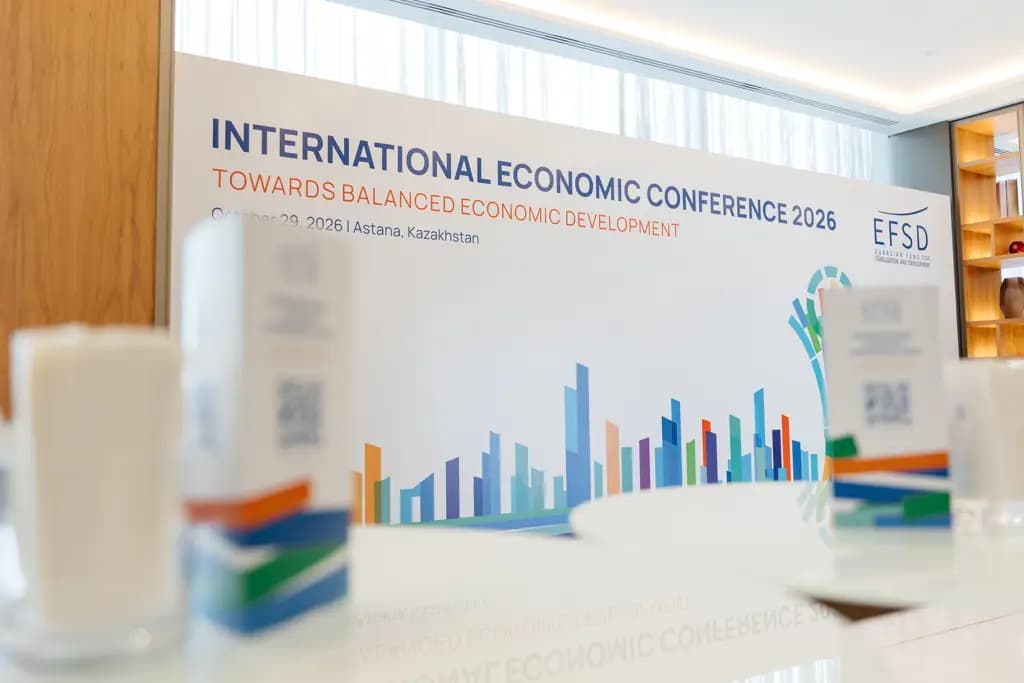
10/29/2026, 13:38Economic growth in developing countries in 2026 appears significantly weaker when China and India are excluded from the calculations. Economist Indermit Gill made this statement at the EFSD International Economic Conference in Astana.
According to his projections, the aggregate growth of developing economies in 2026 will be about 3.6%. However, excluding China and India, the figure drops to 2.6%.
According to Gill, such growth rates are insufficient to rapidly narrow the economic gap with developed countries.
A similar situation is unfolding among high-income countries.
According to data cited by the economist, developed economies as a whole may grow by 1.6%. Excluding the United States, the figure drops to 1.1%, and according to more recent estimates, to approximately 0.9%.
Thus, a significant portion of global economic growth is driven by just a few major countries.
“Aggregate indicators give the impression that the global economy is stable, although the situation in many individual countries is considerably more complex,” Gill emphasizes.
At the same time, the long-term outlook is complicated by a decline in potential growth rates and changing conditions of international competition.
According to the economist, it is much more difficult for developing countries today to replicate the path taken by South Korea, Taiwan, and Singapore, which undertook economic modernization under more favorable external conditions.