

Published
12/18/2025, 15:26On International Migrants Day, the National Bank of the Kyrgyz Republic, together with the Ministry of Labour, Social Security and Migration of the Kyrgyz Republic and the International Organisation for Migration, presented a joint initiative aimed at improving the financial stability of migrant workers and their families.
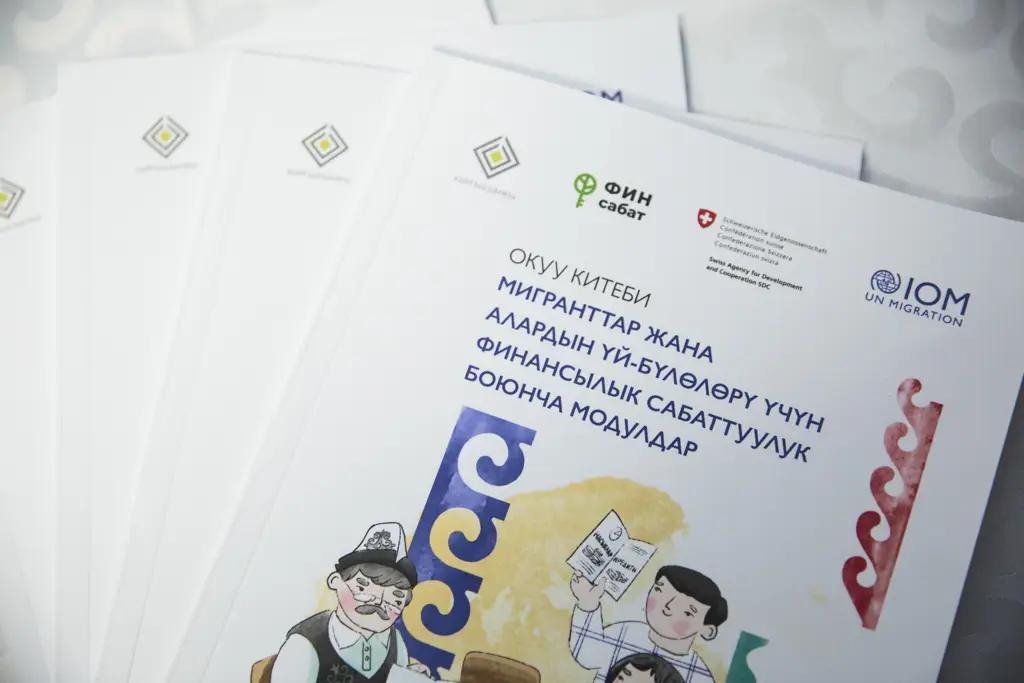
The key event was the presentation of specialised training modules on financial literacy for citizens going abroad to work. The materials have been developed as a practical tool and cover the entire migration cycle — from the decision to leave to returning and investing the money earned.
Speaking at the event, Azat Kozubekov, Deputy Chairman of the National Bank of the Kyrgyz Republic, noted that a significant part of the country's population is involved in labour migration in one way or another, and therefore the financial literacy of migrants is directly linked to macroeconomic stability.
According to him, maintaining the purchasing power of the KGS and the stability of the financial sector is impossible without responsible financial behaviour on the part of citizens, including those who earn money abroad. He emphasised that the National Bank has managed to maintain the stability of the national currency and keep inflation within the target range of 5-7%, despite the global inflationary shocks of recent years.
‘The financial literacy of migrants is not a private matter, but a factor in the economic stability of the country. Funds earned abroad should be used not only for current consumption, but also for the long-term well-being of families and the economy as a whole,’ Kozubekov noted.
According to the International Organisation for Migration, remittances are the main source of income for 41% of migrant families. However, as noted during the presentation, without basic financial knowledge, these funds are often spent inefficiently and do not form a reserve for the future.
The developers of the manual, Basharat Moldokulova and Zhanibek Zurdino, noted that the main characters in the training material are Saltanat and Aman, whose names are fictional, but whose stories are very real. Aman is a young man from an ordinary family who, at the insistence of his relatives, took out a loan for a wedding celebration and now, in order not to lose his home, is forced to go abroad to earn money. Saltanat is a single mother with two children and a mother who also needs support, so the heroine goes to another country in search of decent earnings.
The modules developed in the manual teach the safe use of bank transfer channels, the formation of a financial cushion through deposits and savings accounts, as well as the basics of financial planning. Separate sections are devoted to calculating the cost of migration, analysing credit risks, employment contracts, investments, pension savings and protection against fraud.
Deputy Minister of Labour, Social Security and Migration of the Kyrgyz Republic Bakyt Darmankul uulu emphasised that migration remains an important part of socio-economic reality, but by its nature it cannot be completely stopped.
‘Not all labour migrants know how to manage their earnings effectively. Therefore, one of the priorities for the state and the Ministry of Labour remains the creation of favourable conditions for both citizens of the Kyrgyz Republic and foreign citizens residing in the country,’ he noted.
Strategic documents identify improving the financial literacy of labour migrants and their families as one of the key conditions for strengthening the positive impact of migration on the country's economic development. In today's global economy, financial literacy is an important element of successful migrant adaptation.