

Published
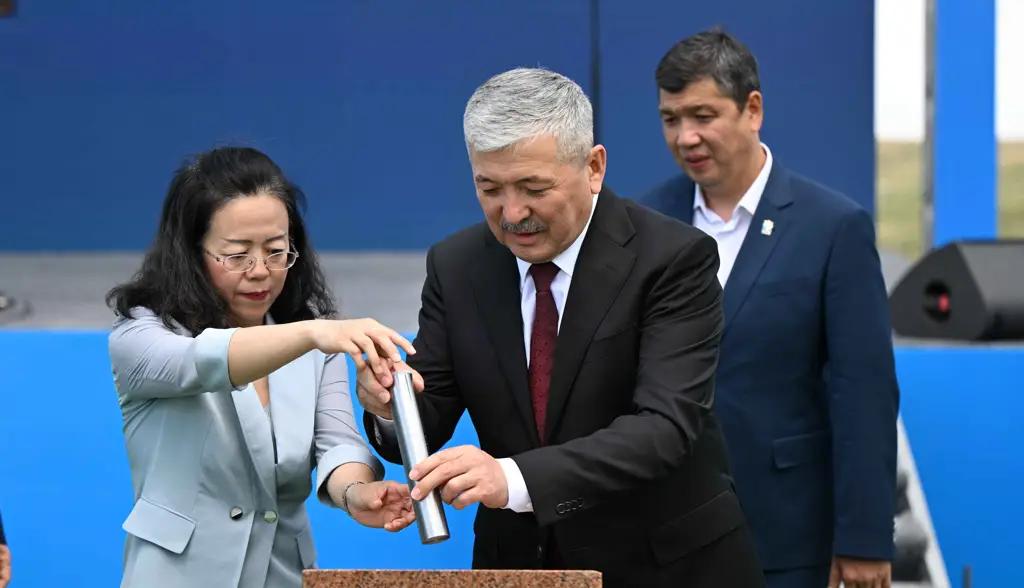
06/11/2026, 16:56Prime Minister Adylbek Kasymaliev took part in a ceremony to lay the foundation stone for the second phase of the eco-technological plant for the disposal of solid household waste and electricity generation.
In his speech, the Prime Minister emphasised the strategic importance of the project for the capital’s environment and future generations.
He noted that to improve the environmental situation in Bishkek, the state has implemented a range of measures, thanks to which the situation is noticeably improving: the private sector is being connected to the gas network (including the provision of preferential loans to residents); diesel buses are being replaced by modern buses running on gas and electricity; the most polluting types of coal have been replaced by high-quality large-sized coal.
“The start of the second phase marks the continuation of a large-scale initiative to radically improve the environmental situation in Bishkek and create a green, clean and modern metropolis. I would like to highlight the benefits this plant will bring to the city: firstly, the waste problem will be solved; secondly, an additional ‘green’ energy source will be created; thirdly, we will ensure clean air and a healthy generation. “The implementation of this phase will reduce annual carbon dioxide emissions by approximately 312,000 tonnes”, — stated Adylbek Kasymaliev.
He also emphasised that, by commencing construction of the plant’s second phase, a “time capsule” is being laid for future generations.
“This is our promise to our children: to hand over to them not a city mired in waste, but a modern, technologically advanced, environmentally clean and safe capital”, — the Prime Minister emphasised.
The first phase of the complex, which came into operation on 27 December 2025, is designed to process 1,000 tonnes per day; upon completion of the second phase, the complex’s total design capacity will reach up to 3,000 tonnes per day — the second unit is designed for 2,000 tonnes, with construction scheduled for completion within three years.