

Published
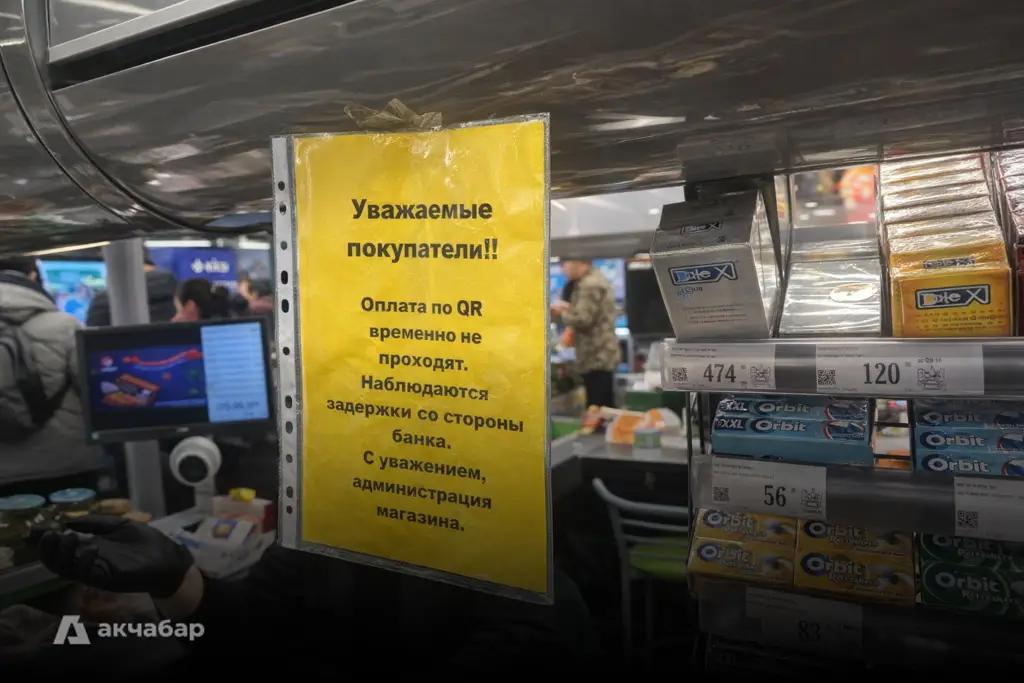
12/27/2025, 18:00The pre-New Year weekend, which traditionally sees peak shopping activity, was marred this year in Kyrgyzstan by disruptions in the QR payment system. Many residents of the country encountered problems when paying at supermarket checkouts and when paying for goods at markets.
New Year's Day falls on a weekday this year, so a significant portion of purchases were moved to the weekend. Despite the development of the commercial infrastructure and the walking distance to stores, the habit of shopping in advance remains — hundreds of Kyrgyzstanis went out to buy food and gifts during these days. However, for many, shopping was accompanied by technical difficulties.
Maria Indina, editor of Akchabar, also witnessed the disruption. According to her, the problems were widespread.
"People couldn't pay, so most of them had to get out their bank cards, which have been gathering dust in their wallets lately. I only had my phone with me. Luckily, my mother, who I went shopping with, was less tech-savvy than me — she had cash. This saved us from an awkward situation at the hypermarket checkout," she said.
As she notes, these glitches are not a one-off occurrence.
"In general, I encounter problems with QR payments throughout the week. For example, this week I almost ran out of gas at a Gazprom gas station because of a QR failure. Fortunately, drivers who had cash agreed to exchange it for a cashless transfer. On December 26, the problem also arose when paying for services at a salon," she added.
Earlier, the Interbank Processing Center (MPC) reported technical problems.
On December 23, the MPC stated that there were problems with processing QR payments to certain banks, the cause had been localized, and service restoration was planned to be completed by 5 p.m. that same day.
On December 24, the IPP also reported a temporary restriction on incoming and outgoing MBANK QR payments, attributing this to technical optimization work. According to the operator, the restrictions were expected to last about an hour and a half.
However, as the events of the weekend showed, the work carried out did not completely solve the problem.
It is possible that the failures may be related to the sharp increase in the use of QR payments. According to data for the second quarter of the year alone, 113.3 million QR payments were made for 180.9 billion KGS. This is 11.7 times more in terms of number and 18.3 times more in terms of volume than a year earlier.