

Published
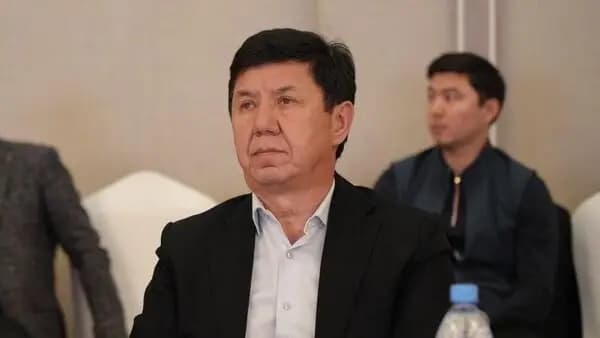
08/05/2026, 16:18Despite close political and trade ties with Russia, major Russian businesses are virtually absent from Kyrgyzstan. This was stated by Temir Sariev, head of the Kyrgyz Chamber of Commerce and Industry, at an off-site session of the ‘Primakov Lectures’ held at Issyk-Kul.
“With the exception of Gazprom and Polyus Gold, there is not a single major Russian company in our country,” he said.
Sariyev noted that Kyrgyzstan offers investors some of the most favourable tax conditions in the region. Under the simplified system, turnover tax stands at 4 per cent. Under the standard regime, sales tax is 2 per cent, VAT is 12 per cent, and corporation tax is 10 per cent.
The employer’s contribution to the wage fund is 2.25 per cent. Employees pay income tax at a rate of 10 per cent and social security contributions at the same rate.
According to the head of the Chamber of Commerce and Industry, these conditions make it possible to establish production facilities in Kyrgyzstan and export products to Russia, other EAEU countries and external markets. He cited the VSP+ status as an additional advantage, as it allows Kyrgyz goods to be supplied to the European Union without customs duties.
At the same time, economic relations between Kyrgyzstan and Russia are still predominantly centred on trade. According to figures cited by Sariyev, trade turnover between the two countries totalled $1.7 billion last year. By way of comparison, he noted that the volume of trade with China reached $27 billion.
“Metals and petroleum products still account for a significant share of trade with the Russian Federation,” added the head of the Chamber of Commerce and Industry.
Sariyev called for a shift from conventional trade towards the creation of joint ventures, production chains and products with higher added value. In his view, Kyrgyzstan could become a location for manufacturing facilities thanks to its affordable skilled workforce, the widespread use of the Russian language and its proximity to the EAEU markets.
However, the existing mechanisms for industrial cooperation within the union are not yet being utilised to their full potential. In particular, to qualify for interest rate subsidies, a cooperative project must involve enterprises from at least three EAEU member states.
Sariyev proposed lowering this requirement to two countries.
“It is very difficult to reach an agreement between three parties. This rule needs to be changed: let the participation of two countries be sufficient. I am confident that the process will then move much faster,” he said.
The head of the Chamber of Commerce and Industry also noted that the four freedoms of the EAEU — the free movement of goods, services, capital and labour — have not yet been fully realised. At the same time, he emphasised that the union remains a developing system, and its problems must be resolved jointly.
According to him, the issue of expanding Russian-Kyrgyz industrial cooperation is set to be discussed in more detail at the Kyrgyz-Russian Business Council as part of the forum.