

Published
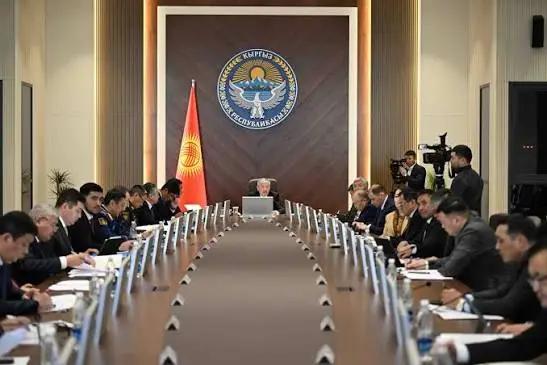
12/31/2025, 08:45The Cabinet of Kyrgyzstan has approved the Action Plan for its development initiatives through 2030. The resolution was signed by Prime Minister Adylbek Kasymaliev.
The document was developed to implement the National Development Program for Kyrgyzstan, approved by the Presidential Decree titled "On the National Development Program of the Kyrgyz Republic until 2030." Its execution aims to realize eight targeted goals, including economic and social indicators as well as international rankings.
Among the primary objectives are maintaining an average annual real GDP growth rate of 8%, reaching a minimum GDP of USD 30 billion, increasing GDP per capita to USD 4,500, advancing Kyrgyzstan into the top 30 countries for Sustainable Development Goals achievement, and improving the country’s Human Development Index ranking by 10 positions.
The Action Plan comprises 900 measures across various sectors such as spiritual and moral development, industrialization, regional hubs, agriculture and tourism, green energy, support for small and medium-sized enterprises (SMEs), financial market development, digitalization, human capital and decent work, social protection, education, accessible and sustainable healthcare, public administration reform, regional development, debureaucratization, legal system enhancement, public safety, anti-corruption measures, foreign policy, national security, climate resilience, and others.
The National Program identifies four key development vectors: industrialization, regional hubs, agriculture and tourism, and green energy. Within the industrialization framework, measures include establishing a national industrial development fund, creating mechanisms for preferential crediting to enterprises investing in energy-efficient technologies, establishing pilot clusters in targeted industries, and developing technology parks, innovation centers, and business incubators.
For the regional hub initiative, measures involve expanding road networks, modernizing transport infrastructure and border crossings at Torugart and Irkeshtam, constructing the Barsoon-Uch-Turfan-Aksu international highway, completing the China-Kyrgyzstan-Uzbekistan railway, and implementing Kyrgyz-Kazakh industrial trade and logistics complexes near checkpoints such as Ak-Tilek and Kurasu, alongside launching the Bedel border crossing. In terms of developing agriculture and tourism, the plan proposes creating full-cycle livestock enterprises utilizing specialized feeding facilities, increasing organic cultivation areas to 202,000 hectares by 2029, supporting domestic producers in aligning product quality with international standards, and establishing "A"-class agro-logistics centers.
Additional measures include introducing automated water resource management systems, attracting major hotel chains, expanding regional tourism infrastructure, constructing and repairing roads leading to major attractions, and forming tourism clusters with developed infrastructure and logistics catering to eco-, medical, and sports tourism sectors. Regarding green energy, measures include implementing projects for hydroelectric power plants (HPPs) such as Kulanak, Kulanak-2, the Upper Naryn cascade, Sary-Jaz cascade, and Chatkal River cascade; advancing key stages of the Kamkabatinskaya-1, Kazarman, and Suusamyr-Kokemeren hydroelectric projects; constructing high-voltage power transmission lines (e.g., Kemine-Balykchy 500 kV, Balykchy substation 220/10 kV, and other lines); modernizing hydroelectric stations; and building conventional power units and related infrastructure to ensure reliable energy supply.
Successful implementation of this Action Plan is expected to enable Kyrgyzstan to meet the Strategic targets set forth in its national development framework for 2030.