

Published
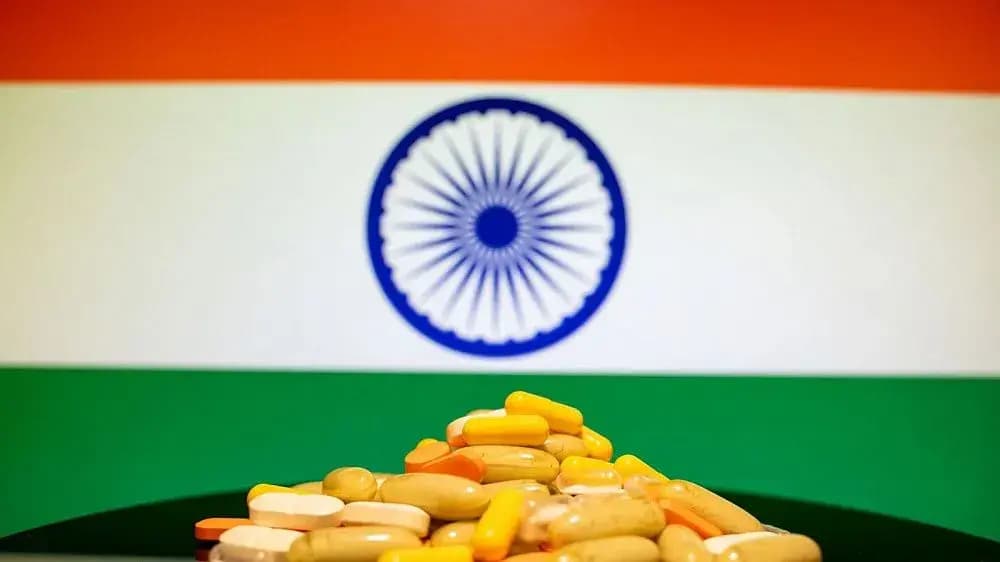
09/04/2026, 17:35India has turned the pharmaceutical industry into one of its key export sectors. The country accounts for around 20 per cent of global generic drug production, and exports of pharmaceutical products exceeded $26 billion in the 2023–2024 financial year. This is stated in an analysis by the international media network TV BRICS.
The Indian pharmaceutical sector now comprises more than 3,000 companies and over 10,000 production sites. A significant proportion of these enterprises are certified in accordance with international Good Manufacturing Practice (GMP) standards. In addition to generic medicines, India occupies a significant position in the global vaccine market.
As TV BRICS notes, the sector’s development has resulted from a combination of several factors: a strong tradition of chemical synthesis, a well-developed chemical industry, a high concentration of manufacturing clusters, an English-language regulatory environment, and a patent policy that has enabled domestic manufacturers to actively expand their production of generics.
Government support has also played a significant role. In the 2024–2025 financial year, the Indian government’s funding for the pharmaceutical sector was increased by 29.4 per cent to 9.3 billion rupees. In addition, the Production-Linked Incentive (PLI) scheme is in place, aimed, amongst other things, at localising the production of active pharmaceutical ingredients. The total volume of support under this initiative is estimated at approximately $2 billion.
At the same time, the Indian pharmaceutical industry is gradually moving away from a model based primarily on the mass production of relatively cheap generics. Manufacturers are stepping up their work on biosimilars, specialised and high-tech medicines, contract research and the development of new molecules. According to data cited by TV BRICS, the size of India’s bioeconomy has reached $150 billion.
The authors of the article examine India’s experience within the broader context of the BRICS and BRICS+ countries. Domestic production of medicines enables countries to reduce their dependence on external suppliers, whilst cooperation can extend not only to the manufacture of medicines but also to clinical trials, technology, specialist training and the establishment of production chains.
Thus, India is in fact no longer exporting medicines alone. The model established in the country encompasses its own manufacturing base, research, staff training and a system of state support — elements which TV BRICS regards as the foundation for strengthening the pharmaceutical sovereignty of countries in the Global South.