

Published
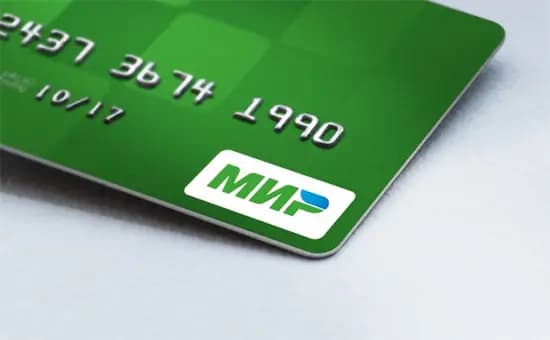
07/30/2026, 11:18The Russian payment system ‘Mir’ has effectively not been operational in Kyrgyzstan for over two years, but its registration with the National Bank remains valid. This means that, formally, the system is still authorised to operate in the market, even though the country’s banks and payment infrastructure no longer support its cards.
In the register of the National Bank of Kyrgyzstan, ‘Mir’ is listed under a registration number issued on 28 September 2017. The system operator is listed as the Russian company ‘National Payment Card System’ JSC. As of 29 July, the entry remains in the register.
However, the formal right to operate does not mean that the cards can be used in practice. This requires the participation of banks, valid agreements and connection to the processing infrastructure.
The Kyrgyz banking sector’s withdrawal from ‘Mir’ began in the autumn of 2022. From 20 October, almost half of the banks had fully or partially suspended services for Russian cards. Subsequently, the remaining financial institutions also announced the cessation of operations.
However, transactions did not cease entirely until the spring of 2024. The interbank processing centre representing the national payment system ‘Elkart’ ceased processing ‘Mir’ cards from 3 April.
Statistics from the National Bank confirm that the last transactions took place in the second quarter of 2024. A total of 5,100 payments worth 1.5 million KGS were made via point-of-sale terminals, whilst 1,100 transactions worth 12.2 million KGS were carried out via ATMs.
From the third quarter of 2024 onwards, turnover dropped to zero. In 2025, the National Bank also recorded neither payments nor cash withdrawals using ‘Mir’ cards.
By way of comparison, the peak in the use of ‘Mir’ cards in Kyrgyzstan occurred in 2022–2023. At that time, they were used to pay for goods and services in retail and service outlets to the tune of 840 million and 600 million KGS, respectively. Interestingly, it was precisely during this period that the system saw significant demand; in previous years, turnover via ‘Mir’ cards had remained negligible.