

Published
03/12/2026, 16:35An electronic queue system for trucks has been introduced at the Torugart border crossing, and infrastructure modernization is continuing, carried out by OJSC State Customs Infrastructure.
During a working trip to the Kyrgyz-Chinese section of the state border, government officials and representatives familiarized themselves with the progress of the pilot project to introduce an electronic queue for trucks and modernize the infrastructure of the Torugart checkpoint.
During the visit, participants familiarized themselves with the results of the implementation of the pilot project for an electronic queue for freight vehicles, implemented by OJSC State Customs Infrastructure within the framework of the Cabinet of Ministers' resolution of July 8, 2025, and measures to implement the concept of customs service development for 2026-2030.
The introduction of the electronic queue system was an important step in streamlining freight traffic on one of the key international transport corridors. Previously, significant traffic jams regularly formed near the Torugart checkpoint—at certain times, the length of the queues reached up to 25 kilometers, which created a burden on the road infrastructure and negatively affected the environmental situation in the Chatyr-Kul Lake area.
The new system provides for the pre-registration of trucks and the formation of a transparent electronic queue. Vehicles are placed in a special waiting area called Kara-Bulak, from where they are gradually directed to the checkpoint in accordance with the established electronic order.
This mechanism makes it possible to: prevent traffic congestion directly at the checkpoint; reduce the load on access roads; ensure an even distribution of truck traffic; and increase the transparency and predictability of crossing the state border.
The project is being implemented by OJSC “State Customs Infrastructure” as part of a comprehensive modernization of the country's border infrastructure and is aimed at developing international transport and logistics links, increasing the efficiency of export and import operations, and creating modern conditions for participants in foreign economic activity.
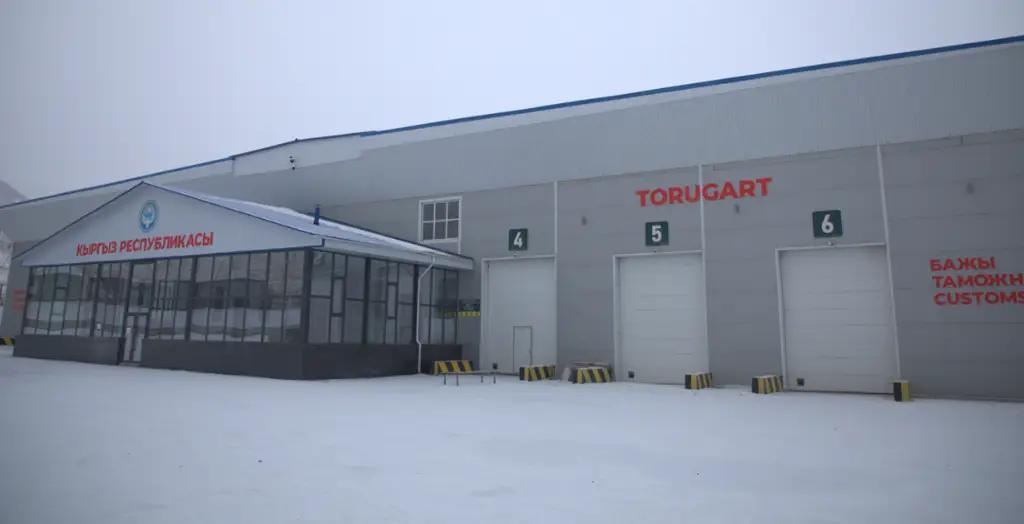
During the working trip, the delegation also familiarized itself with the construction and modernization work being carried out at the Torugart checkpoint, including the construction of an inspection and search complex, the reconstruction of administrative buildings, and the expansion of the checkpoint territory.
In addition, a new waiting room for participants in foreign economic activity, built and equipped by JSC State Customs Infrastructure, was opened during the visit. The conditions created are aimed at improving comfort for carriers, company representatives, and other participants in international trade.
The implementation of these infrastructure and digital projects is an important step in the modernization of Kyrgyzstan's border crossing points and contributes to improving the efficiency of the state border, developing foreign trade, and strengthening the country's transit potential.