

Published
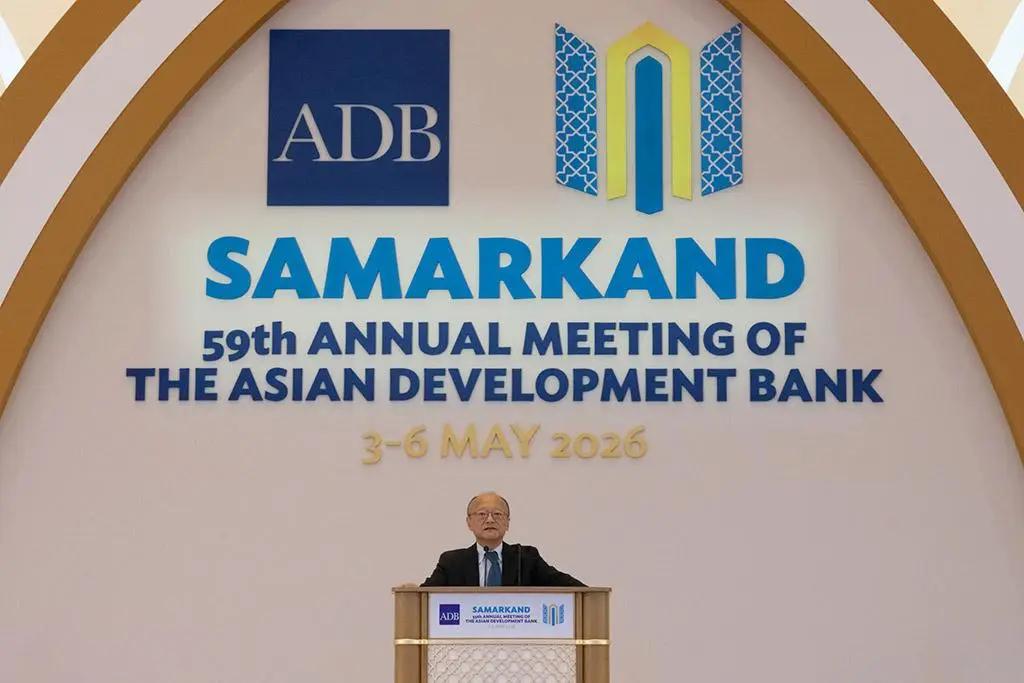
05/04/2026, 17:55ADB President Masato Kanda opened the bank’s 59th Annual Meeting today, May 4, calling on countries in the Asia-Pacific region to “work together for shared development” by strengthening cross-border connectivity that promotes sustainability and inclusive growth.
The 59th Annual Meeting of the ADB Board of Governors is taking place in Samarkand under the theme “Crossroads of Progress: Advancing the Region’s Connected Future.” The meeting brings together government officials, private sector leaders, development partners, and innovators to develop practical solutions in the areas of regional connectivity, digital innovation, and development finance.
In his remarks, Masato Kanda emphasized that today’s shocks spread rapidly across borders—through energy markets, supply chains, and digital networks—affecting communities least able to withstand them.
“Addressing these challenges requires coordinated regional measures that transcend national borders,” he said.
The ADB also announced the launch of a $70 billion program aimed at creating regional systems that will strengthen overall security and resilience in the Asia-Pacific region.
The program includes a $50 billion initiative to establish a Pan-Asian Energy System, aimed at cross-border integration of renewable energy, enhancing energy security, and reducing emissions; as well as a $20 billion initiative focused on expanding cross-border digital connectivity and narrowing the digital divide in the region.
The Asian Development Bank forecasts a slowdown in growth in developing countries in Asia and the Pacific to 4.7% this year, compared to 5.4% last year, while inflation is expected to accelerate to 5.2% from 3%. This is due to the protracted effects of the conflict, leading to rising energy prices, tighter financial conditions, and a decline in economic activity in the region.
In a more adverse scenario involving a further escalation of the conflict, in which oil prices would spike in May 2026 and remain elevated, growth in developing countries in Asia and the Pacific could slow to 4.2% this year and 4% next year, while inflation could reach 7.4% in 2026.
“The Bank will leverage its unique regional mandate, operational capabilities, and ability to act as a financier, advisor, and resource mobilizer to address challenges such as attracting private sector funding for development and combating environmental degradation,” noted Masato Kanda.