

Published
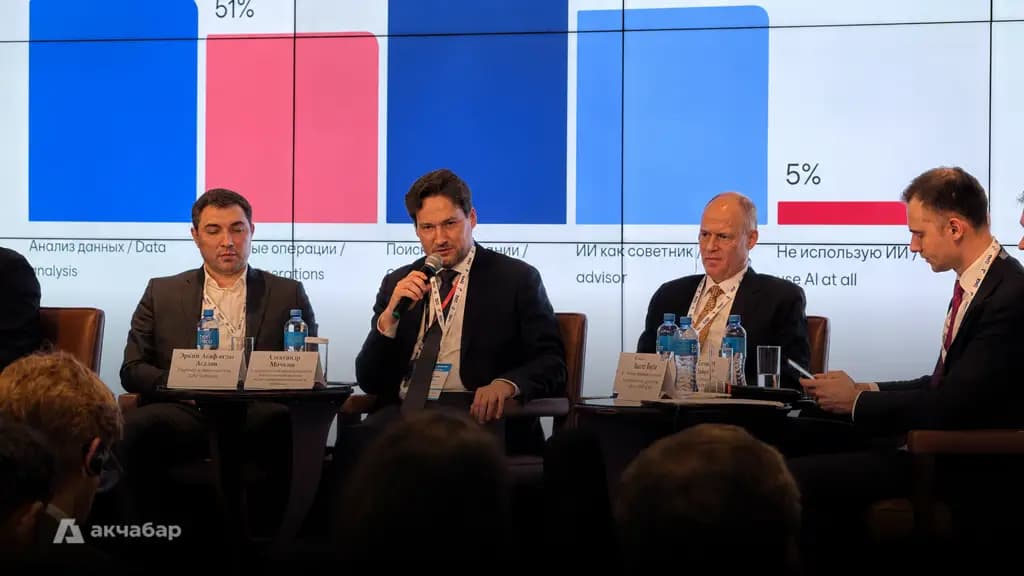
05/29/2026, 13:31Artificial intelligence is advancing so rapidly that even predictions for the next two or three years may become outdated within just a few months. This view was expressed by Alexander Mochkin, a technology entrepreneur and researcher in the fields of artificial intelligence and blockchain, during the plenary session “Finance in the Era of Digital Transformation: Security, Innovation, and Trust,” held as part of BIFF 2026.
According to him, the speed of development and implementation of new technologies today is comparable to the scale of changes that once brought electricity or the internal combustion engine to humanity.
“Even by 2030, everything could change dramatically. The pace of development and implementation of new products is growing so rapidly that it is becoming increasingly difficult to make predictions two or three years in advance,” Mokhkin noted.
The expert identified the growing technological dependence of countries and companies on a limited number of artificial intelligence developers as one of the key challenges.
According to him, many European organizations are already investing in their own models and technological infrastructure to reduce their dependence on solutions created in the U.S. and China.
“This is one of the main trends of the coming years. The issue is no longer just about technology, but also about where it will be developed, who will control the supply chains, and who will ensure technological sovereignty,” he emphasized.
Mochkin paid special attention to the problem of the so-called “black box” in artificial intelligence. Although in many countries final decisions must still be approved by a human, it is far from always possible to explain how an algorithm arrived at a particular conclusion.
According to the expert, the transparency of AI systems and the preservation of human control will be among the key regulatory issues in the coming years.
At the same time, he noted that artificial intelligence is becoming increasingly accessible. Whereas complex models previously required massive computing power and specialized data centers, today the market is moving toward compact solutions capable of running on ordinary user devices.
“Modern smartphones are gradually turning into platforms for local computing. Many tasks that were previously performed only in data centers will in the future be able to be processed directly on users’ devices,” Mokhkin noted.
According to him, this democratization of technology opens up new opportunities for businesses and users, but at the same time creates additional risks in the areas of information security and data management.