

Published
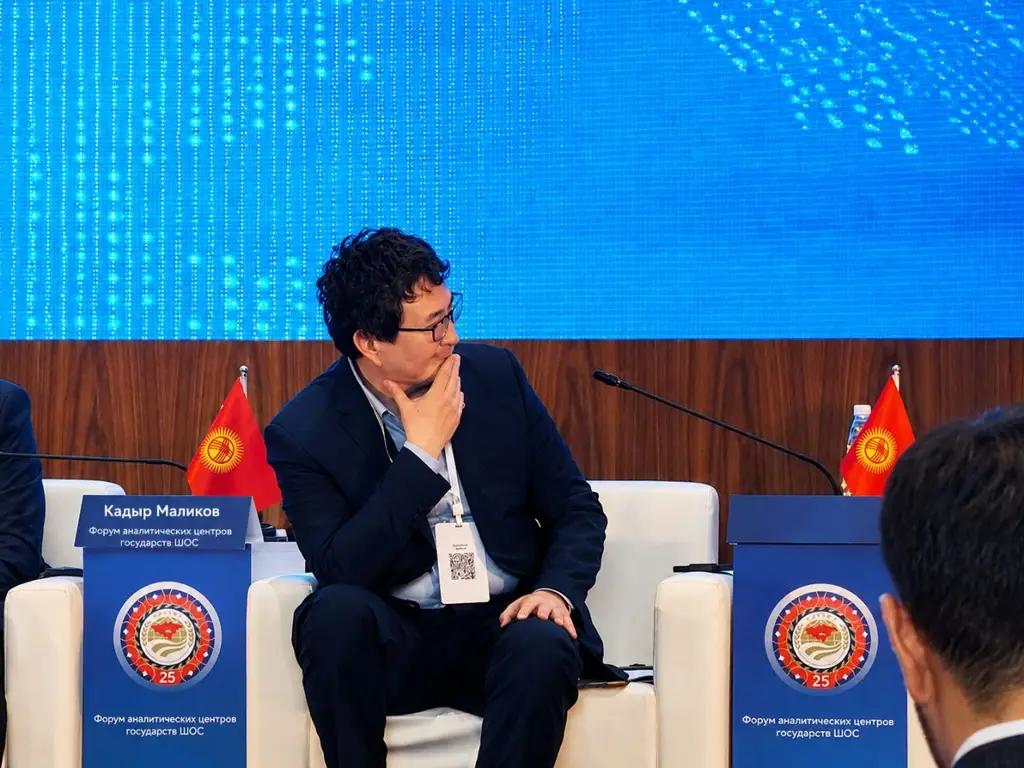
05/21/2026, 13:27Central Asia is gradually becoming a battleground for data, transport corridors, technology and water. This was stated by Kadyr Malikov, director of the Independent Analytical Centre “Religion”, at the SCO Think Tanks Forum.
According to him, traditional security threats are changing. Whereas states used to prepare for conventional wars and terrorist attacks, the main danger now lies in the instability of the global system itself.
“Threats have become hybrid and multi-layered. Pressure is being exerted simultaneously through the economy, technology, sanctions, migration, information and cultural influence,” noted Malikov.
He believes that Central Asia and the SCO region are already caught up in the global realignment of the world. Following the accession of Iran and Belarus, the organisation has strengthened its geopolitical clout, yet at the same time, the complexity of coordination among members has increased.
The expert paid particular attention to the future of transport and energy routes. According to him, competition will intensify not only over oil and gas.
“In the future, the struggle will no longer be solely for oil or gas, but for data, logistics, satellite systems, artificial intelligence, water and control over transit,” he stated.
Malikov also warned of the risks of sanctions-induced fragmentation and the region’s technological dependence.
“Dependence on foreign technologies, servers, payment systems and software makes states vulnerable,” said the expert.
He also touched upon internal risks for Central Asian countries. According to him, the rapidly growing young population, a shortage of jobs and a decline in the quality of education create fertile ground for radicalisation and external manipulation via social media and digital platforms.
Malikov identified water issues in Central Asia as one of the most underestimated threats.
“The water issue could prove even more dangerous than political conflicts,” he noted.
Against this backdrop, the expert proposed expanding mechanisms within the SCO. In particular, he suggested establishing a unified centre for strategic forecasting, a system for the collective protection of digital sovereignty, and programmes to protect young people from radicalisation.
In his view, control over the digital space will become no less important than control over national borders in the future.
“If the states of the region do not begin to jointly protect their technologies, economies and information space, decisions will be made for them by other external centres,” Malikov emphasised.