

Published
05/26/2026, 10:59Kyrgyzstan remains one of the largest potato producers in the EAEU on a per capita basis, but production volumes continue to decline. Against this backdrop, the country—which until recently was considered fully self-sufficient in potatoes—was forced to import potatoes from China in 2025.
According to EAEU data, Kyrgyzstan harvested 1.17 million tons of potatoes in 2025 (-9.23% compared to 2021). This is less than:
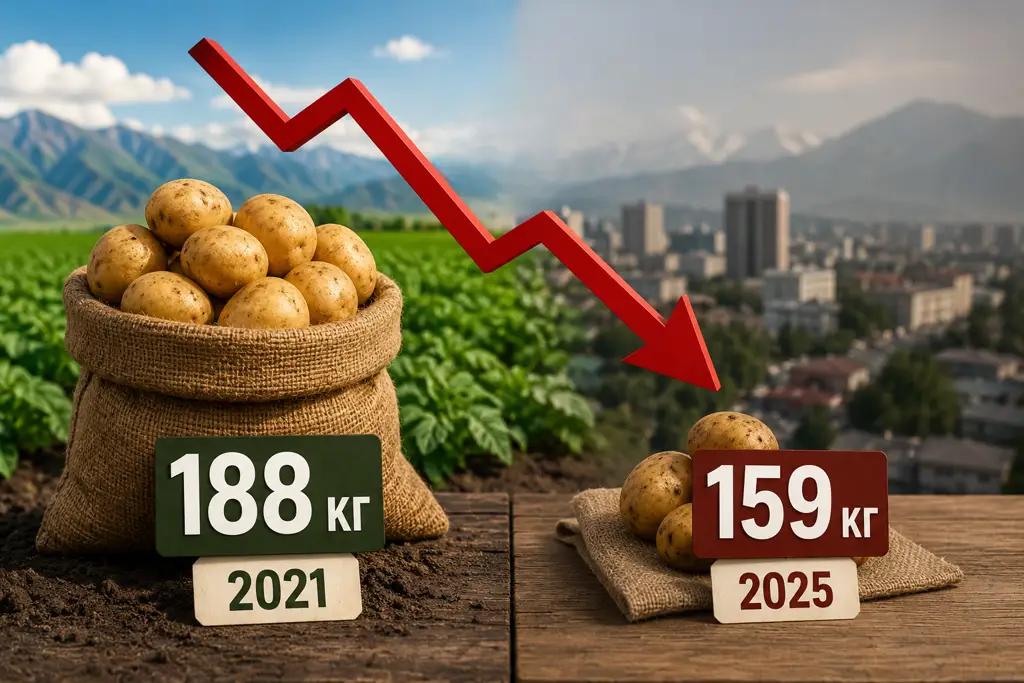
At the same time, per capita production is also declining. While in 2021, each resident of Kyrgyzstan consumed 188 kg of potatoes, the figures were:
Despite the decline, Kyrgyzstan remains one of the EAEU leaders in per capita potato production. Only Belarus has a higher figure—335 kilograms per person. For comparison:
Across the EAEU as a whole, potato production is also declining. In 2025, the union’s countries harvested 26.9 million tons, compared to 28.4 million tons in 2022.
Against the backdrop of its own overproduction, Kyrgyzstan began actively importing potatoes from China in 2025. According to customs statistics, approximately 28,600 tons of potatoes were imported into the country between January and December. Of this amount, more than 22,200 tons came from China.
As previously explained by the Ministry of Agriculture, there was no formal potato shortage in the country. In 2025, the self-sufficiency rate was estimated at 167%, meaning that production significantly exceeded domestic consumption.
However, in the spring of 2025, the market faced a local shortage. This was caused by floods in Kazakhstan and Russia, which damaged cropland and sharply increased demand for Kyrgyz potatoes. Significant volumes of produce were exported, while domestic prices rose to 62–70 KGS per kilogram.
To stabilize the domestic market, the authorities authorized imports. Unexpectedly, China became the main supplier. At the same time, representatives of the Ministry of Agriculture themselves emphasize that demand for local potatoes remains significantly higher.
In 2026, authorities expect a higher harvest thanks to rainy February and March, which had a positive effect on soil conditions. This is reflected in the statistics. For example, in January–March of this year, Kyrgyzstan imported 7,500 tons of potatoes. This is 17% less than at this time last year. At the same time, the bulk of the imports still came from China—6,500 tons, or 86.6% of the total volume of potatoes imported into the country.