Published
09/08/2026, 13:31In Kyrgyzstan, there are plans to determine the average amount of meat, milk, vegetables, fruit and other foodstuffs required per person for a balanced diet. The current average physiological standards were approved back in February 2010 and have not changed since then.
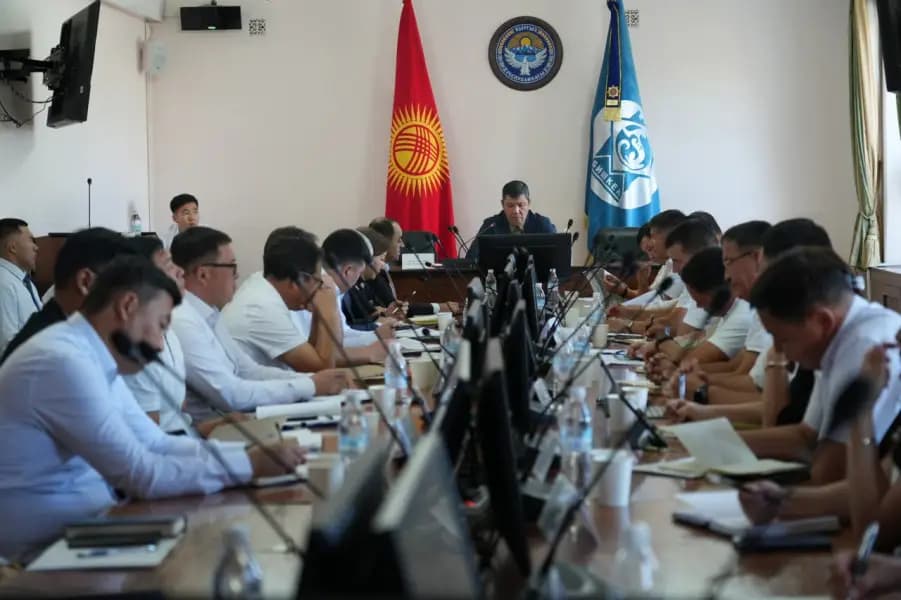
The instruction to update the regulatory framework in the field of food security and to review the physiological consumption standards was issued following a meeting of the Council on Food Security and Nutrition.
The meeting took place on 8 September, chaired by the Deputy Head of the Cabinet of Ministers – Minister of Water Resources, Agriculture and the Processing Industry, Erlist Akunbekov.
The current standards were established by a government decree dated 19 February 2010. According to the document, the average annual consumption per person should be 61.3 kilograms of meat and meat products, 200 kilograms of milk and dairy products, 114.25 kilograms of vegetables and melons, and 123.74 kilograms of fruit and berries.
The standard also provides for the consumption of 25.55 kilograms of sugar and confectionery, 9.1 kilograms of fish and 182.5 eggs per year. The estimated energy value of this diet is 2,981 kilocalories per day.
Prior to the adoption of these standards, government bodies had been guided by the minimum consumption standards approved by the Jogorku Kenesh in 2006. Following a review in 2010, the recommended intake for most foodstuffs was significantly increased.
| Foodstuffs | Minimum standard (2006) | Standard (2010) |
|---|---|---|
| Bread and bakery products | 89.2 kg | 115.34 kg |
| Potatoes | 57.4 kg | 98.55 kg |
| Vegetables and melons | 150.4 kg | 114.25 kg |
| Fruit and berries | 112.4 kg | 123.74 kg |
| Meat | 39.1 kg | 61.3 kg |
| Milk | 184.8 kg | 200 kg |
| Sugar | 21.7 kg | 25.55 kg |
| Vegetable oil | 9.6 kg | 9.13 kg |
| Eggs | 166 pieces | 182.5 pieces |
| Fish | not listed separately | 9.1 kg |
The potato ration saw the sharpest increase — from 57.4 to 98.55 kilograms per year, or by almost 72 per cent. The meat ration was raised from 39.1 to 61.3 kilograms — by approximately 57 per cent. Fish was placed in a separate category with a ration of 9.1 kilograms.
At the same time, the recommended intake of vegetables and melons was reduced from 150.4 KGS to 114.25 KGS per year, and that of vegetable oil from 9.6 KGS to 9.13 KGS.
Participants at the current meeting also reviewed the state of food security, supply-demand balances for nine socially significant commodities for 2026, and plans for 2027. Discussions covered imports of specific product categories, price risks, state reserves, the supply of fuel and lubricants, and logistics.
The Council instructed officials to draw up rapid response protocols for the nine socially significant commodities, to strengthen regulation of the meat market, and to organise autumn fieldwork and preparations for the 2027 spring sowing campaign in accordance with a unified plan.
The Cabinet of Ministers also intends to draw up a programme for the processing of fruit and vegetables for 2027–2031, including specific production projects, and to prepare a separate proposal on the development of citrus cultivation.
Erlist Akunbekov demanded that these decisions be implemented in practice and warned that managers would be held personally accountable for missing deadlines or merely going through the motions.
“Food security is not a matter for a single ministry or agency. It concerns the stability of the entire system – from production to storage, processing, logistics, state reserves, trade, pricing and public nutrition,” he stated.