

Published
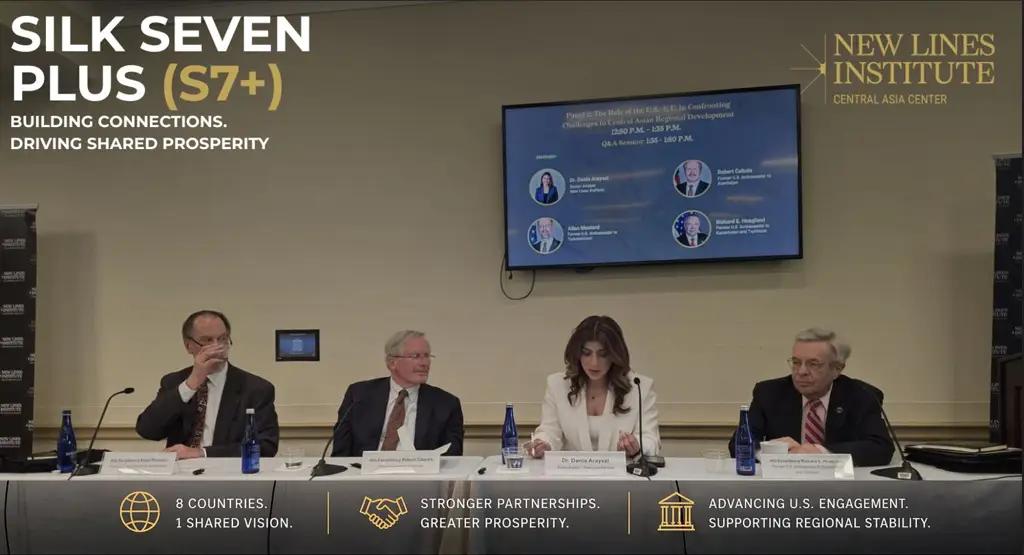
04/30/2026, 10:39The Silk Seven Plus (S7+) initiative, aimed at fostering economic cooperation among the countries of Central and South Asia and expanding their ties with global markets, was unveiled on Capitol Hill in Washington. The presentation was organized by the New Lines Institute for Strategy and Policy, with the participation of members of the U.S. Congress, experts, and former diplomats.
The initiative brings together eight countries—Kazakhstan, Uzbekistan, Turkmenistan, Kyrgyzstan, Tajikistan, Afghanistan, Pakistan, and Azerbaijan—and envisions the formation of a closer regional economic bloc. The main goal is to strengthen cooperation in areas such as trade, energy, water resources, and transportation infrastructure.
Within the S7+ framework, special attention is being paid to the development of new trade corridors designed to connect the region with Europe, the Middle East, and the Indo-Pacific region. There is also discussion of addressing systemic challenges—water scarcity, energy shortages, and limited access to external markets.
During the discussions, U.S. representatives emphasized the region’s strategic importance. In their view, the development of alternative trade routes and infrastructure will reduce countries’ dependence on individual partners and create new sources of economic growth.
It was specifically noted that the region is viewed not only as a transit zone but also as an area with growing potential—including through human capital and the adoption of new technologies.
As part of the initiative, a series of analytical reports is planned, containing specific proposals for deepening integration, including coordination in the energy sector, the use of critical minerals, and the modernization of transport infrastructure.
Following its presentation in the U.S., the initiative will be presented in other global hubs, including London and Brussels, to attract international support and investors.
S7+ is viewed as one of the potential tools for strengthening Eurasian economic connectivity and expanding the region’s participation in the global economy.